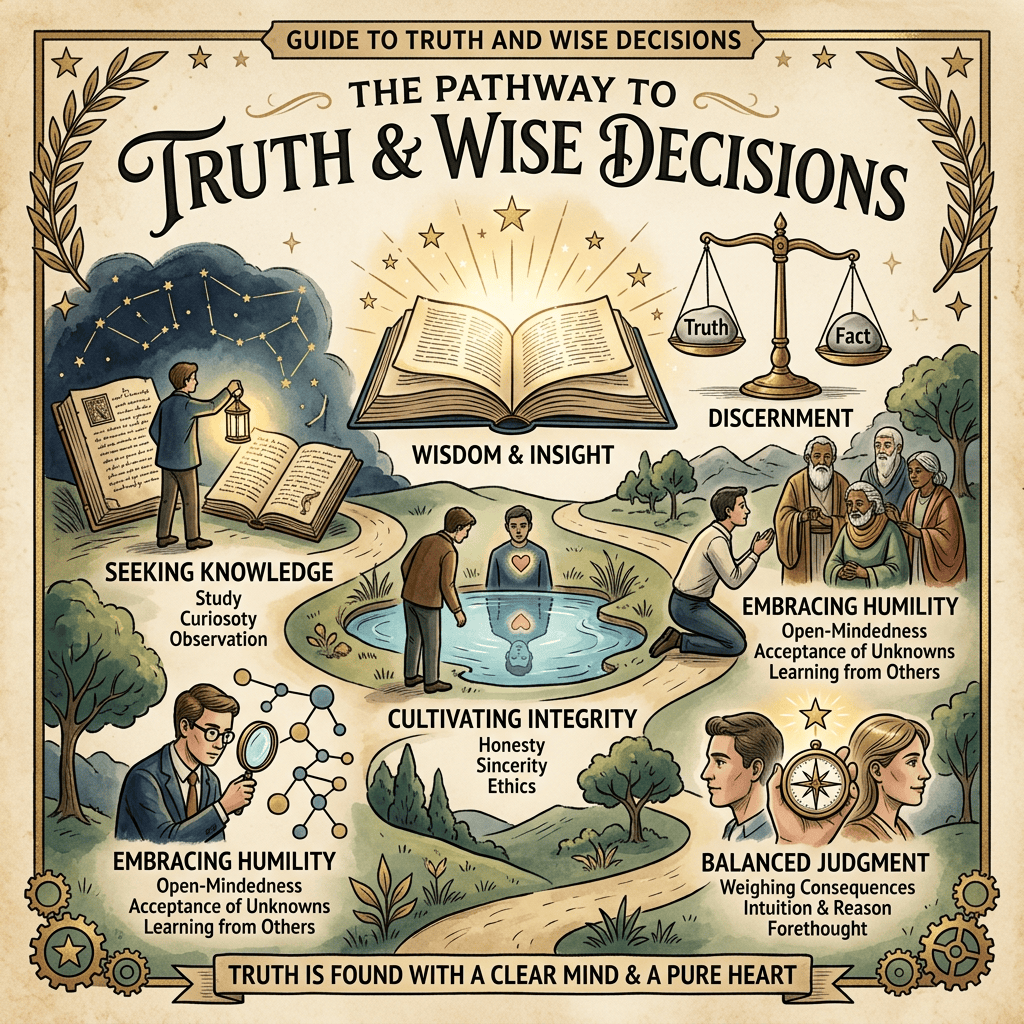
My dear friends, Today’s devotion reminds us that every choice we make shapes the direction of our lives. Decisions are not just moments — they are seeds. Some grow into blessing, some into difficulty, and some into lessons that guide us toward wisdom. Scripture teaches us that sound decisions are built on truth, not impulse; on understanding, not assumption; and on God’s Word, not shifting opinions.
In a world overflowing with voices, information, and pressure, it’s easy to lean on our own understanding or follow whatever feels right in the moment. But God calls us to something higher: to pause, to seek His wisdom, and to choose paths that lead to life.
Proverbs reminds us, “The prudent give thought to their steps.” Wise choices are not accidental — they are intentional. They come from gathering substantiated information, listening carefully, and weighing our decisions through the lens of God’s truth. When we slow down and seek clarity, we protect our future and strengthen our character.
So today, let this be your encouragement: Make decisions that honor who you are becoming. Choose paths that align with God’s Word. Seek counsel, gather facts, and let wisdom guide your steps.
You are not alone in this journey. God delights in giving direction to those who ask, and He promises to steady the hearts of those who walk with Him.
May your choices today be rooted in truth, strengthened by wisdom, and blessed by God’s faithful guidance.💕✌️🙏
A Children’s Bible LessonTheme:God Can Turn Hard Things Into Good Things Inspired by Nicole Reed’s quote: “Sometimes the bad things that happen in our lives put us directly on the path to the best things that will ever happen to us.”
Main Idea
Sometimes life feels hard — things happen that we don’t like or don’t understand. But God can take those hard moments and use them to bring something good, something beautiful, and something better than we expected.
This is one of the ways God shows His love.
Bible Story: Joseph’s Big Surprise
Joseph had a very hard time. His brothers were unkind to him, he was taken far from home, and he had to live in a place he didn’t choose. It looked like everything was going wrong.
But God was still with Joseph. God used those hard moments to put Joseph exactly where he needed to be — in a place where he could help many people and save his family.
What looked “bad” became the beginning of something wonderful.
This helps children see that God can turn their hard moments into good ones too.
Key Points for Children
God is with you even when things feel hard
God can use sad or scary moments to help you grow
God has a good plan for your life
Good things can come from tough times
Simple Illustration
Imagine planting a seed in the ground. It’s dark, it’s buried, and it looks like nothing good is happening. But inside that dark place, the seed is growing into something beautiful — a flower or a tree.
Sometimes our lives feel like that seed. But God is helping us grow into something wonderful.
Activity
Give each child a small seed (or draw one). Have them write: “God can bring good things from hard things.”
Let them take the seed home as a reminder.
Memory Verse
“We know that in all things God works for the good of those who love Him.” — Romans 8:28
Closing Prayer
Dear God, Thank You for being with us even when things feel hard. Help us trust that You can turn every sad or scary moment into something good. Make our hearts brave, our minds peaceful, and our lives full of Your blessings. Amen💕✌️🙏
My dear friends, Today’s reflection invites us to slow down, breathe, and remember that wise decisions are not accidents. They are the fruit of a heart anchored in God’s truth, shaped by patience, and strengthened by clarity. In a world overflowing with noise and instant reactions, Scripture calls us to something steadier — a way of choosing that honors God and builds stability in our lives.
The devotional thought for this season reminds us that wisdom grows when we listen carefully, gather trustworthy information, and align our choices with God’s Word. This is not about perfection; it is about intention. Every decision becomes part of the story God is writing in us.
Why Wisdom Matters
We make countless decisions every day. Some are small, others carry long-term consequences. When we rely on impulse or pressure, we often end up confused or regretful. But when we root our choices in Scripture, we find peace, clarity, and direction.
Proverbs teaches that “the wise listen and add to their learning.” Wisdom begins with humility — the willingness to pause, learn, and seek God’s voice above all others.
Three Principles for Making Sound, God-Honoring Decisions
Seek God’s guidance first Before acting, pray. Ask God to steady your heart and reveal truth. Wise decisions begin with listening.
Gather trustworthy information Don’t rely on assumptions or rumors. Look for facts, clarity, and reliable counsel. Good information protects you from confusion.
Align your choices with Scripture Ask: Does this honor God? Does it reflect integrity, love, and truth? When your decisions match God’s Word, they produce lasting fruit.
Building a Lifestyle of Wisdom
Wise decisions are not one-time events — they are habits formed over time. Surround yourself with voices that speak truth. Meditate on Scripture. Practice patience. Let God’s Word shape your thinking before the world shapes your reactions.
When you choose wisely, you plant seeds that grow into peace, stability, and spiritual strength. These choices become part of the testimony God is forming in your life.
A Prayer for July 6
Heavenly Father, Teach us to walk in wisdom today. Help us pause before we act, listen before we speak, and seek Your guidance in every decision.
Give us clarity, courage, and discernment. Protect us from confusion and impulsive choices. Let Your Word be our foundation, and let Your Spirit lead us into truth.
Bless my friends with peace, stability, and the strength to choose what honors You. In Jesus’ name, Amen💕✌️🙏
Making decisions is a daily part of life—big or small. But have you ever considered that the quality of your choices shapes your future? When life feels chaotic and noise surrounds us, it’s easy to act impulsively or based on fleeting emotions. Yet, Scripture reminds us that true wisdom comes from understanding, trustworthiness, and aligning with God’s character. In this post, we’ll explore how to make wise decisions rooted in truth, supported by Scripture, and supported by prayer.
Why Wise Decisions Matter More Than Ever
Every day presents opportunities to choose, whether it’s how to respond to a coworker, what to prioritize for the day, or how to manage larger life choices. Without discernment, these decisions can lead us astray, cause regret, or even derail our faith journey.
In a world filled with opinions, pressure, and rapid information, it’s vital to approach decision-making with purpose. Proverbs highlights this with the phrase, The prudent give thought to their steps. Wisdom isn’t accidental—it’s cultivated. By deliberately seeking trustworthy information and anchoring our choices in truth, we build a foundation that sustains us through challenges.
The Biblical Foundation for Making Wise Choices
Scripture underscores the importance of wisdom in decision-making:
– The prudent give thought to their steps (Proverbs 14:15) — Wise people don’t rush into decisions; they consider the consequences.
– Trust in the Lord with all your heart and lean not on your own understanding (Proverbs 3:5-6) — We are encouraged to seek divine guidance rather than rely solely on our limited perspective.
– In all your ways submit to him, and he will make your paths straight (Proverbs 3:6) — Trusting God’s truth leads us along the right path.
These verses remind us that wisdom entails looking beyond our impulses to stand firmly on God’s character and promises.
How to Anchor Your Decisions in Truth
1. Pause and Reflect
Amidst pressure, take a moment to pause. Ask yourself: Is this choice rooted in truth? Rushing often leads to shallow decisions that don’t align with our values or faith.
2. Gather Trustworthy Information
Before making big choices, seek understanding. That might mean consulting Scripture, praying for clarity, and listening to wise counsel. When we slow down and gather reliable information, we’re less prone to impulsive actions.
3. Align with God’s Character
Evaluate whether your decision reflects God’s nature—loving, just, and truthful. Does it promote peace and kindness? Does it honor God? If not, it’s worth reevaluating.
4. Pray for Guidance and Peace
Ask God to direct your steps. Prayer is not just a ritual but a conversation that aligns our hearts with His wisdom. As James 1:5 promises, If any of you lacks wisdom, you should ask God, who gives generously.
5. Make Heart-Focused Choices
Decisions driven by fear, pride, or emotion tend to be shallow and unstable. When rooted in prayer and Scripture, our choices become steady and confident.
Practical Steps for Making Wise Decisions
Pause – Stop before rushing into action | Reflect on whether your choice aligns with God’s truth instead of impulse |
Seek Truth – Gather facts, consult Scripture, pray | Look beyond impulse and emotion, encouraging prayer-supported decisions |
Align with God – Evaluate if decision reflects His character | Does this decision honor God’s character? |
Trust the Process – Commit to following through with peace | Walk with confidence when you choose with clarity |
Overcoming Common Barriers to Wise Decisions
Even with a plan, obstacles can derail us:
– Emotional Overwhelm— Take a breath and consult truth over feelings.
– External Pressures — Remember that true wisdom is rooted in divine guidance, not societal noise.
– Lack of Information — Be proactive in seeking trustworthy sources—Scripture, prayer, counsel.
By consistently practicing these steps, decision-making becomes less overwhelming and more rooted in faith, truth, and peace.
Final Reflection: Make God-Honoring Choices
In the rush of life, it’s easy to settle for quick fixes or shallow choices. Yet, Scripture invites us to slow down, seek understanding, and trust in God’s wisdom. When we anchor our decisions in truth and align them with His character, we walk with confidence and peace.
Remember, God honors the heart that seeks truth. Your decisions today—whether big or small—can become acts of courage and faith when rooted in His guidance. 💕✌️🙏
God wants us to help each other grow by using kind words and encouragement.
Bible Verse
“Encourage one another and build each other up.” — 1 Thessalonians 5:11
Lesson Story
Imagine you have a small plant. If you give it water, sunlight, and care, it grows strong and tall. But if you ignore it or speak mean words to it (even though plants can’t hear!), it won’t grow well.
People are like that too.
When we say things like:
“Good job!”
“I’m proud of you!”
“You can do it!”
It helps others grow strong on the inside.
Charles Schwab said something very true: “The way to develop the best in a person is by appreciation and encouragement.”
That means when we thank people, cheer for them, and notice the good they do, it helps them become their best.
Jesus did this all the time. He told His friends they were important. He helped people believe they could do great things with God’s help.
Application for Children
Use kind words with your friends.
Tell someone “You did great today!”
Encourage someone who feels sad or scared.
Notice the good things people do and say something nice about it.
When you encourage others, you are doing God’s work.
Short Prayer
Dear Jesus, Help us use kind words. Teach us to encourage others and help them grow. Make us children who build people up with love. Amen💕✌️🙏
God grows people through encouragement, not criticism. Appreciation awakens the gifts He has placed inside every person.
Key Scripture
“Therefore encourage one another and build each other up.” — 1 Thessalonians 5:11 This verse teaches exactly what Schwab’s quote reflects: people flourish when they are lifted, not pushed down.
Teaching Point 1: God Uses Encouragement to Shape Lives
Charles Schwab’s insight mirrors a biblical truth — people grow best in an atmosphere of grace, not fear.
When Jesus met people, He spoke to the best in them.
He called fishermen “fishers of men.”
He called a fearful Gideon a “mighty warrior.”
He restored Peter by reminding him of his calling, not his failure.
Jesus didn’t develop people by pointing out their weaknesses. He developed them by calling out their God‑given potential.
Jesus’ encouragement
Teaching Point 2: Appreciation Awakens Gifts
Schwab said the best in a person grows through appreciation. Scripture agrees:
Proverbs 16:24 — “Gracious words are a honeycomb, sweet to the soul and healing to the bones.”
Hebrews 10:24 — “Let us consider how to stir up one another to love and good works.”
When you appreciate someone’s effort, you help them see what God sees. When you encourage someone’s gift, you help it grow.
Stirring up good works
Teaching Point 3: Encouragement Is a Ministry
Encouragement is not optional — it is a command and a calling.
It strengthens the weak.
It comforts the discouraged.
It restores the broken.
It builds the church.
Every believer is called to be a builder, not a breaker.
Encouragement as ministry
Application for Life
Speak life, not criticism.
Notice the good in others.
Appreciate small steps of growth.
Encourage gifts you see in people.
Become a voice that lifts, not a weight that crushes.
When you encourage someone, you partner with God in shaping their future.
Closing Prayer
Dear Lord, make us people who build others up.Teach us to speak appreciation, to offer encouragement,and to call out the gifts You have placed in every heart.May our words bring life, hope, and strength.In Jesus’ name, Amen💕✌️🙏
As we step into July, many of us feel the rush of new opportunities and challenges. But amid this bustling energy, a vital question emerges: How can we make decisions that truly align with our values and faith? Whether large or small, each choice we make shapes the course of our lives. This month, I want to encourage you to pause, seek God’s wisdom, and walk with confidence in His guidance.
In this post, we’ll explore why thoughtful decision-making matters, how to anchor your choices in Scripture and prayer, and practical steps to incorporate divine wisdom into everyday life. By the end, you’ll be equipped to approach July — and every month — with a steadiness rooted in trust and clarity.
The Power of Reflective Decision-Making
In a world where quick options and constant noise are the norm, taking time to reflect before choosing is more important than ever. Proverbs 14:15 reminds us that the prudent give thought to their steps. This wisdom highlights that deliberate, well-thought-out decisions lead to better outcomes and greater peace.
Why Haste Can Lead astray
Many of us fall into the trap of impulsivity — responding out of emotion or pressure rather than prayerful discernment. Quick decisions often result in regret or uncertainty because they lack the foundation of divine guidance.
Reflective decision-making helps us:
– Avoid rash choices that might hurt us or others.
– Gain clarity in complex situations.
– Foster peace and confidence in our direction.
The Role of Quiet Reflection
God invites us into a slower pace — to stop, listen, and hear His voice. It’s in these quiet moments that His truth illuminates our path. As Psalm 46:10 says, Be still, and know that I am God. Spending time in prayer and Scripture opens our hearts to divine insight, giving us the confidence to move forward.
Anchoring Decisions in Scripture and Prayer
The foundation for sound decisions is rooted in God’s Word and communication with Him. Here’s how you can ensure your choices are aligned with divine wisdom:
Step 1: Seek God’s Word
Before making a decision, spend time in Scripture relevant to your situation. For example, if facing a major life change, passages about trust, obedience, and God’s promises can serve as anchors.
Tip: Keep a journal of Scripture verses that resonate with your decision. Meditate on them regularly.
Step 2: Prayer and Discernment
Invite God into your decision-making process through prayer. Ask questions like:
– What would You have me do in this situation?
– Where is Your peace guiding me?
– Are there wise counsel or circumstances I should consider?
Listen for the still, small voice of God that Guides your heart.
Step 3: Wait for Peace
True guidance often brings peace, not pressure or anxiety. If you’re feeling unsettled, pray until you find calm assurance. Romans 8:6 reminds us that The mind governed by the Spirit is life and peace.
Practical Steps to Make Thoughtful Choices
Integrating divine wisdom into daily life doesn’t have to be complicated. Here are practical steps you can start implementing today:
1. Create a Reflection Routine
Dedicate a few minutes daily or weekly to pause, pray, and reflect on upcoming decisions. Use a journal to record guidance or insights received.
2. Seek Wise Counsel
Consult trusted friends, mentors, or leaders who share your faith values. Proverbs 15:22 says, Plans fail for lack of counsel, but with many advisers they succeed.
3. Practice Patience
Resist the urge to rush. When faced with a decision, give yourself permission to wait until peace and clarity emerge.
4. Trust in God’s Timing
Understand that not all answers are immediate. Trust that God’s timing is perfect, and sometimes the best decision is to wait.
Final Encouragement for July
May this new month be a time of deliberate and faith-filled choices. Remember, your decisions are not just about immediate outcomes — they shape your spiritual walk and your future. When you slow down, listen, and anchor your choices in God’s truth, you walk with confidence and peace.
Let your heart be guided not by haste but by the calm assurances of divine wisdom. As Proverbs 3:5-6 encourages us, Trust in the Lord with all your heart and lean not on your own understanding; in all your ways submit to him, and he will make your paths straight.
Frequently Asked Questions
How can I tell if a decision is truly from God?
Typically, divine guidance aligns with Scripture, brings peace rather than conflict, and resonates with wise counsel. Pray for discernment and observe if your feelings of peace increase as you seek guidance.
What if I feel overwhelmed by choices?
Take a step back and pray. Trust that God’s wisdom is available to all who seek it sincerely. Break decisions into smaller parts and ask God for clarity with each step.
How do I stay patient when waiting for guidance?
Remind yourself that God’s timing is perfect. Use the waiting period for prayer, studying His Word, and seeking wise counsel. Trust that He will reveal the right path at the right time.
Remember: Every decision, big or small, is an opportunity to trust God more and walk in His peace. Make July a month of thoughtful, faith-filled choices, guided by divine wisdom and rooted in Scripture. 💕✌️🙏
Every day presents us with crossroads—moments where our choices influence our future more than we might realize. In a world full of noise, opinions, and quick reactions, cultivating wisdom in our decisions is more vital than ever. But how do we ensure we’re making choices rooted in truth and guided by clarity?
In this post, I’ll explore timeless principles from spiritual teachings that help us slow down, seek wisdom, and make sound decisions. Drawing inspiration from scripture and personal reflection, you’ll learn practical steps to build a decision-making process anchored in trust, prayer, and discernment.
Whether you’re facing a major life change or everyday choices, these insights will empower you to act with confidence and peace. Let’s dive into how you can cultivate wisdom in your decision-making.
The Foundation of Wise Decision-Making: Seeking Truth and Prayer
One of the most important lessons from spiritual wisdom is that good decisions do not come from hurried judgments. Instead, they are rooted in a commitment to seek truth, listen to your heart, and pray for guidance.
Imagine standing at a crossroads, uncertain which path to take. The tendency might be to react quickly, driven by emotions or external pressures. However, true wisdom calls us to pause—a moment to examine what is real and trustworthy. In scripture, wisdom is never accidental; it is something we pursue actively.
Key Principle: Ground your decisions in truth—dive into facts, ask for divine guidance, and listen with an open heart.
Example : Sound decisions are rarely made in haste. They grow from truth, prayer, and a heart willing to listen.
Practical Tip: Next time you’re faced with a choice, take a moment to pray for clarity. Ask for discernment to see beyond surface appearances and assumptions.
Building Your Decision Framework: Trustworthy Information and Reflection
In today’s fast-paced digital world, we are bombarded with opinions, unverified claims, and hurried reactions. To make wise choices, it’s essential to slow down and build your framework for decision-making based on substantiated information.
This process involves three key steps:
Gather factual information: Ensure your choices are based on reliable data rather than assumptions.
2. Pray and reflect: Seek divine guidance for clarity and peace.
3. Seek counsel: Sometimes, consulting trusted friends or mentors helps validate your perspective.
Why this matters: By slowing down and examining the facts, your decisions become steadier, and your heart finds more peace amid uncertainty.
Example from the transcript: When we slow down long enough to examine the facts, pray for clarity, and seek counsel, our decisions become steadier and our hearts more peaceful.
Actionable Step: Before acting, write down the facts you’ve gathered, pray for God’s guidance, and consider input from those you trust.
Emotions vs. Wisdom: Balancing Heart and Head
It’s natural to feel pulled in many directions when faced with a difficult choice, especially if emotions run high. However, wise decision-making involves balancing feelings with divine wisdom. Our hearts may be tempted to react impulsively, but faith calls us to trust God’s grace and truth.
Tip: When decision-making feels heavy or overwhelming, remember that peace is often a sign of divine guidance. If your heart feels disturbed or conflicted, take extra time to pray and seek reassurance.
May the Lord give you clarity when things feel uncertain, courage when choices feel heavy, and peace where your heart feels pulled. 🙏
Practical advice: Stop and assess if your current feelings align with God’s peace. If not, it’s okay to delay your decision until you experience that calm assurance.
Applying Wisdom in Everyday Choices
Wisdom isn’t just for major life decisions; it applies to everyday moments too. Simple habits, like pausing before responding or seeking guidance when unsure, build a foundation of discernment over time.
Steps to develop daily wisdom:
– Pause before reacting to news or conflicts.
– Reflect on what aligns with truth.
– Listen to your inner peace or prompting.
Act with clarity and confidence. Example: Instead of reacting emotionally to criticism, pause, pray for insight, and respond with grace and understanding.
Final Blessings: A Heart Rooted in Wisdom
As you navigate your daily decisions, remember that wisdom is a gift rooted in seeking truth, prayer, and trusting God’s guidance. When you slow down, examine the facts, and invite divine insight, your choices become steadier, more peaceful, and aligned with your purpose.
May the Lord give you clarity when things feel uncertain, courage when choices seem heavy, and peace in every decision you make. Trust that His grace, truth, and strength are already within you—ready to guide your steps.
Blessings to your journey of wise decision-making. 🙏
Frequently Asked Questions:
How can I learn to make better decisions daily?
By slowing down, seeking truth through prayer, and reflecting before acting. Building trust in divine guidance over time helps develop discernment.
What if I’m unsure whether my feelings are guiding me correctly?
Check for peace—if your heart feels calm and centered after praying, it’s often a sign you’re aligned with God’s guidance. If not, take extra time or seek counsel.
How does prayer influence decision-making?
Prayer helps clarify what is true, calms the mind, and invites divine wisdom—making our choices more aligned with God’s purpose.
Instead of a biblical lesson, I’d like to present the Columbia Protocol for Suicide Prevention and Strategies to Save Lives.
Suicide prevention remains a critical public health challenge, with over 5,000 suicides reported in the US in 2022 alone. Among these, a significant 73% involved firearms, highlighting the urgent need for effective intervention strategies. If you’re involved in mental health, emergency response, or community support, understanding structured protocols like the Columbia Protocol can empower you to take meaningful action. This post breaks down the key components of this protocol, why it’s vital, and how it can be applied across diverse sectors to make a real difference.
Why the Columbia Protocol Matters in Suicide Prevention
Suicide is a complex and tragic issue, but structured approaches can significantly reduce risk and save lives. The Columbia Protocol offers a clear, actionable framework designed to assess and mitigate suicide risk, especially concerning access to lethal means like firearms. Having trained personnel across various sectors—be it first responders, healthcare workers, or community leaders—can make a lasting impact. With extensive experience in suicide prevention, the protocol emphasizes not only assessing risk but also encouraging protective behaviors such as safe firearm storage and normalizing seeking help.
This protocol is rooted in the understanding that multiple factors contribute to suicide risk—prior attempts, social disruption, access to lethal means—and that targeted intervention can dramatically reduce the chances of a tragic outcome. Its emphasis on comprehensive, cross-sector training aims to foster coordinated support tailored to each individual’s needs.
The Core Components of the Columbia Protocol
1. Assessing Suicide Risk Factors
The protocol starts with identifying key risk factors such as:
– Prior suicide attempts
– Social and relationship disruptions
– Access to lethal means, particularly firearms
By systematically evaluating these factors, responders can better understand the immediacy and severity of the risk, enabling more effective intervention.
2. Managing Access to Lethal Means
Given that firearms are involved in the majority of suicides, the protocol emphasizes *safe storage practices*. This involves securing firearms in a way that reduces chances of impulsive or vulnerable individuals gaining access during crises—using gun safes, lock boxes, or temporary removal when necessary.
Example: The instructor shared how encouraging families to store firearms securely or temporarily removing them during periods of crisis can prevent impulsive suicides.
3. Normalizing Help Seeking and Support
Reducing stigma around mental health is critical. The protocol promotes normalizing conversations about seeking help, making it easier for individuals to share their struggles before reaching a crisis point.
Stories from the session: It was highlighted how social connections—like friends, family, or community groups—play a vital role in providing support and encouraging individuals to seek professional help.
4. Training Across Sectors
The success of the Columbia Protocol depends on comprehensive training for all involved. This includes:
– First responders
– Healthcare professionals
– Faith leaders and chaplains
– Educators and community workers
Training ensures that these stakeholders can recognize warning signs, assess risk accurately, and apply appropriate interventions swiftly.
Practical Strategies for Implementing the Columbia Protocol
Educate and Train Key Responders
– Conduct regular training sessions covering risk assessment and intervention techniques
– Use role-playing scenarios to build confidence
– Promote understanding of firearm safety strategies
Foster Open Dialogue and Reduce Stigma
– Normalize discussions about mental health and suicide
– Encourage social connections and community involvement
– Teach caregivers to recognize early warning signs
Promote Safe Storage and Access Control
– Distribute educational materials on firearm safety
– Support programs that provide free or subsidized lock boxes
– Advocate for policies that support temporary firearm removal during crisis periods
Support a Multi-Disciplinary Approach
– Coordinate efforts among healthcare, law enforcement, community organizations, and families
– Share best practices and success stories to reinforce training
Why This Approach Works: Evidence and Impact
The emphasis on assessing risk factors and managing access to lethal means is supported by extensive research showing significant reductions in suicide rates when these strategies are implemented. Normalizing help seeking behavior diminishes stigma, encouraging more people to get the support they need before reaching a crisis point.
Real-world example: The session shared how communities that adopted safe firearm storage campaigns observed a measurable decline in impulsive suicides involving firearms.
Final Thoughts: Empowering Communities to Save Lives
Addressing suicide requires a comprehensive, collaborative effort. The Columbia Protocol provides a practical blueprint for evaluating risk, managing access to lethal means, and fostering social support. By implementing training programs across sectors and promoting open conversations about mental health, you can help create safer environments where individuals in distress feel supported and empowered to seek help.
Every life saved counts—your role in applying these strategies can make all the difference.
Frequently Asked Questions
What is the Columbia Protocol for Suicide Prevention?
It is a structured framework aimed at assessing suicide risk, managing access to lethal means like firearms, and promoting help seeking through comprehensive cross-sector training.
Why focus on firearm safety in suicide prevention?
Because approximately 73% of suicides involve firearms, safe storage practices can prevent impulsive suicides and save lives.
Who should be trained in the Columbia Protocol?
First responders, healthcare providers, community leaders, faith-based organizations, educators, and anyone involved in mental health support.
How does social connection help prevent suicide?
Strong social ties provide emotional support, reduce feelings of isolation, and encourage individuals to seek help before reaching a crisis.
Can limiting access to firearms really reduce suicide rates?
Yes; research consistently shows that safe firearm storage and temporary removal during crises significantly lower impulsive suicide attempts.
Are your choices feeling small and simple today? Or do they seem weighty, carrying the power to shape your future? Making clear, wise decisions can be challenging, especially when life feels loud and overwhelming. This post will explore how you can seek wisdom, ground your decisions in truth, and navigate the noise with confidence and grace.
In today’s reflection, I’ll share practical insights inspired by spiritual principles that help us make thoughtful choices rooted in understanding rather than reaction. Whether you’re facing everyday decisions or life-changing ones, these strategies can guide you to act with clarity and purpose.
Why Wise Decisions Matter
Life is full of moments that require us to choose — some small, some significant. When decisions are made impulsively or under pressure, they often lead to regret or confusion. Conversely, decisions rooted in wisdom can bring peace, direction, and alignment with our values.
In Scripture, wisdom isn’t something we stumble into but something we actively seek and practice. It involves a deliberate effort to understand the circumstances, prayerfully consider options, and allow divine guidance to shape our choices.
The Power of Seeking Wisdom
1. Understanding that Decisions Require Intention
Many of us wish decisions would come effortlessly, but true wisdom requires effort. It begins with acknowledging that thoughtful choices are valuable and worth the time invested. Instead of rushing, take a moment to pause and reflect.
Why this matters: Impulsive decisions often lead to outcomes that don’t align with your long-term goals or values.
How to do it:
– Slow down and breathe before making a choice.
– Ask yourself, “What is the real issue here?” and “What do I truly need to consider?”
– Note your feelings but don’t let them control the outcome.
2. Anchoring Decisions in Truth
In a world filled with hearsay and opinions, it’s easy to rely on assumptions or gut reactions. But grounded decisions come from facts, understanding, and spiritual truth.
Why this matters: When choices are rooted in truth, they offer clarity and peace of mind, even amid chaos.
How to do it:
– Pray for divine insight and wisdom.
– Use Scripture or core values as your lens for evaluating options.
– Seek reliable information and weigh it prayerfully.
3. Moving Beyond Assumptions and Emotions
Our feelings and assumptions can distort our view, especially when under stress or overwhelmed. Recognizing this is essential in making wise decisions.
Why this matters: Reactions driven solely by emotion may seem quick but often lack long-term wisdom.
How to do it:
– Acknowledge your emotions but don’t let them dictate your choice.
– Ask, “Is this decision based on facts or feelings?”
– Seek input from trusted friends or mentors.
How to Practice Wise Decision-Making
Step 1: Pause and Pray
Before rushing into a decision, take a deep breath. Invite God’s guidance through prayer, asking for clarity and understanding.
Why it matters: Prayer opens our hearts and minds to divine wisdom, helping us see beyond our limited perspective.
Example:
– Lord, please help me see this situation clearly. Guide my steps and fill me with your peace.
Step 2: Gather Information and Reflect
Seek out the facts, listen to different perspectives, and consider what aligns with your core values and God’s truth.
Why it matters: Informed decisions are more rooted and less impulsive.
What to do:
– List pros and cons.
– Pray over the information.
– Reflect on how your decision aligns with your purpose.
Step 3: Weigh With Prayer and Peace
Evaluate your options by praying again, asking for peace and confidence in your choice. Trust that God’s guidance will bring clarity.
Why it matters: Inner peace confirms you’re on the right path.
Key insight from transcript: When life is loud, it’s easy to lean on assumptions and opinions, but God calls us to something steadier — grounded in truth, and guided by His Spirit.
Step 4: Take Grounded Action
Once you’ve sought wisdom, made the decision, and felt peace, step forward confidently. Remember, not every decision needs to be perfect, but it should be rooted in understanding and trust.
Final Words: Make Grounded Choices with Confidence
In a noisy world, making wise decisions can feel overwhelming. But by seeking divine wisdom, anchoring your choices in truth, and practicing patience and prayer, you can navigate even the most complex situations with confidence.
You don’t have to make perfect decisions — just grounded ones. Choose with intention, guided by God’s truth, and filled with grace.
Next step: Begin today by pausing before your next decision, praying for insight, and seeking clarity over impulse.
FAQ Section
Q1: How can I know if a decision is truly guided by God?
A1: Seek consistent peace in your heart, align your choice with Scripture and core values, and ask for confirmation through prayer and wise counsel.
Q2: What should I do if I feel overwhelmed and indecisive?
A2: Take a step back, pause, pray for clarity, and gather the necessary information. Trust that God’s guidance will lead you.
Q3: How do I handle decisions where I don’t have all the information?
A3: Do your best with what you have, seek additional insight if possible, and trust God’s sovereignty in the unknown. Be blessed. 💕✌️🙏