Author: freshthoroughly2d271c9b79

  • Celebrating the Meeting of the Lord: A Spiritual Reflection

    Feast of the Meeting of the Lord in the Temple “A light to enlighten the nations, and the glory of Your people Israel.” — Luke 2:32

    Today the Church celebrates the radiant feast of the Meeting of the Lord, when the infant Jesus was brought into the Temple and was received by the righteous elder Simeon and the prophetess Anna. This moment, quiet and humble, shines with extraordinary glory. Heaven and earth meet in a single embrace: the Eternal Word, carried in the arms of His mother, enters the house of His Father.

    Simeon, who had waited his whole life for the consolation of Israel, takes the Christ Child into his arms and blesses God. In that moment, the long‑awaited promise becomes flesh before his eyes. Anna, faithful in prayer and fasting, recognizes the Messiah and begins to proclaim His redemption to all who longed for deliverance.

    This feast reminds us that:

    • Christ is the Light who enters our darkness with hope and salvation.
    • God fulfills His promises, even when the waiting is long and the night feels heavy.
    • The humble and faithful—like Simeon and Anna—are the first to recognize the presence of the Lord.
    • We, too, are called to receive Christ, to hold Him close, and to bear His light into the world.

    As we commemorate this holy day, may we echo Simeon’s joy, Anna’s proclamation, and Mary’s quiet faith. May the Lord meet us in the temple of our hearts, and may His light guide our steps in peace.

    Blessed Feast of the Meeting of the Lord. May His light shine upon you and through you. 💕✌️🙏
  • Lessons from the Publican and Pharisee Sunday

    Commemoration for the Sunday of the Publican & Pharisee, the Mothers of the Three Hierarchs, St. Tryphon the Martyr, and St. Brigid of Ireland

    Today the Church gathers a tapestry of holy witnesses—each shining with humility, courage, and steadfast faith. Their lives speak across centuries, calling us to repentance, compassion, and unwavering trust in God.

    Sunday of the Publican and the Pharisee

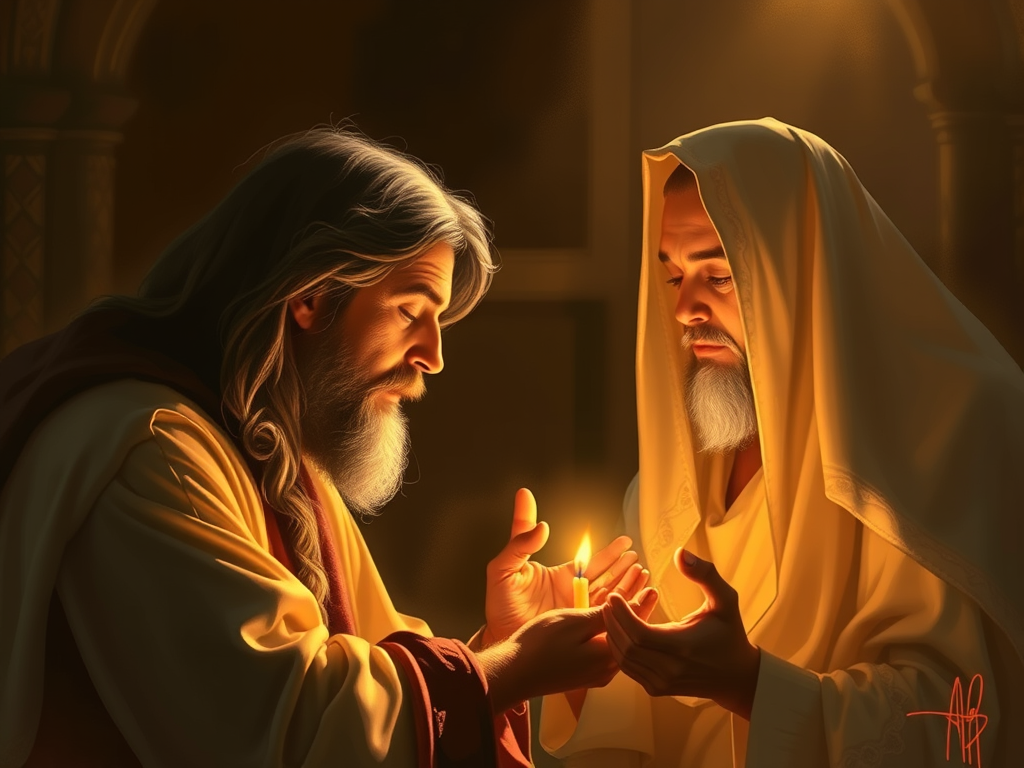
    This Sunday opens the Triodion, inviting us into the journey toward Pascha. We meet two men in the temple—one proud, one broken. The Pharisee boasts of his righteousness; the Publican can only whisper, “God, be merciful to me, a sinner.”

    Christ teaches us that true holiness begins with humility, not self‑confidence. May this season soften our hearts and draw us into deeper repentance and mercy.

    Mothers of the Three Hierarchs

    Today we also honor the holy mothers of St. Basil the Great, St. Gregory the Theologian, and St. John Chrysostom—women whose faith shaped the greatest teachers of the Church.

    • Emmelia, mother of Basil
    • Nonna, mother of Gregory
    • Anthousa, mother of Chrysostom

    Their quiet strength, prayerful devotion, and wisdom remind us that the formation of saints often begins in the home, nurtured by the love and faithfulness of godly mothers.

    St. Tryphon the Martyr

    A young man of deep purity and courage, St. Tryphon bore witness to Christ during persecution. Known for healing, gentleness, and steadfast faith, he faced suffering with unshakable hope. His life calls us to trust God in every trial and to serve others with compassion.

    St. Brigid of Ireland

    One of the great lights of Celtic Christianity, St. Brigid embodied generosity, hospitality, and fearless love. She cared for the poor, welcomed the stranger, and built communities of prayer and service. Her life reminds us that holiness is found in open hands, open hearts, and open doors.

    A Prayer for This Day

    May the humility of the Publican shape our hearts. May the faith of the holy mothers inspire our families. May the courage of St. Tryphon strengthen us in trials. May the generosity of St. Brigid teach us to love without measure.

    May their witness guide us as we walk toward the light of Christ. 💕✌️🙏

  • Saints Cyrus and John: Unmercenary Healers

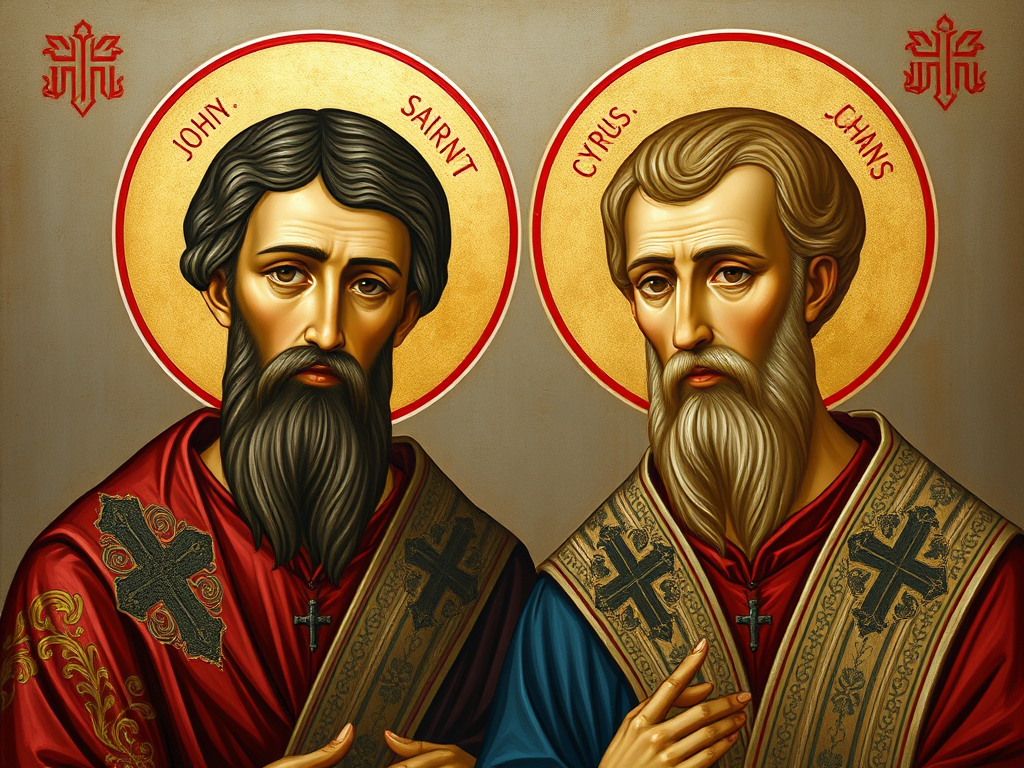
    Today the Church honors Saints Cyrus and John, the holy Unmercenaries—two friends in Christ whose lives shine with compassion, courage, and sacrificial love.

    Healers Without Price

    Cyrus, a physician from Alexandria, used his medical skill not for profit but for mercy. He treated the sick freely, offering not only healing for the body but hope for the soul. His gentle wisdom and deep faith drew many to Christ.

    John, a former soldier, joined Cyrus in this ministry of compassion. Together they became known as “Unmercenaries”—servants who gave everything and charged nothing, reflecting the generosity of Christ Himself.

    Witnesses of Courage

    Their path eventually led them to stand with a Christian mother and her three daughters who were facing persecution. Refusing to abandon them, Cyrus and John embraced suffering with steadfast faith. Their martyrdom became a testimony that love is stronger than fear and that the Gospel is worth every sacrifice.

    A Legacy of Mercy

    Across the centuries, believers have turned to Saints Cyrus and John for healing, comfort, and intercession. Their lives remind us that true ministry flows from compassion, humility, and a heart willing to serve without seeking reward.

    A Prayer for Today

    May the example of Saints Cyrus and John inspire us to offer kindness freely, to serve without seeking recognition, and to carry the healing love of Christ into every place of need. May their intercession strengthen all who care for the sick, the poor, and the suffering. 🙏

    Saints Cyrus and John the Unmercenaries, pray for us.💕✌️🙏

  • The Spiritual Impact of St. Ignatius’ Relic Return

    Today we honor the sacred memory of the Translation of the Relics of St. Ignatius of Antioch, the God‑bearer—one of the earliest and most radiant witnesses of the Christian faith.

    After his martyrdom in Rome around the year 107, the faithful of Antioch longed to receive back the body of their beloved bishop, the one who had shepherded them with courage, tenderness, and unshakable devotion to Christ. In time, his holy relics were returned to his home city, where they became a source of consolation, unity, and spiritual strength for generations of believers.

    This feast reminds us of several profound truths:

    A Shepherd Who Loved His Flock

    Ignatius walked the path of Christ with extraordinary boldness. Even on the road to martyrdom, he wrote letters filled with joy, encouragement, and deep theology—letters that still nourish the Church today.

    A Witness Who Embraced the Cross

    He saw martyrdom not as defeat, but as a final act of union with Christ. His courage continues to inspire all who face trials for the sake of the Gospel.

    A Legacy That Lives On

    The return of his relics to Antioch symbolized the unbroken bond between a shepherd and his people, and the enduring victory of faith over fear, love over violence, and Christ over death.

    A Prayer for Today

    May the intercession of St. Ignatius strengthen all who serve the Church with humility and courage. May his example inspire us to love Christ with our whole being. May his memory remind us that the seeds of faith planted in suffering often bear the richest fruit. 💕✌️🙏

  • This Weeks Biblical Lesson, Loved by God Before Creation: A Biblical Insight

    The statement “You can feel secure in the Father’s love knowing you were loved, named, and claimed BEFORE the foundation of the world” is not just a comforting thought — it is a profound biblical truth woven throughout Scripture. It tells us something essential about God’s heart: His love for us did not begin when we were born, when we believed, or when we “got it right.” His love began before time itself.

    1. Loved Before the World Began

    Scripture teaches that God’s love for His children is older than creation.

    • “He chose us in Him before the foundation of the world…” (Ephesians 1:4)
    • “I have loved you with an everlasting love.” (Jeremiah 31:3)

    Before there was light, land, or life — there was love. Before God said, “Let there be light,” He had already said in His heart, “Let there be you.”

    This means your existence is not an accident. You are the result of divine intention.

    2. Named by the Father

    To be “named” in Scripture is to be known, seen, and understood.

    • “I have called you by your name; you are Mine.” (Isaiah 43:1)

    God does not love you as a category or a number. He loves you personally — with full knowledge of your story, your struggles, your gifts, and your future.

    He knows your name because He gave you your identity before the world began.

    3. Claimed as His Own

    To be “claimed” means God has taken responsibility for you, covered you, and called you His own.

    • “You are a chosen generation… His own special people.” (1 Peter 2:9)
    • “No one can snatch them out of My Father’s hand.” (John 10:29)

    You belong to God not because you earned it, but because He chose you in love. Your salvation is not fragile. Your identity is not unstable. You are held by a love that existed before time and will outlast eternity.

    4. Security in the Father’s Love

    When you understand that God loved you before the world began, several things become clear:

    • Your worth is not based on performance
    • Your identity is not shaped by failure
    • Your future is not threatened by fear
    • Your relationship with God is not temporary
    • Your life is rooted in eternal love

    You can rest, breathe, and walk in confidence because you are loved with a love older than creation itself.

    Reflection Prayer

    Father, thank You for loving me before the foundation of the world. Thank You for naming me, claiming me, and calling me Your own. Help me to walk in the security of Your everlasting love. Let this truth quiet my fears, strengthen my faith, and anchor my identity in You. Amen 💕✌️🙏

  • Lessons from St. Ephraim the Syrian: A Legacy of Love

    Harp of the Holy Spirit • Teacher of Repentance • Defender of the Faith

    Today we honor St. Ephraim the Syrian, one of the most beloved saints of the early Church — a man whose tears, hymns, and teachings continue to shape Christian devotion across the world.

    Born in the 4th century in Nisibis, Ephraim lived during a time of conflict, exile, and theological turmoil. Yet from this turbulence emerged a voice of astonishing clarity and beauty. His writings — especially his hymns — earned him the title “Harp of the Holy Spirit.” Through poetry, song, and prayer, he defended the truth of the Gospel and comforted the faithful with a tenderness that still speaks to the heart.

    What St. Ephraim Teaches Us

    • Humility is strength. Ephraim embraced simplicity, choosing the life of a deacon and servant rather than seeking honor.
    • Repentance is healing. His prayers remind us that repentance is not shame, but a return to God’s embrace.
    • Beauty belongs to God. Ephraim used poetry and music to proclaim the mystery of Christ with reverence and joy.
    • Compassion is the mark of holiness. During a devastating famine in Edessa, he organized relief efforts, feeding the hungry and caring for the sick until his final days.

    A Life Poured Out in Love

    Ephraim’s hymns are filled with awe before the mystery of God — the Incarnation, the Cross, the Resurrection. He invites us to see Christ not only with the mind, but with the heart. His life was a living sermon: gentle, disciplined, prayerful, and overflowing with mercy.

    A Prayer Inspired by St. Ephraim

    O Lord, through the prayers of Your servant Ephraim, kindle in us a spirit of humility, purity, and compassion. Teach us to repent with hope, to serve with joy, and to love with sincerity. May our hearts become instruments of Your peace, and our lives a hymn of praise to Your holy name. Amen.

    May the memory of St. Ephraim the Syrian be a blessing, and may his words continue to guide us into deeper love for Christ and His Church. 💕✌️🙏

  • Honoring St. John Chrysostom: A Journey of Faith and Reconciliation

    Today we honor the Translation of the Relics of St. John Chrysostom, a moment in the Church’s life that speaks powerfully about repentance, reconciliation, and the triumph of truth spoken in love.

    After his unjust exile and death, the Church—broken by division and political pressure—finally recognized the holiness of the golden‑mouthed preacher. His relics were brought back to Constantinople with deep reverence, and the people welcomed him home with tears, hymns, and gratitude. The one they once rejected became the one whose words continue to shape the heart of Christian faith.

    This feast reminds us that:

    • Truth may be resisted for a season, but it is never defeated.
    • Holiness outlives injustice.
    • Reconciliation is always possible, even after great wrongs.
    • The voice that proclaims Christ cannot be silenced by earthly powers.

    St. John Chrysostom’s life and return call us to courage in preaching, humility in repentance, and confidence that God vindicates His servants in His perfect time.

    Prayer

    O Lord, who glorified Your servant John Chrysostom and restored honor to his name, grant us the courage to speak truth with love, the humility to repent when we have erred, and the grace to seek reconciliation where there has been division. May his words continue to illumine our hearts and guide Your Church in every generation. Amen 💕✌️🙏

  • Lessons from Xenophon and Paula of Rome

    Today, let us honor two very different yet beautifully united witnesses to the life of Christ: Xenophon and his Companions, and Paula of Rome. Their stories span continents and centuries, yet both reveal what it means to surrender everything to God and discover a life shaped by grace.

    Xenophon and His Companions

    Xenophon, along with his wife Mary and their sons Arcadius and John, lived in the 5th century and embodied a faith that grew stronger through trial. When their sons were lost at sea, Xenophon and Mary turned not to despair but to prayer. Their trust in God led them to Jerusalem, where they discovered their sons alive — not only physically, but spiritually transformed as monks.

    Their family became a living icon of:

    • trust in God during uncertainty
    • the healing power of prayer
    • a household united in holiness

    Xenophon and his companions remind us that God can take even our deepest fears and turn them into pathways of grace.

    Paula of Rome

    Paula, a noblewoman of the 4th century, left behind wealth, privilege, and comfort to follow Christ with radical devotion. After meeting St. Jerome, she embraced a life of asceticism, Scripture study, and service. She founded monasteries in Bethlehem, cared for the poor, and became a spiritual mother to countless believers.

    Her life shines with:

    • love for Scripture and learning
    • compassion for the poor and suffering
    • courage to leave behind everything for Christ

    Paula shows us that holiness is not limited by status or circumstance — it is born from a heart willing to follow Christ wherever He leads.

    A Shared Witness

    Though their paths were different, Xenophon’s family and Paula of Rome share a common truth: God transforms those who seek Him with humility and courage.

    Xenophon teaches us to trust God with our families. Paula teaches us to trust God with our future. Together, they call us to a faith that is steady, generous, and wholehearted.

    A Prayer for Today

    Lord Jesus Christ, through the prayers of Xenophon and his family, and of Paula of Rome, strengthen our trust in You. Teach us to surrender our fears, to love Your Word, and to serve others with compassion. Guide our families, our communities, and our hearts into deeper communion with You. Amen 💕✌️🙏

  • Finding Providence in Everyday Challenges

    WEEK 4 Devotional — Providence in Every Season

    Reading: Genesis 37–50

    Life doesn’t always unfold the way we expect. Joseph’s story reminds us that even in betrayal, injustice, and delay, God’s hand is quietly at work. What others meant for harm, God wove into a greater purpose. His providence isn’t always visible in the moment, but it is always present, always faithful, always moving.

    If you’re walking through a season that feels confusing or unfair, take heart—God is not absent. He is shaping something deeper, preparing something better, and guiding you toward a future filled with His goodness.

    Prayer: Dear Lord, help me trust Your unseen work in my life. Teach me to rest in Your timing and Your wisdom, even when I don’t understand the path before me. Amen 💕✌️🙏

    Practice: Take a moment today to list three ways God has been faithful to you in the past year. Let gratitude remind you that the same God who carried you then is carrying you now.

  • Sunday of Zacchaeus, St. Gregory the Theologian, and the New Martyrs of Russia

    Today, Chapel Connect stands at a beautiful intersection of repentance, theology, and sacrificial witness as we remember three powerful moments in the life of the Church: the Sunday of Zacchaeus, St. Gregory the Theologian, and the New Martyrs of Russia. Together, they form a single call — to seek Christ with honesty, to confess Him with clarity, and to follow Him with courage.

    The Sunday of Zacchaeus

    Zacchaeus marks the first stirring of the Lenten journey — the moment when the heart begins to wake up. His story is one of holy desire: a man too small to see Christ, yet willing to climb a tree just to catch a glimpse of Him.

    • a longing that refuses to stay hidden
    • a repentance that transforms the home and the heart
    • a Savior who calls us by name

    Zacchaeus reminds us that no one is beyond redemption, and that Christ always meets sincere desire with mercy.

    St. Gregory the Theologian

    One of the greatest voices in Christian history, Gregory of Nazianzus gave the Church a language worthy of the mystery of God. His words shaped the Creed, defended the Trinity, and continue to nourish the faithful.

    • a mind purified by prayer
    • a heart aflame with divine love
    • a voice that proclaimed truth with beauty and precision

    Gregory teaches us that theology is not an academic exercise — it is the fruit of communion with God.

    The New Martyrs of Russia

    In the 20th century, countless bishops, priests, monastics, and laypeople bore witness to Christ under brutal persecution. They faced imprisonment, exile, torture, and death — yet they remained faithful.

    • courage in the face of oppression
    • forgiveness offered to their persecutors
    • hope that outlives every earthly power

    Their sacrifice is a reminder that the Church is watered by the blood of the faithful, and that Christ’s light shines even in the darkest times.

    A Shared Message for Us Today

    Zacchaeus calls us to seek Christ. Gregory calls us to know Christ. The New Martyrs call us to stand with Christ.

    Together, they invite us into a life of repentance, clarity, and courage — a life shaped by the Gospel and sustained by grace.

    A Prayer for This Day

    Lord Jesus Christ, awaken in us the longing of Zacchaeus, the wisdom of Gregory, and the courage of the New Martyrs. Purify our hearts, strengthen our faith, and guide us to walk in Your light with humility and boldness. Through their prayers, keep us steadfast in love and truth. Amen 💕✌️🙏