Category: Inspiration

  • This Weeks Biblical Lesson: “Jesus Is the Answer to All of Our Ills”

    The statement “Jesus is the answer to all of our ills” is not a cliché — it is the heartbeat of the New Testament. Scripture consistently presents Jesus not merely as a helper, but as the Healer, the Restorer, the Redeemer, and the One in whom all things hold together.

    Let’s explore how the Bible reveals this truth.

    1. Jesus Heals Our Spiritual Ills

    The deepest human illness is separation from God. Jesus addresses this first.

    “For the Son of Man came to seek and to save the lost.” Luke 19:10

    Our spiritual sickness — guilt, shame, alienation, fear — finds its cure in Christ.

    • He forgives sin
    • He restores fellowship
    • He removes condemnation
    • He gives new birth

    Jesus is the answer because He heals the root, not just the symptoms.

    2. Jesus Heals Our Emotional Ills

    Human hearts carry wounds: grief, anxiety, trauma, rejection. Jesus meets us there.

    “He has sent Me to bind up the brokenhearted.” Isaiah 61:1

    Throughout the Gospels, Jesus:

    • comforts the grieving
    • welcomes the rejected
    • calms the fearful
    • restores the ashamed

    He does not shame our emotions — He heals them.

    3. Jesus Heals Our Physical Ills

    The Gospels are filled with physical healings, not as random miracles but as signs of the Kingdom.

    “He healed every disease and every affliction among the people.” Matthew 4:23

    This teaches us:

    • God cares about the body
    • sickness is not God’s desire
    • healing is a foretaste of resurrection life

    Even when physical healing is not immediate, Jesus remains the ultimate answer because He promises a future where sickness is no more.

    4. Jesus Heals Our Moral Ills

    Humanity is plagued by sin’s power — habits, addictions, destructive patterns. Jesus breaks these chains.

    “If the Son sets you free, you will be free indeed.” John 8:36

    He gives:

    • new desires
    • new strength
    • new identity
    • new power to walk in holiness

    Jesus is not just a forgiver — He is a liberator.

    5. Jesus Heals Our Social Ills

    Broken relationships, injustice, division, hatred — these are societal illnesses. Jesus confronts them with His reconciling love.

    “He is our peace… breaking down the dividing wall of hostility.” Ephesians 2:14

    Jesus heals:

    • families
    • communities
    • nations
    • enemies

    Where Jesus reigns, reconciliation becomes possible.

    6. Jesus Heals Our Existential Ills

    Every human wrestles with meaning, purpose, identity, and destiny. Jesus answers these longings.

    “I am the way, the truth, and the life.” John 14:6

    In Him we discover:

    • who we are
    • why we exist
    • where we are going
    • what our lives are for

    Jesus is the answer because He is the Truth about God and the Truth about us.

    7. Jesus Heals Our Ultimate Ill — Death

    The final enemy is death. Jesus does not avoid it — He defeats it.

    “I am the resurrection and the life.” John 11:25

    Because of Jesus:

    • death is not the end
    • the grave is not final
    • resurrection is our future
    • eternal life is our inheritance

    No other answer reaches this deep.

    Conclusion: Why Jesus Is the Answer to All Our Ills

    Jesus is the answer because:

    • He heals the spirit
    • He restores the heart
    • He strengthens the body
    • He frees the soul
    • He reconciles the community
    • He gives meaning to life
    • He conquers death

    Every human ill finds its remedy in the person, presence, and power of Jesus Christ.

    He is not one answer among many. He is the answer — the fullness of God’s love poured into human need.💕✌️🙏
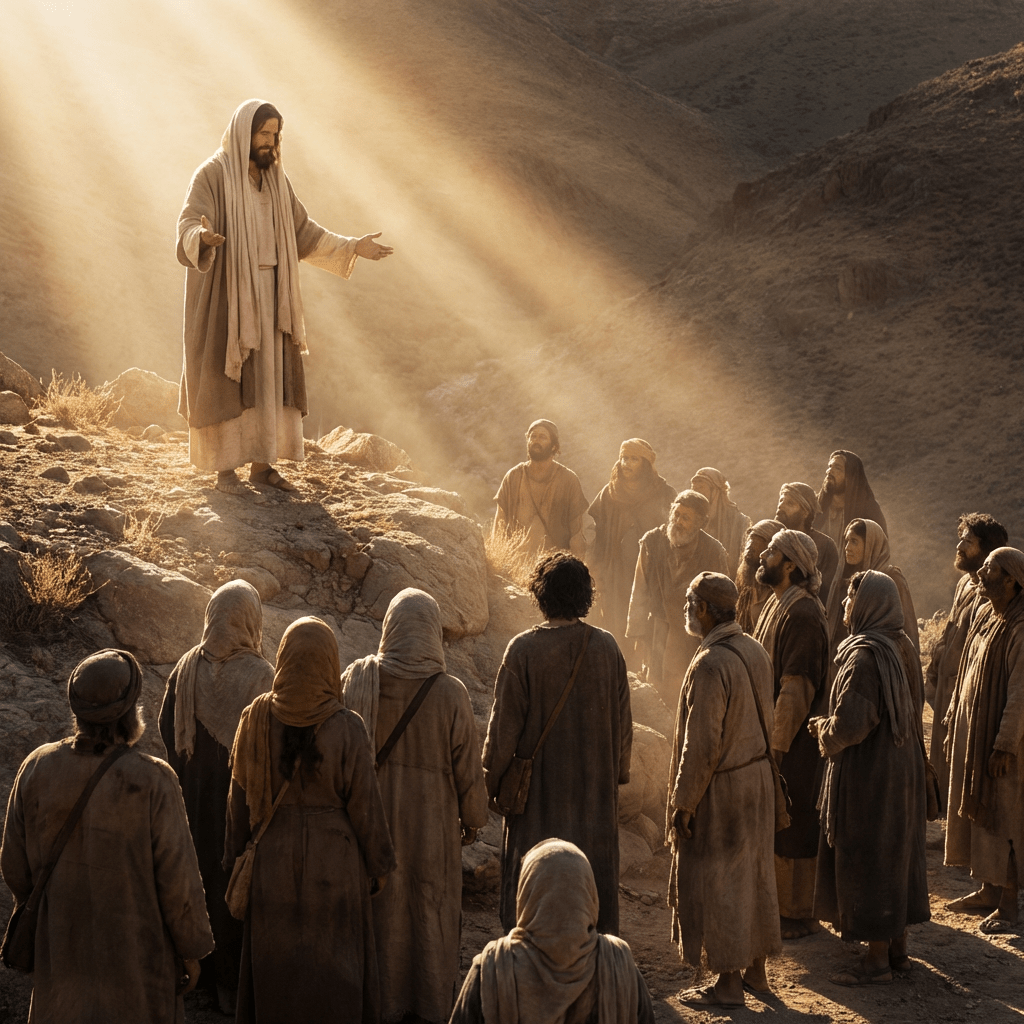
    Jesus preaching to a crowd in a rocky desert landscape under divine sunbeams.
    Jesus shares his teachings with a gathering of people under dramatic, golden sunbeams.
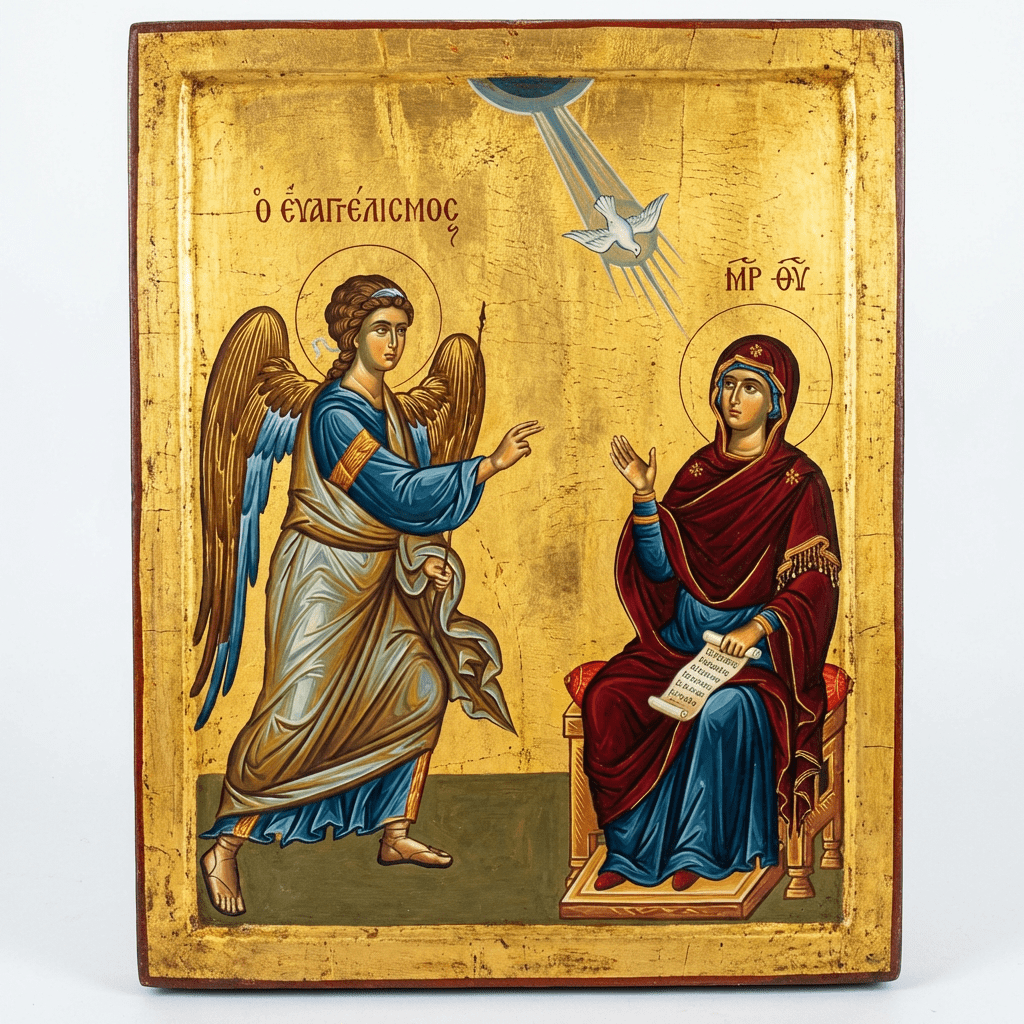
  • Understanding the Annunciation of the Theotokos

    Commemorating the Annunciation of the Theotokos

    Today we rejoice in one of the most radiant moments in salvation history—the Annunciation of the Theotokos, when the Archangel Gabriel came bearing heaven’s most astonishing message: “Rejoice, O Full of Grace, the Lord is with you.”

    In that quiet room in Nazareth, eternity touched time. The long‑awaited promise drew near. And the humble Virgin of Israel became the living temple of the Most High.

    Mary’s response still echoes through the ages: “Behold, I am the handmaid of the Lord; let it be to me according to your word.” In her “yes,” the Word became flesh. In her surrender, the world received its Savior. In her faith, the new creation began to dawn.

    Today we remember that:

    • God’s greatest works often begin in hidden places
    • Grace does not force—it invites
    • True strength is found in holy surrender
    • And the salvation of the world came through a young woman who trusted God more than she feared the unknown

    May the Theotokos teach us to listen for God’s voice, to welcome His will, and to carry Christ into the world with the same humility and courage she showed on this blessed day.

    Most Holy Theotokos, rejoice— for through you joy has come to all creation.💕✌️🙏

    Religious icon of the Annunciation showing Archangel Gabriel, Virgin Mary, and the Holy Spirit.
    A beautiful traditional Byzantine icon illustrating the Annunciation scene with Gabriel and Mary.
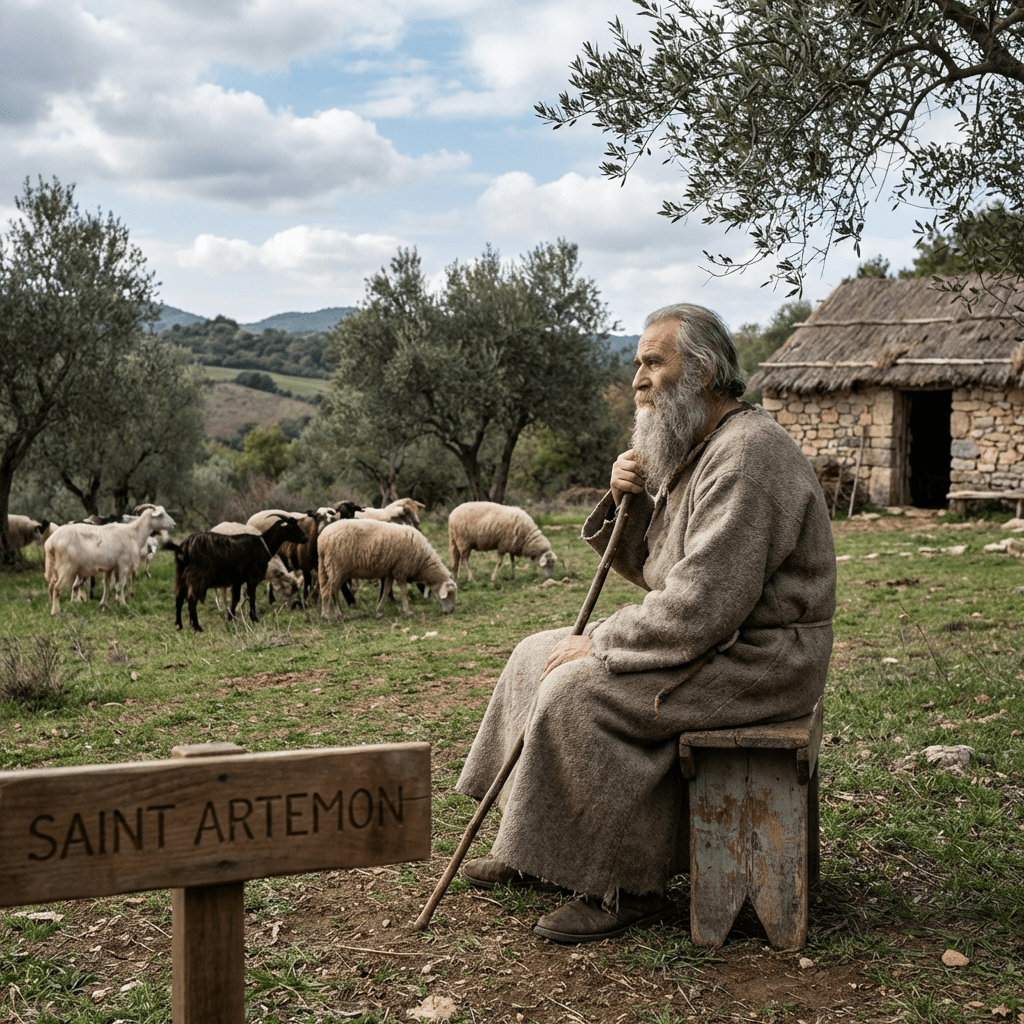
  • Honoring Saint Artemon: A Model of Quiet Faithfulness

    Commemorating Artemon, Presbyter

    Today we honor Saint Artemon, the faithful presbyter whose life reminds us that quiet steadfastness in Christ often speaks louder than any public acclaim. Serving in the early centuries of the Church, Artemon carried the Gospel with a shepherd’s heart — teaching, guiding, and strengthening believers in a time when following Jesus required courage, patience, and deep conviction.

    Artemon’s ministry was marked not by grand gestures, but by faithful presence. He tended the flock entrusted to him, upheld the truth of the faith, and lived with a devotion that shaped the community around him. In an age of uncertainty, he became a steady light — a reminder that the Church is built not only on apostles and martyrs, but also on the quiet labor of pastors who love their people well.

    His witness invites us to reflect:

    • To serve without seeking recognition
    • To remain faithful in seasons of pressure
    • To let the love of Christ shape our words, our work, and our relationships
    • To remember that every act of pastoral care participates in the life of the Kingdom

    Prayer

    O Lord, who strengthened Your servant Artemon to shepherd Your people with wisdom and grace, grant us the same steadfast spirit. Teach us to serve with humility, to speak truth with gentleness, and to love with the heart of Christ. May his example inspire all who labor in ministry today. Amen.

    May the memory of Artemon, Presbyter, be a blessing and a quiet encouragement to all who serve the Church with faithfulness and love. 💕✌️🙏

    Saint Artemon sitting with grazing sheep near a sign that reads SAINT ARTEMON.
    A serene depiction of Saint Artemon watching over his grazing flock near his humble stone dwelling.
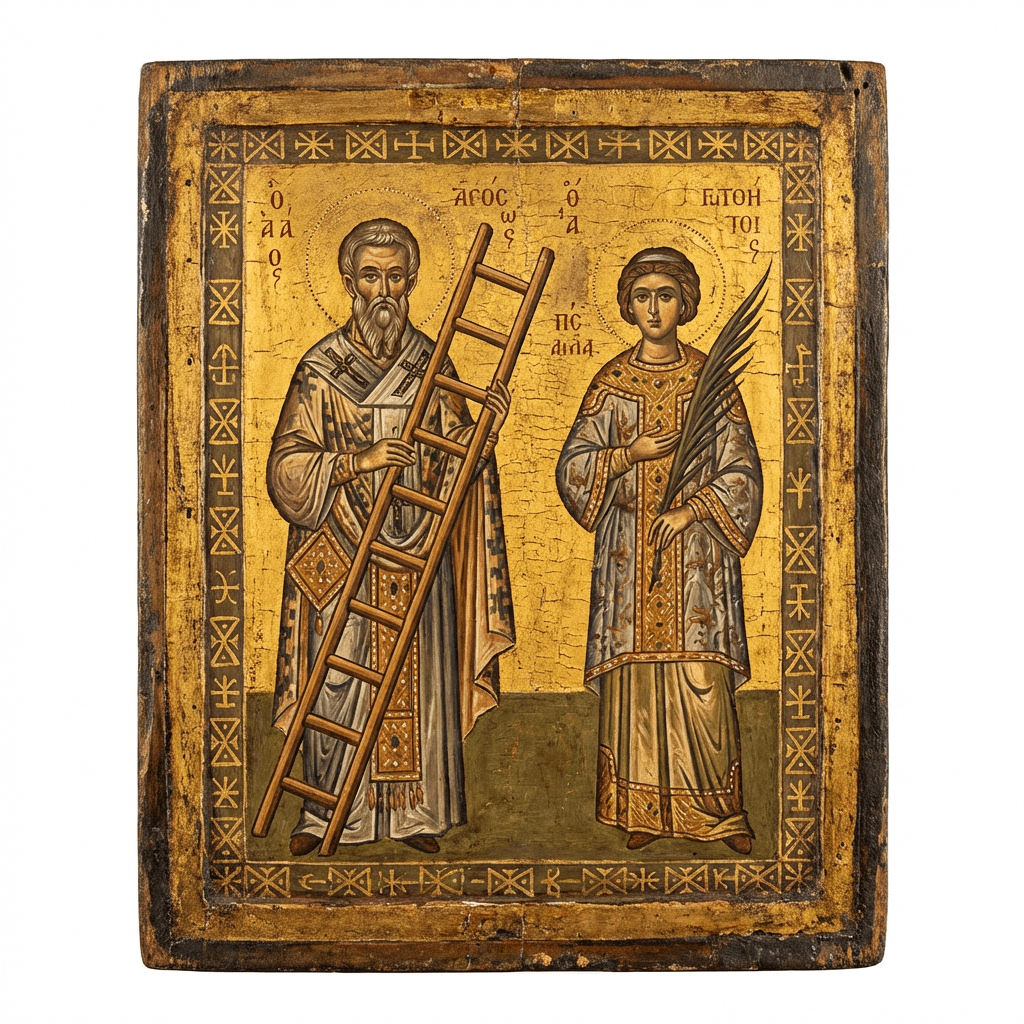
  • Honoring St. John Climacus and St. Basil: Pathways to God

    Commemoration of St. John Climacus (“John the Ladder”) and St. Basil of Ancyra

    Today we honor two radiant witnesses of the Church—St. John the Ladder, the desert father whose wisdom continues to guide souls toward God, and St. Basil of Ancyra, the steadfast confessor who held fast to Christ in the face of fierce persecution. Though separated by centuries and circumstances, both men reveal the same truth: that the path to God is shaped by courage, humility, and unwavering love.

    St. John the Ladder (Climacus)

    Known for his spiritual masterpiece The Ladder of Divine Ascent, John offers the Church a vision of the soul’s gradual rising into the likeness of Christ. His “ladder” is not a ladder of achievement, but of transformation—thirty rungs of repentance, purity, prayer, humility, and love. He teaches us that holiness is not a sudden leap but a lifelong ascent, carried by grace and sustained by perseverance.

    John’s life in the desert was marked by silence, watchfulness, and deep compassion. His words continue to awaken in us a longing for inner stillness and a renewed desire to seek God above all else.

    St. Basil of Ancyra

    Basil lived during the turbulent fourth century, a time when confessing the true faith often meant suffering. As a priest and later a bishop, he stood firmly against heresy and endured imprisonment, torture, and exile for the sake of Christ. His witness reminds us that faithfulness sometimes requires endurance, and that the truth of Christ is worth every sacrifice.

    Basil’s courage was not rooted in anger or pride, but in love—love for Christ, love for the Church, and love for the people entrusted to his care. His steadfastness continues to inspire all who face trials for the sake of righteousness.

    A Shared Legacy

    Though one lived in the quiet of the desert and the other in the turmoil of persecution, both saints reveal the same mystery: The path to God is both an ascent and a confession—an inner journey of transformation and an outward witness of faith.

    John shows us how to climb with humility. Basil shows us how to stand with courage. Together, they call us to a life rooted in Christ, shaped by grace, and strengthened by love.

    A Prayer

    O Lord, who strengthened Your servants John and Basil, grant us the courage to stand firm in truth and the humility to ascend the ladder of Your grace. May their witness inspire us to seek You with pure hearts and to walk faithfully in the way of Christ. Amen 💕✌️🙏

    Byzantine icon depicting two saints with Greek inscriptions on a gold leaf background.
    This beautifully preserved Greek icon depicts two saints in traditional Byzantine style against a striking gold background.
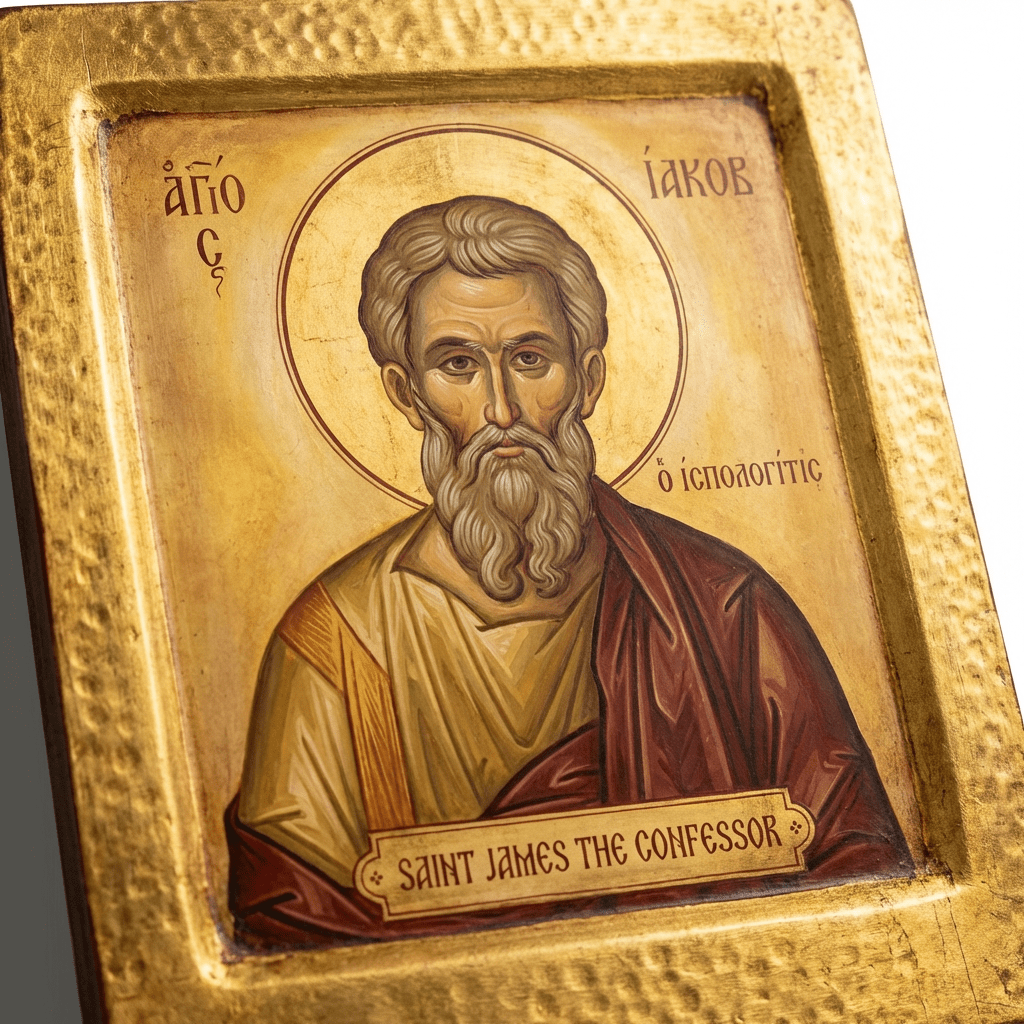
  • Honoring James the Confessor: A Model of Quiet Courage

    Commemorating James the Confessor

    Today we honor James the Confessor, a faithful shepherd who bore witness to Christ not through the shedding of blood, but through the quiet, unyielding courage of a life rooted in truth.

    James lived in a time when confessing the fullness of Christ’s divinity was costly. The pressures of political power, theological confusion, and cultural compromise pressed hard against the Church. Yet James stood firm—not with anger or force, but with the steady conviction that Jesus Christ is the true Light, the One who holds all things together.

    He suffered exile, humiliation, and hardship for the sake of the gospel. But he never surrendered his gentleness, never abandoned his compassion, and never allowed bitterness to take root. His confession was not merely doctrinal—it was deeply personal, shaped by love for Christ and love for the people entrusted to him.

    James reminds us that faithfulness is often quiet, that courage can look like endurance, and that the Church is strengthened not only by martyrs who die, but also by confessors who live the truth with unwavering grace.

    May his witness inspire us today:

    • to stand firm in Christ without harshness
    • to hold truth and love together
    • to remain faithful even when misunderstood
    • to trust that God sees every hidden act of endurance

    Holy James the Confessor, pray that we may walk in steadfast love and unshakable hope, bearing witness to Christ in our own generation. 💕✌️🙏

    Saint James the Confessor icon with ΆΓΙΟC ΙΑΚΩΒ ό ὁμολογητής and SAINT JAMES THE CONFESSOR.
    This beautiful Orthodox icon depicts Saint James the Confessor in a traditional Byzantine style with gold leaf detailing.
  • Discovering Your Spiritual Journey’s Most Alive Moments

    What part of your spiritual journey feels most alive right now?💕✌️🙏

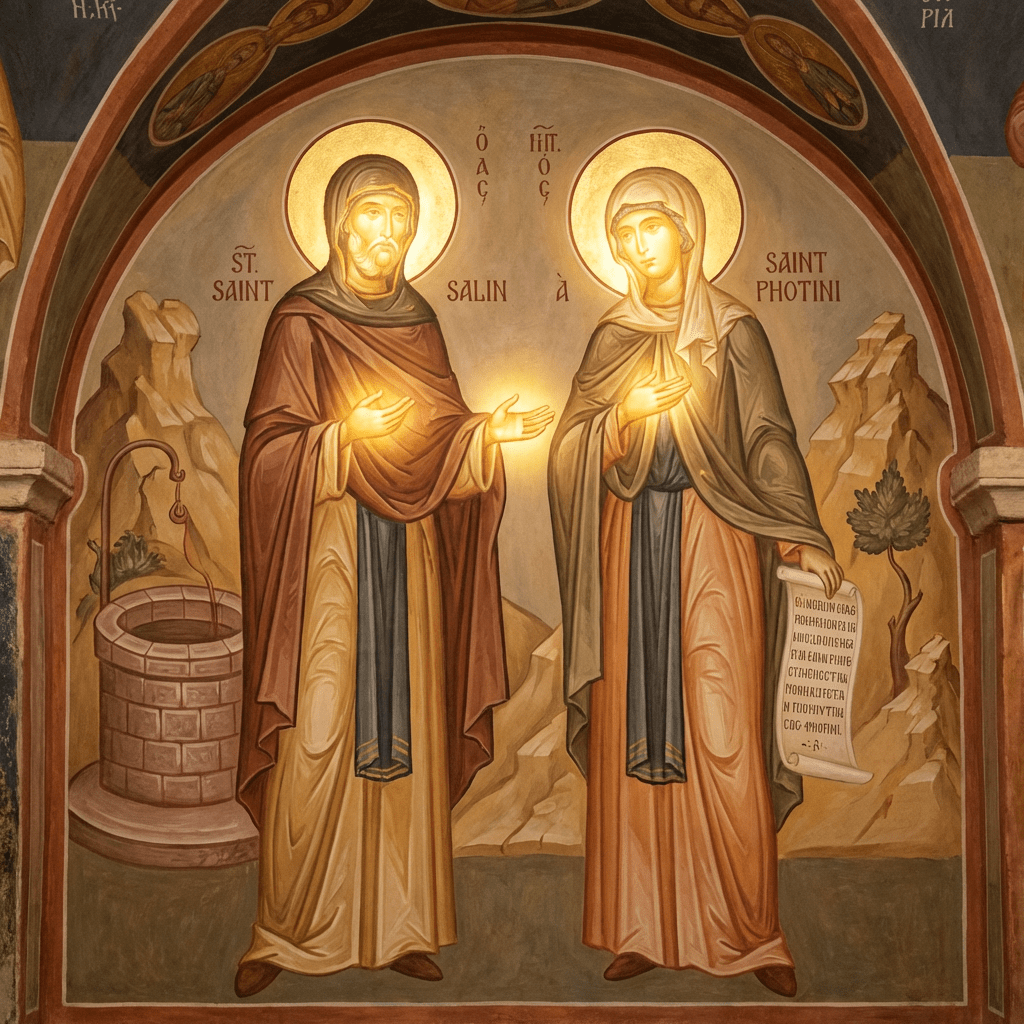
  • Witnessing Grace: Fathers Salin and Photini

    Commemorating Fathers Salin of St. Savas Monastery and Photini the Samaritan Woman

    Today we remember two radiant witnesses whose lives, though separated by centuries, shine with the same fire of God’s transforming grace.

    Fathers Salin of St. Savas Monastery In the quiet desert of St. Savas, Father Salin lived the hidden life of holiness—one shaped not by noise or acclaim, but by prayer, humility, and the long obedience of the monastic path. His life reminds us that the deepest work of God often happens in silence, where the heart is purified and the soul learns to rest in the mercy of Christ. May his memory call us back to stillness, to simplicity, and to the gentle courage of a life surrendered to God.

    Photini, the Samaritan Woman And today we also honor Photini, the woman at the well—the one who met Jesus in the heat of the day and found herself seen, known, and transformed. Her encounter with Christ turned shame into testimony, isolation into mission, and thirst into overflowing life. She became a preacher of the Living Water long before anyone thought she could. Her story reminds us that no one is beyond the reach of grace, and that Christ meets us not where we pretend to be, but where we truly are.

    Two lives, one message: God meets us in the desert. God meets us at the well. God meets us in silence and in struggle, in hidden faithfulness and in unexpected revelation. And wherever He meets us, He brings life.

    May the prayers of Father Salin strengthen all who seek God in quiet devotion. May the witness of Photini inspire all who long for renewal and courage. And may Christ, the Living Water, refresh our hearts today.💕✌️🙏

    Byzantine fresco of ST. SAINT SALIN and SAINT PHOTINI standing beside a stone well.
    A beautifully detailed Byzantine fresco depicts Saint Salin and Saint Photini in a serene, devotional setting.
  • Explore Your Faith Questions: Insights Await

    What’s a question about faith you’ve been carrying for a while?

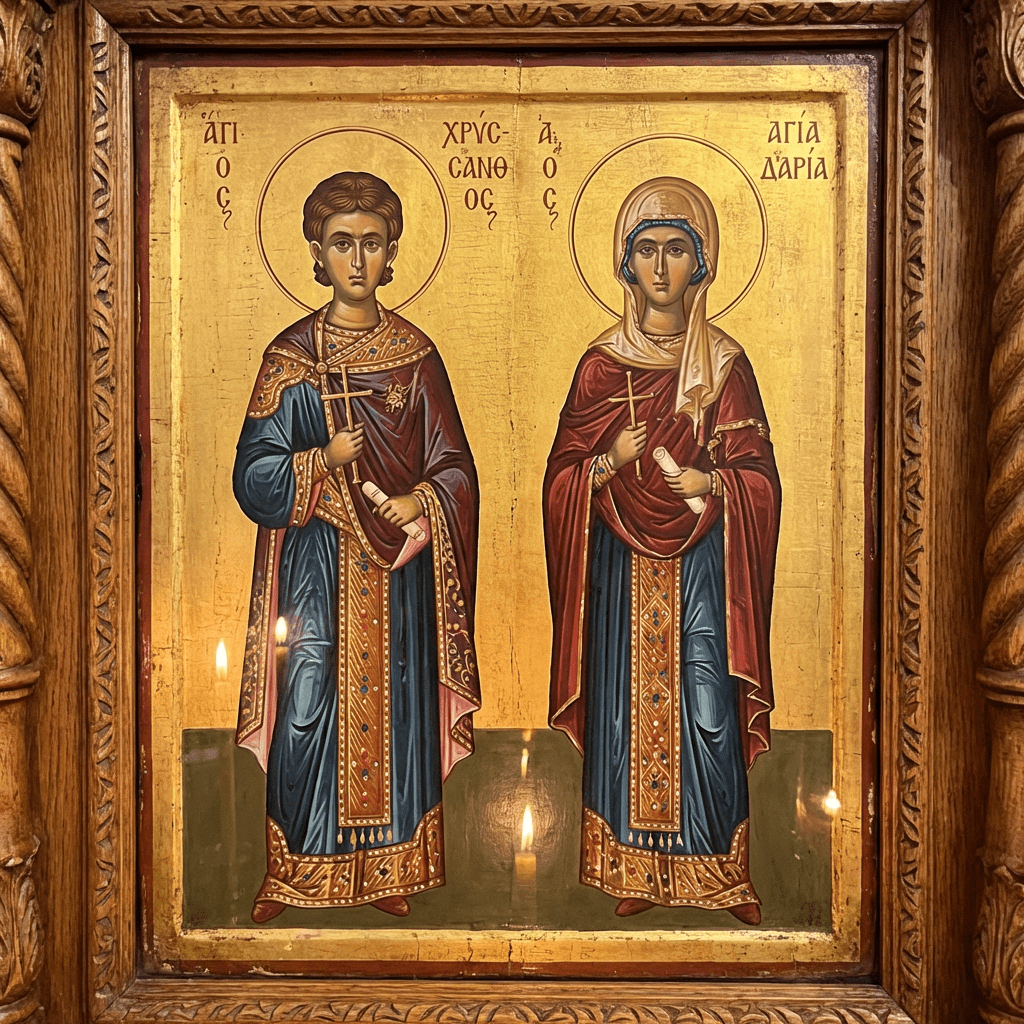
  • Commemorating the Holy Martyrs Chrysanthus & Daria

    Today we honor the steadfast witness of Chrysanthus and Daria, a husband and wife whose lives were transformed by Christ and whose martyrdom became a beacon of courage for the early Church.

    Chrysanthus, raised in a world of philosophy and pagan learning, found in the Gospel a truth deeper than anything he had studied. Daria, a devoted priestess of the old religions, encountered Christ through Chrysanthus’ testimony and embraced the faith with her whole heart. Together they formed a marriage rooted not only in love, but in a shared devotion to the Lord who had captured their lives.

    Their home became a sanctuary of prayer, a refuge for believers, and a place where the light of Christ pushed back the shadows of a hostile empire. For this, they were arrested, tortured, and ultimately buried alive—yet even in death, their witness could not be silenced. The ground that covered them became a seedbed of faith for generations to come.

    May their courage inspire us to hold fast to Christ in every season. May their unity remind us that love rooted in God becomes unbreakable. And may their witness strengthen all who face pressure, hostility, or fear because of their faith.

    Holy Martyrs Chrysanthus and Daria, pray for us, that we may remain faithful and steadfast in the love of Christ.💕✌️🙏

    Byzantine icon of ΆΓΙΟΣ ΧΡΥΣΑΝΘΟΣ (Saint Chrysanthos) and ΑΓΙΑ ΔΑΡΙΑ (Saint Daria) holding crosses.
    This ornate Byzantine icon depicts the early Christian martyrs Saints Chrysanthos and Daria standing against a gold background.
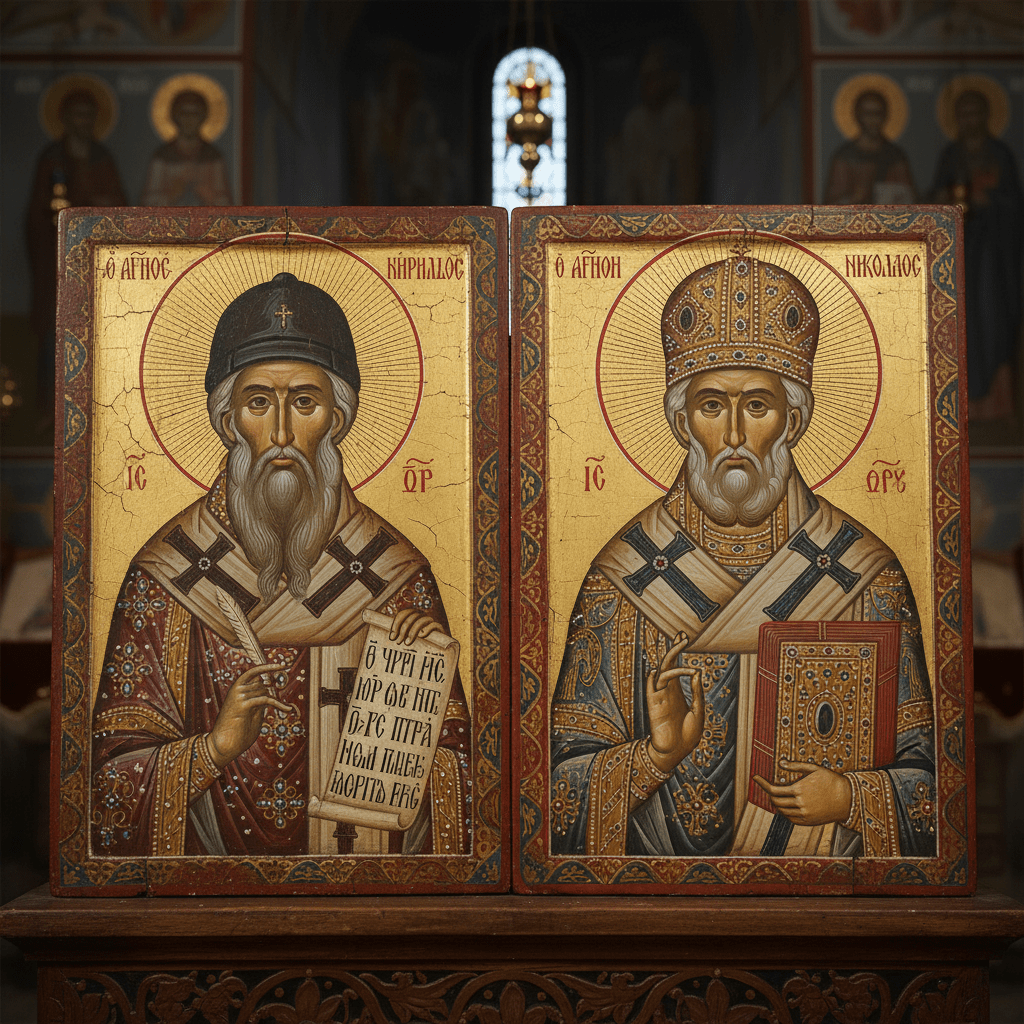
  • Honoring Cyril of Jerusalem and Nikolai Velimirovich

    Commemorating Cyril of Jerusalem & Nikolai Velimirovich

    Today we honor two luminous teachers of the Church—Cyril of Jerusalem and Nikolai Velimirovich—men separated by centuries, yet united in their love for Christ and their devotion to the formation of God’s people.

    Cyril of Jerusalem, the 4th‑century bishop and catechist, offered the Church some of its earliest and most beautiful teachings on baptism, the Eucharist, and the life of faith. His Catechetical Lectures continue to guide believers into the mystery of Christ with clarity, depth, and pastoral tenderness. Cyril reminds us that the Christian life is not merely learned—it is received, lived, and embodied.

    Nikolai Velimirovich, the “Serbian Chrysostom,” carried the flame of faith through the storms of the 20th century. A bishop, theologian, and poet, he endured imprisonment in Dachau and emerged with a heart still burning with forgiveness and love. His writings radiate a deep, experiential knowledge of God’s mercy—a mercy stronger than hatred, violence, or fear.

    Together, these saints call us to a faith that is both rooted and radiant—anchored in the ancient tradition, yet alive with compassion, courage, and hope.

    A Prayer in Their Memory Lord Jesus Christ, We thank You for the wisdom of Cyril and the courageous love of Nikolai. Grant us the clarity to teach Your truth with gentleness, the courage to endure trials with hope, and the grace to shine Your light in our generation. May their lives inspire us to walk more deeply in the mystery of Your love. Amen.

    May their memory be eternal, and may their witness strengthen all who seek to follow Christ with sincerity and joy.💕🙏✌️

    Two religious icons depicting Saint Cyril holding a scroll and Saint Nicholas holding a book.
    These two meticulously detailed Byzantine-style icons of Saint Cyril and Saint Nicholas represent key figures in Orthodox Christian history.