Category: Self-Care

  • Sacramental Being: What Are the Sacraments?

    What Is the Chapter I Read Mainly About?

    This chapter explains what it means to live sacramentally as a Christian. Building on the previous chapter’s idea that physical and spiritual reality are interconnected, the author argued that Christians participate in the life of Christ through the Church and, especially, through the sacraments.

    The sacraments are presented as physical actions through which believers participate in spiritual realities. The chapter discusses baptism, the Eucharist, marriage, priesthood, ordination, and sacred objects as examples of how the physical world can communicate and participate in divine life. The central message is that Christianity is not merely something to believe intellectually. It is a life with Christ in which the whole person, body and soul, participates.

    Most Important Ideas I came away with?

    1. The Sacraments Reconnect Us With the Life of Christ

    The chapter continues the earlier analogy of God as the Arche, the ultimate source of life and being. Humanity’s separation from God through the Fall resulted in death and corruption. Christ, however, reconnects humanity to its divine source.

    The sacraments are therefore not merely symbolic religious ceremonies. They are presented as ways in which human beings participate in the life of Christ.

    2. Baptism Is Entry Into a New Life

    Baptism represents a person’s entrance into the sacramental life of the Church. The chapter describes our old humanity as connected to Adam and therefore affected by mortality.

    Through baptism, the believer is connected to Christ as the new source of life. The chapter’s electricity analogy describes baptism as being “plugged in” to Christ.

    This also emphasizes that salvation concerns the whole human person. Christianity does not seek simply to save an invisible soul while disregarding the body. The person, body and soul together, is renewed in Christ.

    3. The Eucharist Is at the Heart of Sacramental Life

    If baptism connects us to Christ, the chapter describes the Eucharist, or Holy Communion, as the continuing nourishment of that relationship.

    The Incarnation is crucial to this understanding. God the Son became physically human in Jesus Christ. Therefore, the spiritual and physical come together in Christ Himself.

    The chapter presents Communion not merely as remembering Jesus but as actually participating in His life. In the author’s electrical analogy, baptism plugs us into Christ, while the Eucharist provides the “electricity” or divine life that flows from Him.

    4. Marriage Is a Sacramental Union Rather Than Merely a Contract

    The chapter contrasts a secular, contractual understanding of marriage with a sacramental understanding.

    A contract primarily joins two individuals through agreed obligations. Sacramental marriage, however, represents a deeper union in which two people share a common life.

    The chapter uses the image of a lock and key, two distinct parts forming one mechanism. Marriage therefore becomes a place of spiritual transformation in which spouses learn to suffer together, rejoice together, care for one another, and move beyond an exclusively individual understanding of life.

    5. Priesthood and Sacred Objects Reflect Sacramental Reality

    The chapter describes the priesthood as essential to the Church’s sacramental life. Through ordination, authority and responsibility are handed down through generations of the Church, much as something precious is transmitted through a family.

    The chapter also explains why sacramental Christianity treats certain physical objects with particular reverence. If physical and spiritual reality are interconnected, physical things may participate in spiritual realities.

    This helps explain why sacramental Christianity places importance upon physical actions, sacred places, sacred objects, water, bread, wine, oil, and other material elements within worship.

    What Question Do I Still Have?

    If the sacraments truly unite physical and spiritual reality and allow us to participate in the life of Christ, how should receiving the sacraments transform the way I live, treat other people, and experience ordinary life outside the church?

    For me, this question moves the discussion from understanding the sacraments intellectually toward actually living sacramentally.

    Personal Reflection

    This chapter I read helped me see why the physical dimension of Christianity is so important. Faith is not simply something that occurs within the mind or even within the soul. We are physical and spiritual beings, and therefore our relationship with Christ involves the whole person.

    I particularly appreciated the progression from baptism to Eucharist. Baptism represents entering into the life of Christ, while Communion represents continuing to receive and participate in that life. Through these sacraments, Christianity becomes more than believing certain truths about Jesus. It becomes participation in Him.

    The discussion of marriage also challenged me. If marriage is sacramental rather than merely contractual, then marriage cannot be understood principally by asking, “What am I receiving from this relationship?” Rather, it calls two people toward a shared life of sacrifice, growth, faithfulness, and love.

    Perhaps the deepest lesson for me is that sacramental Christianity brings together what modern thinking often separates: body and soul, visible and invisible, physical and spiritual, belief and participation.

    This challenges me to move beyond simply studying Christianity toward experiencing and living my faith. The sacraments remind me that following Christ is not merely about understanding Him. It is about participating in His life and allowing His life to transform mine.
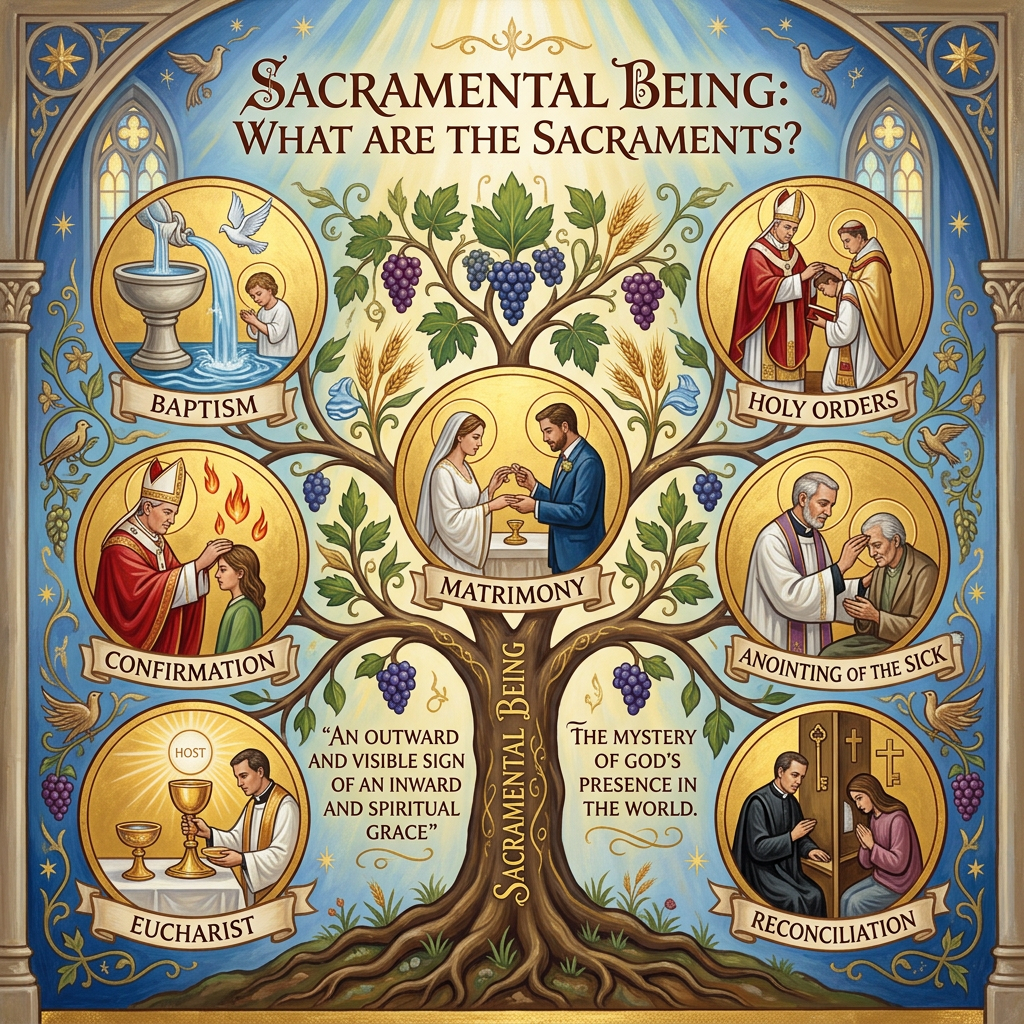
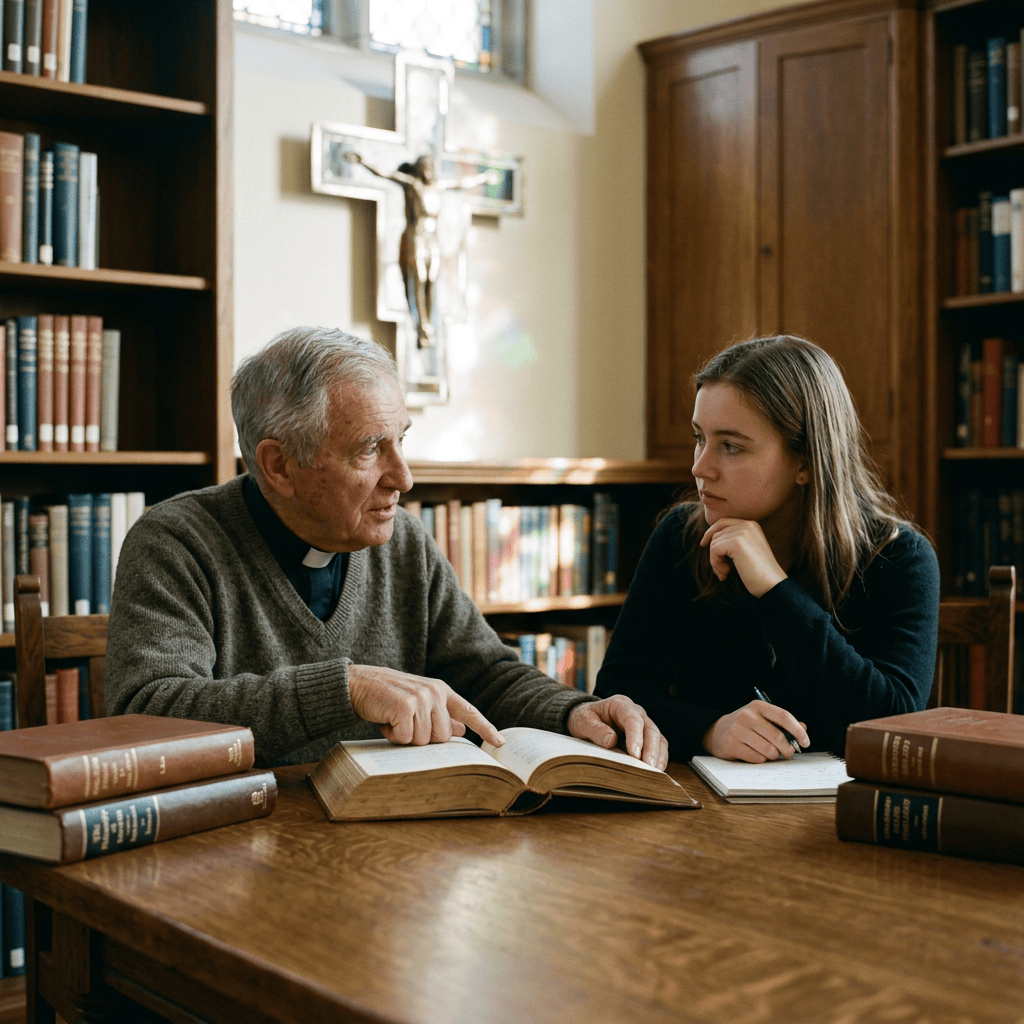
    Illustration titled “Sacramental Being: What Are the Sacraments?” showing seven Catholic sacraments
    A richly detailed tree illustrates the seven Catholic sacraments and their spiritual meaning.
  • Sacramental Thinking

    My current study, if you care to have a peek.

    Chapter 5 explores sacramental thinking, especially the difference between modern Western ways of understanding reality and the more integrated worldview found in ancient cultures and sacramental Christianity.

    Modern thinking often separates reality into two categories, the natural or physical world and the supernatural or spiritual world. The chapter challenges this separation. Sacramental thinking understands physical and spiritual reality as deeply interconnected. Physical things, actions, relationships, and experiences can therefore possess deeper spiritual meaning.

    The chapter also introduces participatory knowledge. Some truths cannot be fully understood simply by observing or intellectually analyzing them. They must be known through participation and relationship. Christian truth, therefore, is not merely something we think about. It is something we enter into, experience, and ultimately live.

    What Are the 3–5 Most Important Ideas?

    1. The Physical and Spiritual Are Not Completely Separate

    Modern Western culture tends to distinguish the natural world from the supernatural world. The chapter explains that ancient people generally did not think this way.

    Sacramental thinking sees physical and spiritual realities as interconnected. A visible action or physical object can participate in and communicate a deeper spiritual reality.

    This helps explain why physical things and actions are so important within sacramental Christianity.

    2. Creation Possesses Meaning Beyond Its Physical Properties

    A sacramental worldview sees the universe as filled with meaning. The physical world is not simply a collection of objects and processes without significance.

    Nature, human relationships, history, beauty, worship, and our individual lives participate in a much larger reality. We are therefore part of a greater story rather than isolated individuals creating meaning entirely for ourselves.

    This gives ordinary life a sense of cosmic and spiritual significance.

    3. Not All Truth Is Known Objectively or Subjectively

    The chapter challenges the common distinction between objective knowledge, which deals with measurable facts, and subjective knowledge, which deals with personal feelings or experiences.

    It offers a third category: participatory knowledge.

    For example, I may study everything available about another person, but I do not truly know that individual in the fullest sense until I enter into a relationship with that person. Participation gives us knowledge that observation alone cannot provide.

    4. Knowing God Requires Participation and Relationship

    This concept becomes especially important for Christianity. If truth is ultimately personal and revealed in God, knowing truth involves more than studying theological ideas.

    Christian faith becomes a relationship with Christ.

    Because God became human in Christ, humanity can encounter divine truth personally. Christianity is therefore not simply accepting certain propositions about God. It involves participating in God’s life and developing communion with Him.

    5. Moral and Spiritual Growth Affect Our Ability to Recognize Truth

    One of the most challenging ideas in the chapter is that our character can influence our ability to perceive reality.

    Pride, selfishness, resentment, and other vices may prevent us from seeing situations and people clearly. By contrast, virtues such as humility and compassion can help us recognize truths that we might otherwise overlook.

    Therefore, spiritual understanding requires more than increased intellectual knowledge. It also requires personal and moral transformation.

    What Question Do I Still Have?

    If knowing God requires participation rather than intellectual understanding alone, what practices within sacramental Christianity help us participate more deeply in Christ and recognize spiritual reality within everyday life?

    This question seems especially important because the chapter explains the theory of sacramental thinking while pointing toward the practical Christian life that will be discussed next.

    Personal Reflection

    I found this chapter particularly thought-provoking because it challenges me to reconsider the tendency to separate my “spiritual life” from ordinary life.

    If sacramental thinking is correct, then God is not relevant only during prayer, worship, or theological study. Creation, relationships, beauty, suffering, service, and even ordinary experiences can become places where deeper spiritual realities are encountered.

    The discussion of participatory knowledge was especially meaningful to me. There is a significant difference between knowing aboutsomeone and actually knowing that person. The same can be true of faith. I can study Scripture, theology, doctrine, and the history of Christianity, yet Christianity ultimately calls me beyond knowing information about Christ toward knowing Christ Himself.

    The chapter also challenges me personally because it suggests that spiritual growth and moral growth cannot be separated. Humility, compassion, love, and other virtues may actually help us see reality more clearly.

    For me, the central lesson is this: Christian faith is not merely something to understand intellectually; it is a reality to enter, participate in, and live. Sacramental thinking invites us to see the entire world differently, recognizing that the visible and invisible, physical and spiritual, ordinary and sacred may be more deeply connected than we normally realize. 💕✌️🙏

    A priest discussing an open book with a student in a library
    A priest guides a student through an open book in a warmly lit library.
  • This Week’s Biblical Lesson: The Longing for Union: A Biblical Reflection on Spiritual Wholeness

    Scripture Reading: John 17:20-23; Galatians 2:20; Romans 12:1-2

    Throughout history, people have sought to understand who they are, why they exist, and how they may experience a deeper sense of spiritual fulfillment. Within yogic philosophy, yoga is often described as “union,” the joining of the individual self with ultimate reality. This concept invites practitioners to become more aware of their thoughts, habits, dietary choices, and spiritual development as they pursue greater harmony and understanding.

    While Scripture presents a different theological framework, it also speaks to humanity’s deep longing for connection and wholeness. The Bible teaches that our ultimate fulfillment is found not in discovering our union with an impersonal reality, but in a living relationship with the personal God who created us and revealed Himself through Jesus Christ.

    In John 17, Jesus prayed for His followers, saying, “that they all may be one, as You, Father, are in Me, and I in You.” This divine invitation is not merely intellectual or religious. It is relational. Through faith, believers are united with Christ and brought into fellowship with God by grace.

    Just as yogic discipline encourages self-examination, Scripture calls believers to examine their hearts. The Apostle Paul writes in Romans 12:2, “Be transformed by the renewing of your mind.” Spiritual growth involves becoming aware of our thoughts, attitudes, and behaviors so that they may be aligned with God’s truth. We are invited to reflect honestly upon the beliefs we entertain, the habits we cultivate, and the influences that shape our lives.

    Our daily choices also matter. The foods we consume, the activities we pursue, and the rhythms we establish can affect our physical, emotional, and spiritual well-being. While Christianity does not typically define spirituality through dietary practices, it does teach stewardship of the body as a gift from God. Caring for ourselves wisely can support a life of service, worship, and devotion.

    The pursuit of spiritual progress is another area where meaningful reflection may occur. In yogic traditions, progress is often associated with increased awareness and harmony. In the Christian life, growth is recognized through the fruit of the Spirit: love, joy, peace, patience, kindness, goodness, faithfulness, gentleness, and self-control. These qualities are not achieved through self-effort alone but are produced through the gracious work of the Holy Spirit within us.

    Perhaps the deepest lesson is that true transformation begins with grace. We do not strive to earn God’s acceptance. Rather, because we are already loved and accepted in Christ, we are free to grow, learn, and mature spiritually. Our practices of prayer, meditation upon Scripture, self-examination, and healthy living become responses to God’s love rather than attempts to obtain it.

    Reflection Questions

    1. What thoughts or habits most influence your spiritual life today?
    2. In what ways are you experiencing the renewing work of God’s grace?
    3. How do your daily choices reflect your desire to honor God?
    4. What evidence of spiritual growth can you identify in your life?
    5. How might a deeper awareness of God’s presence reshape your relationship with yourself and others?

    Closing Prayer

    Dear Gracious Father, thank You for creating us with a desire to know You and walk in Your ways. Help us to examine our hearts with honesty and humility. Renew our minds, guide our daily choices, and shape our character through Your Spirit. May we grow in the grace and knowledge of Jesus Christ, discovering ever more deeply the joy of life in communion with You. Amen.

    I value your feedback. If you have questions, comments, or suggestions, please share them. I’m a one-man ministry here, and I’ll respond to everyone. May God bless you and your loved ones. 💕✌️🙏

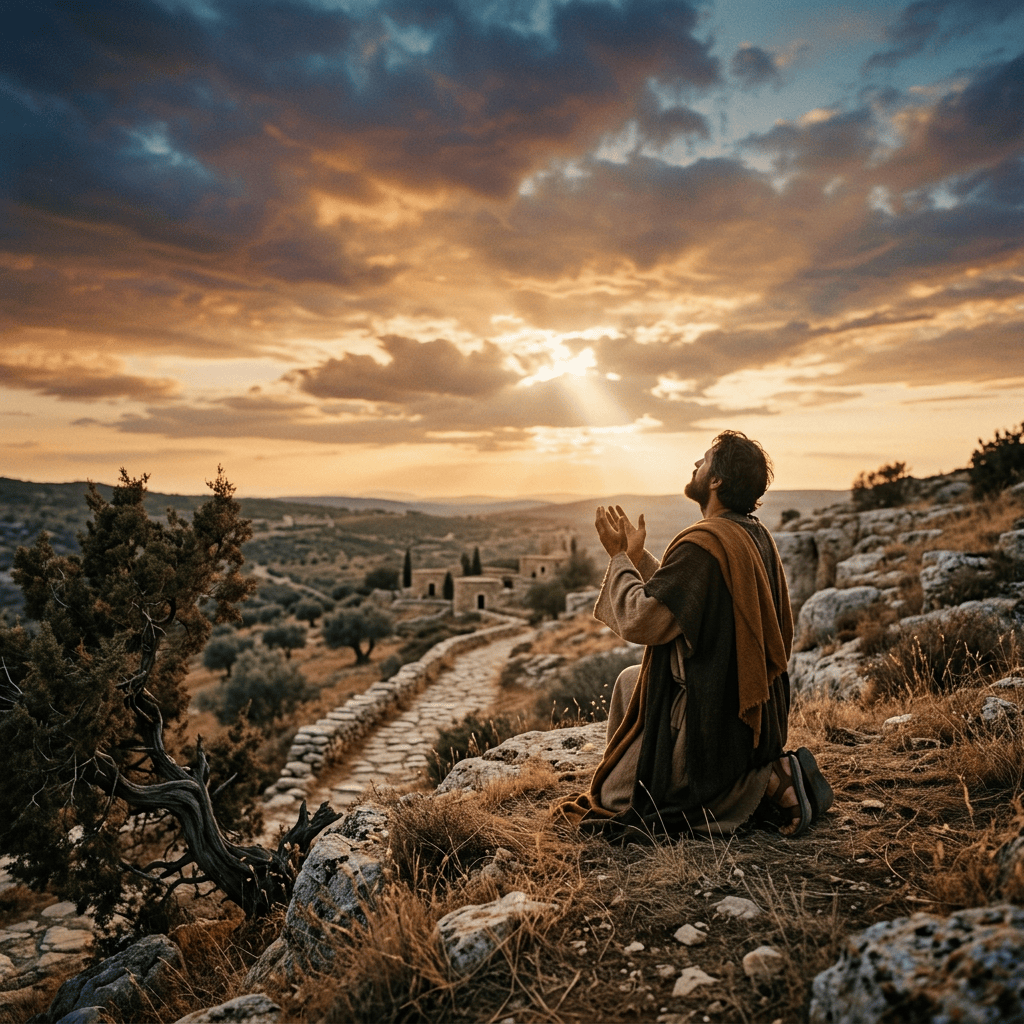
    Robed person kneeling in prayer above a stone path at sunset
    A robed traveler kneels in prayer as golden sunlight breaks through dramatic clouds over the valley.
  • This Week’s Biblical Lesson

    “Whatever makes your soul happy, do it.” — A Grace‑Centered Reflection

    Takeaway: The joy that rises from your soul is not random or selfish—it is often the quiet voice of the Holy Spirit leading you toward life, peace, and wholeness.

    A Grace‑Centered Teaching

    The phrase “Whatever makes your soul happy, do it” is not a call to reckless living. It is an invitation to listen to the deepest part of yourself—the place where the Spirit dwells, where Christ abides, and where the Father delights in you.

    Scripture teaches that true joy is a fruit of the Spirit. Not the surface happiness that fades, but the deep, steady joy that comes from alignment with God’s heart.

    • “The joy of the Lord is your strength.” (Nehemiah 8:10)
    • “In Your presence is fullness of joy.” (Psalm 16:11)
    • “My peace I give you… not as the world gives.” (John 14:27)

    When your soul is happy in God, you are living from your truest identity.

    What Makes the Soul Happy?

    Each item begins with a Guided Link so you can explore further if you choose.

    • Rest in God — Joy rises when you stop striving and let grace hold you.
    • Acts of kindness — Serving others aligns you with the heart of Christ.
    • Creative expression — Writing, singing, painting, or building awakens the image of God within you.
    • Quiet reflection — Stillness lets your soul breathe.
    • Healthy boundaries — Saying “no” to what drains you is saying “yes” to what God desires for you.
    • Community and connection — Joy grows when you walk with others in grace.

    Your soul is happiest when it is free, loved, and rooted in the Triune God.

    A Short Devotional Thought

    When you choose what makes your soul happy, you are choosing what brings you closer to God’s presence. Joy is not a luxury—it is a spiritual compass. Follow it, and you will find yourself walking in the path God has already prepared for you.

    A Prayer for This Week

    Dear Holy One, Teach us to listen to the quiet joy within our souls. Let Your Spirit guide us toward what brings life, peace, and wholeness. Free us from fear, obligation, and striving. Let our choices reflect Your goodness and our identity in You. May joy be our strength, peace be our companion, and grace be our way of living. Amen 💕✌️🙏

    Artist painting outdoors; text reads “Whatever makes your soul soul happy, do it.”
    An artist paints a joyful mountain landscape surrounded by wildflowers and breathtaking alpine scenery.
  • This Weeks Children’s Bible Lesson: The Gospel Is Simple—Friends, Grace, and God With Us

    Big Idea:

    The gospel is not hard to understand. It is about being friends, showing grace, and knowing God is always with us.

    1. The Gospel Begins With Friendship

    Jesus loved spending time with people. He didn’t need big buildings or fancy places. He showed God’s love by being with others.

    • Jesus ate meals with people.
    • He walked with His friends.
    • He talked with people who felt lonely.
    • He welcomed anyone who needed love.

    Jesus shows us that the gospel grows when we spend time together, help each other, and share God’s love.

    “Where two or three are gathered in my name, I am there with them.” — Matthew 18:20

    Children’s point: The gospel is simple—be kind, be together, and share God’s love.

    2. The Gospel Is Grace—A Gift From God

    Grace means God loves us even when we make mistakes. We don’t earn grace. We don’t work for it. God gives it because God loves us.

    Grace:

    • Forgives us
    • Helps us try again
    • Welcomes everyone
    • Gives us strength when we feel tired or sad

    “By grace you have been saved… it is the gift of God.” — Ephesians 2:8

    Children’s point: Grace is God’s gift. We receive it, and we share it with others.

    3. The Gospel Is God’s Presence—God Is With Us

    Jesus came to show us that God is not far away. God is close, loving, and always with us.

    When we feel:

    • Sad — God comforts us
    • Confused — God guides us
    • Weak — God strengthens us
    • Lonely — God stays with us
    • Afraid — God gives peace

    “I am with you always.” — Matthew 28:20

    Children’s point: The gospel is simple—God is with us every day.

    4. How We Live This Out

    When we remember friendship, grace, and God’s presence, we learn to live like Jesus:

    • We welcome others because God welcomes us
    • We forgive because God forgives us
    • We help others because God helps us
    • We walk with people because God walks with us
    • We rest in God’s love because God loves us first

    Children’s point: The gospel is not heavy or hard. It is a simple life of love, kindness, and trust in God.

    5. Prayer

    Dear God, Thank You for making the gospel simple enough for everyone to understand. Help us be good friends, show grace to others, and remember that You are always with us. Fill our hearts with Your love and guide our steps each day. Amen 💕✌️🙏

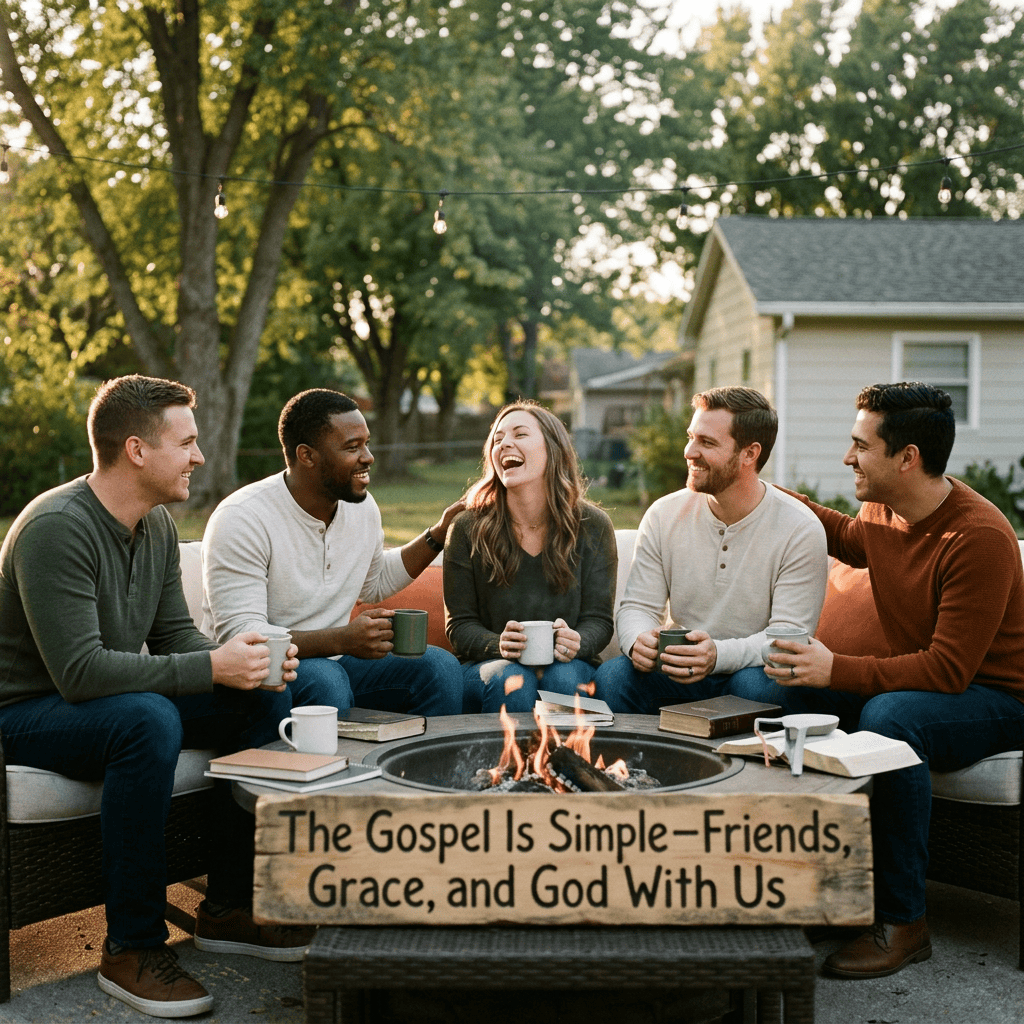
    Five friends gathered around a fire with mugs; sign reads “The Gospel Is Simple—Friends, Grace, and God With Us.”
    Five friends share laughter and fellowship around a fire beneath a message about grace and God’s presence.
  • This Week’s Biblical Lesson is Titled “The Best Things in Life Are Free.”

    “Proof, the best things in life are free: sunrises, sunset, hugs, deep conversation, love, waking up, nature, laughter.”

    These simple gifts whisper a truth woven throughout Scripture: God’s goodness is not locked behind wealth, status, or achievement. His blessings arrive quietly, daily, and freely.

    Sunrises & Sunsets

    Every sunrise is God saying, “I am still here.” Every sunset is God saying, “Rest, I am still in control.”

    “From the rising of the sun to its setting, the name of the Lord is to be praised.” — Psalm 113:3

    Hugs & Deep Conversation

    Human connection is a divine gift. A hug is grace wrapped in arms. A deep conversation is fellowship that nourishes the soul.

    “Encourage one another and build each other up.” — 1 Thessalonians 5:11

    Love

    Love is the greatest gift because it flows directly from God’s heart. It cannot be bought, only received and given.

    “We love because He first loved us.” — 1 John 4:19

    Waking Up & Nature

    Every morning breath is mercy renewed. Every tree, river, and bird is a reminder of God’s creativity and care.

    “His mercies are new every morning.” — Lamentations 3:23 “The earth is the Lord’s, and everything in it.” — Psalm 24:1

    Laughter

    Laughter is healing. It is God’s way of lifting the weight from our shoulders.

    “A cheerful heart is good medicine.” — Proverbs 17:22

    The Message

    The world teaches us to chase what is expensive. God teaches us to cherish what is free. The best things in life are not purchased — they are received. They are the fingerprints of God scattered across our days, reminding us that His presence is near, His love is constant, and His gifts are abundant.💕✌️🙏

    Collage of sunrise hiking, mountain views, smiling couples, flowers, and a heart-shaped rock arrangement.
    A collage capturing joyful sunrise hikes, nature scenes, and happy moments with friends and couples.
  • Finding Wisdom in Reflection

    “Wisdom grows when we pause long enough to listen.”

    My dear friends, As we step into this new day, I’m reminded of how every choice we make—large or small—shapes the direction of our lives. Today’s reflection invites us to slow down, breathe, and consider the path before us with clarity and intention.

    In Scripture, wisdom is never portrayed as something we stumble into by accident. It is something we seek, something we practice, and something God generously gives to those who ask with an open heart. Good decisions rarely come from rushing, reacting, or following the loudest voice around us. They come from grounding ourselves in truth, gathering sound information, and allowing God’s Spirit to steady our thoughts.

    When we pause long enough to reflect, we begin to see:

    • What aligns with God’s character
    • What leads toward peace rather than confusion
    • What is supported by truth, not assumption
    • What strengthens us rather than drains us

    This is how wisdom grows—one thoughtful choice at a time.

    Today, I encourage you to take a moment before each decision and ask: “Is this choice rooted in truth, guided by peace, and supported by what I know to be right?”

    When we choose well, we honor God, we protect our future, and we strengthen the people around us. May your decisions today be steady, informed, and filled with grace.💕✌️🙏

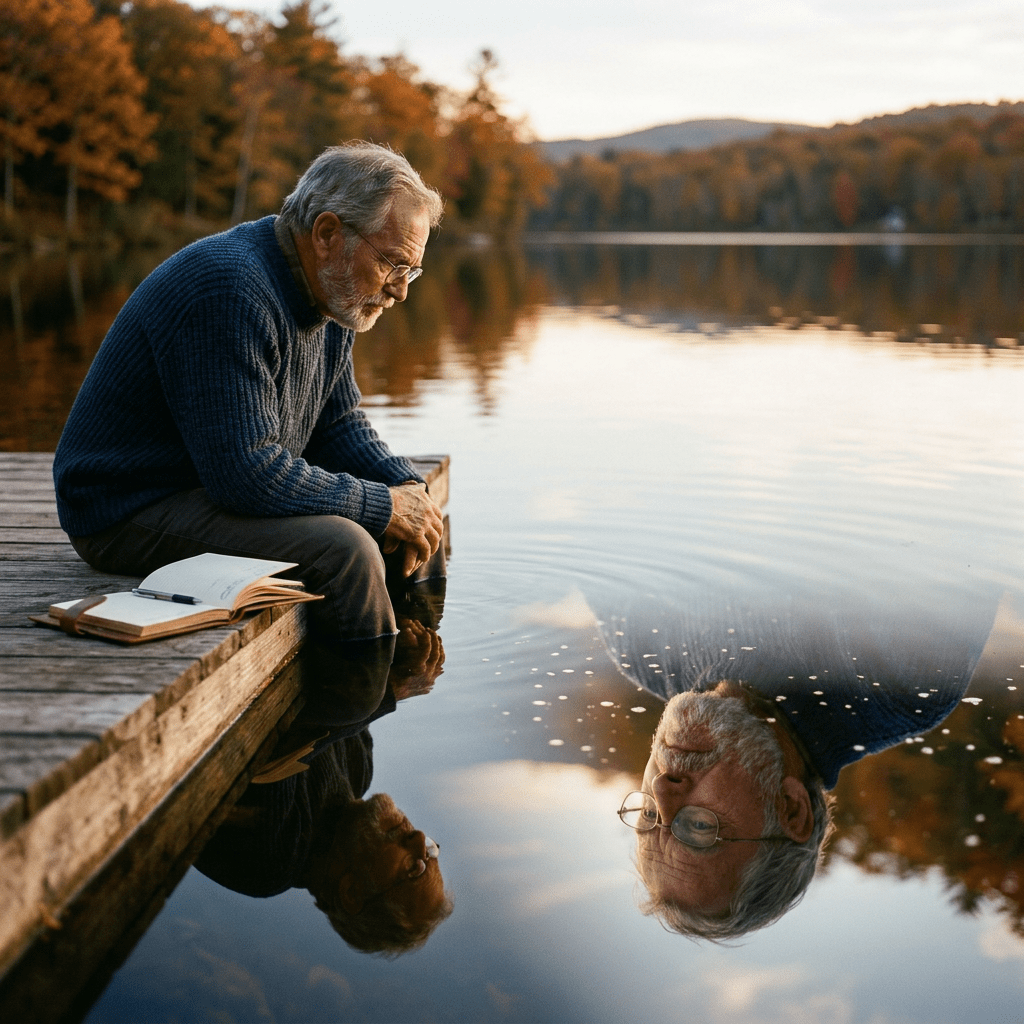
    Elderly man with glasses sitting on wooden dock looking at his reflection in calm lake water
    An elderly man sits pensively on a dock beside a calm lake in autumn.
  • Choosing Wisdom: Foundations of Sound Decision-Making

    Friends, as we step into May 13th, I’m reminded of a truth that devotionals for students often highlight: sound decisions begin with sound information. What we take in—what we believe, what we trust, what we allow to shape our thinking—becomes the foundation for the choices we make.

    Scripture gives us a steady reminder of this:

    “The simple believe anything, but the prudent give thought to their steps.” — Proverbs 14:15

    This verse isn’t meant to shame anyone. It’s an invitation. An invitation to pause. To think. To weigh what we hear. To seek clarity before we act.

    In a world filled with noise, opinions, and half‑truths, wisdom calls us to slow down long enough to ask:

    • Is this true?
    • Is this helpful?
    • Is this aligned with God’s heart?
    • Is this leading me toward peace or confusion?

    Good decisions grow from good foundations. And good foundations are built on truth, prayer, and thoughtful reflection.

    Today, let this be your encouragement:

    • Choose information that strengthens your understanding, not your anxiety
    • Choose voices that guide you toward clarity, not confusion
    • Choose actions that reflect wisdom, not impulse
    • Choose paths that lead to growth, not regret

    You don’t need to have every answer. You simply need to be willing to seek truth before you move. God honors the heart that desires to choose well.

    May your decisions today be grounded, thoughtful, and guided by grace. Walk wisely. Walk gently. Walk with God.💕✌️🙏

    Blue hardcover book titled Choosing Wisdom Foundations of Sound Decision-Making by Alistair Finch with compass and open book illustration
    Choosing Wisdom explores the foundations of sound decision-making in this insightful book.
  • Finding Peace in Chaos: Embracing Clarity

    There’s a line I came across recently: “Hell is a place with no reason.” The author is unknown, but the truth it carries is unmistakable.

    When we lose our sense of reason—when life feels chaotic, when emotions run wild, when fear or anger take the lead—we begin to taste a kind of inner “hell.” Not flames, not punishment, but the disorientation of being cut off from clarity, peace, and grounding.

    Scripture often speaks of wisdom as light, and confusion as darkness. Not because God abandons us, but because we sometimes drift from the steady voice that anchors us.

    “God is not the author of confusion but of peace.” — 1 Corinthians 14:33

    Hell, then, is not merely a place. It is any moment where we forget:

    • who we are
    • whose we are
    • where our true center lies

    But here is the hope: Even when reason feels far away, grace is not. God meets us in the fog. God steadies us when our thoughts scatter. God restores what confusion tries to steal.

    If “hell” is the absence of reason, then heaven begins wherever truth, clarity, and love return to the heart.

    So today, if you feel overwhelmed, uncertain, or pulled in too many directions, may this be your reminder:

    • Breathe
    • Slow down
    • Let God’s peace gather your scattered thoughts
    • Let wisdom rise again
    • Let love restore what fear has shaken

    You are not meant to live in confusion. You are meant to live in light.

    May clarity find you. May peace steady you. May God’s gentle wisdom guide you back to yourself.💕✌️🙏

    Woman sitting cross-legged meditating with swirling books and objects
    A woman meditates peacefully as colorful objects and ideas swirl around her.
  • Honoring Saint Martin: Lessons from His Courage on Bright Monday

    Bright Monday Commemorating Saint Martin the Confessor, Pope of Rome

    On this Bright Monday, as the light of the Resurrection continues to shine through the whole week, we remember Saint Martin the Confessor, the courageous bishop of Rome whose life became a living witness to the triumph of Christ’s truth over fear, coercion, and injustice.

    Saint Martin served the Church during a turbulent time, when political pressure and theological confusion threatened to silence the confession of Christ’s full humanity and full divinity. Yet he stood firm. With a shepherd’s heart and an unshakable conscience, he defended the faith entrusted to the apostles, even when it cost him his freedom, his health, and ultimately his life.

    Arrested, exiled, and treated with cruelty, Martin never returned hatred for hatred. Instead, he bore suffering with the quiet strength of one who knows that the Risen Christ is Lord, and that no earthly power can extinguish the light of truth. His endurance became a confession louder than any sermon.

    On this radiant day of Pascha’s joy, his witness reminds us:

    • that resurrection light strengthens us to stand firm in love
    • that faithfulness sometimes looks like quiet endurance
    • that truth, carried humbly, outlives every empire
    • that Christ’s victory is already shining in the lives of those who trust Him

    May Saint Martin’s courage inspire us to hold fast to Christ with gentleness and clarity, even when the path is costly. And may the joy of Bright Monday fill our hearts with the assurance that the Risen Lord walks with us, strengthening every step.

    Christ is Risen! Truly He is Risen!💕✌️🙏

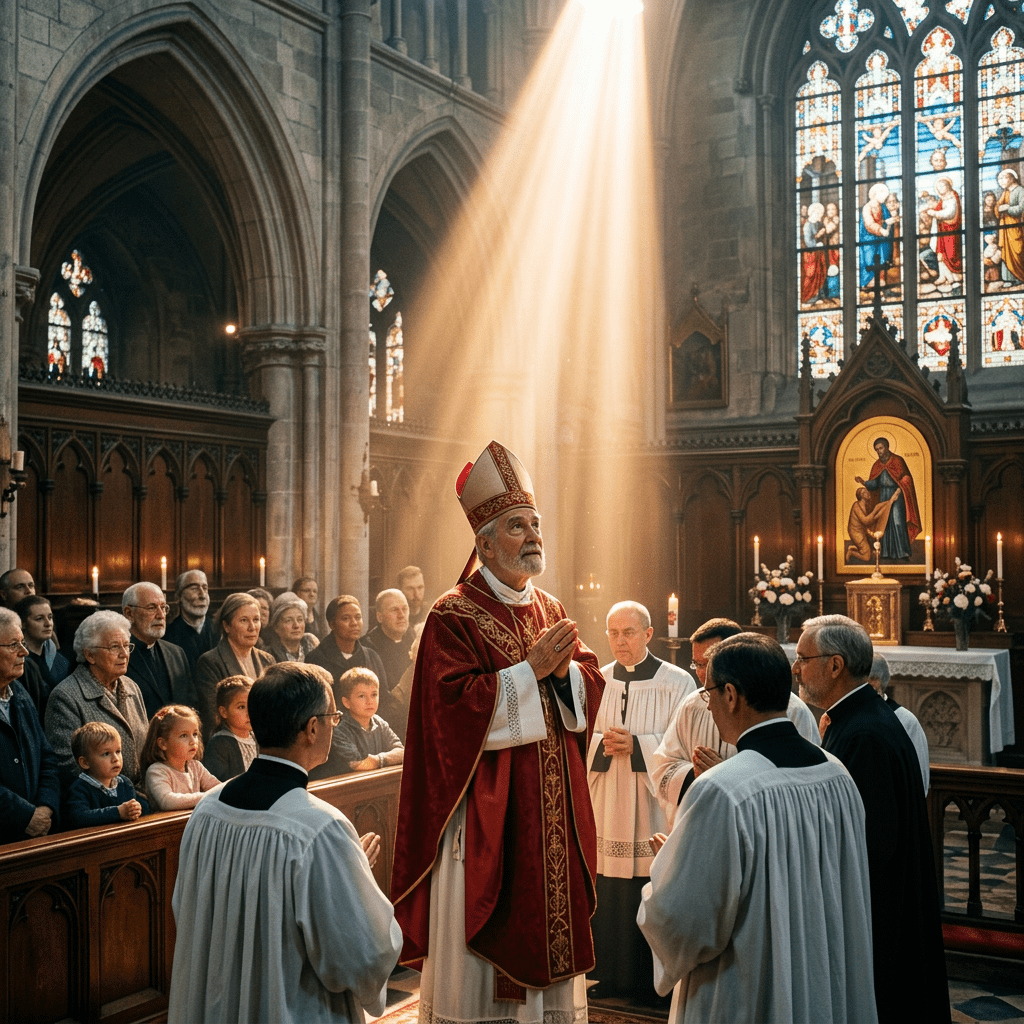
    Bishop in red robes praying with clergy and congregation inside church
    A bishop prays with clergy and congregation in a church bathed in sunlight