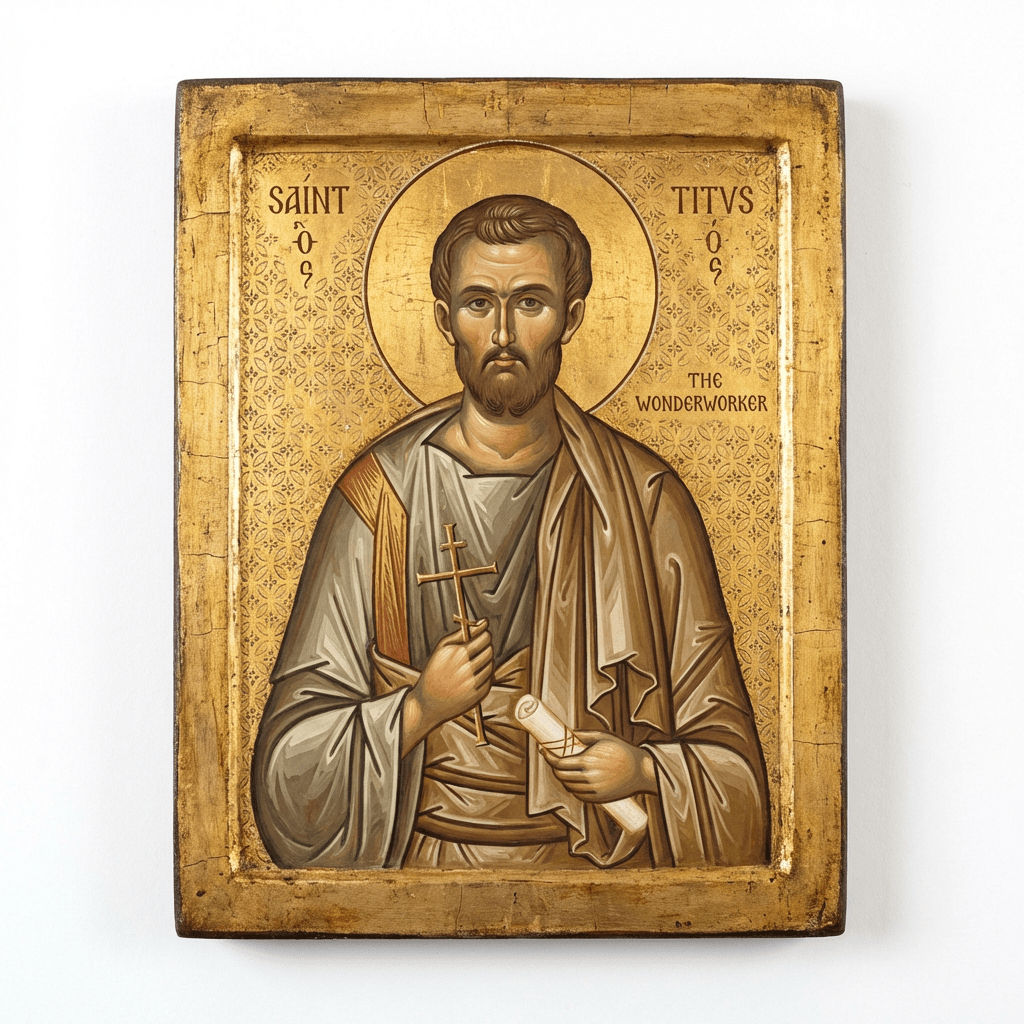
Today we honor Titus the Wonderworker, a quiet yet radiant saint whose life reminds us that holiness often grows in hidden places. Little is recorded about his early years, but what the Church remembers is enough to reveal a heart wholly given to God — a man shaped by prayer, humility, and a deep compassion for those who sought his counsel.
Titus lived as an ascetic, withdrawing from the noise of the world so he could listen more clearly to the voice of Christ. In that stillness, God entrusted him with gifts of healing and discernment. Many came to him burdened by sickness, fear, or spiritual confusion, and through his prayers they found restoration. His miracles were not displays of power, but signs of God’s nearness — quiet wonders that lifted the weary and strengthened the faithful.
What made Titus a “Wonderworker” was not only the miracles themselves, but the spirit in which he lived: gentle, steadfast, and anchored in the love of God. His life teaches us that true spiritual authority is born from humility, and that the greatest wonders often flow from a heart surrendered to grace.
May the memory of Titus the Wonderworker call us to deeper prayer, quieter trust, and a renewed openness to the healing presence of God.
A Prayer
O Lord, who strengthened Your servant Titus with grace and compassion,teach us to walk in humility and to seek You in the still places of the heart.Through his prayers, grant us healing where we are wounded,clarity where we are confused,and courage where we are afraid.May we, like him, become vessels of Your peace in a troubled world.Amen 💕✌️🙏
This traditional Byzantine icon depicts Saint Titus the Wonderworker holding a cross and a scroll against a shimmering gold background.
As we step into the first day of April, we enter a month that quietly carries the theme of renewal. The earth begins to soften, the rains return, and creation slowly awakens from its winter rest. In many ways, April mirrors the spiritual work God often does in us—quiet, steady, and deeply transformative.
Today’s Scripture invites us to pause and listen:
“See, I am doing a new thing!Now it springs up; do you not perceive it?I am making a way in the wildernessand streams in the wasteland.” — Isaiah 43:19
This verse is not just a promise—it’s an invitation.
1. God Begins New Things Before We Notice Them
God doesn’t wait for perfect conditions to begin His work. He starts in the wilderness. He starts in the dry places. He starts in the parts of our lives that feel stuck, tired, or uncertain.
April reminds us that growth often begins underground—before we see anything on the surface.
Reflection: Where might God already be planting something new in you, even if you can’t see it yet?
2. God Makes a Way Where There Was No Way
A wilderness is a place without paths. A wasteland is a place without water. Yet God says, “I will make a way… I will bring streams.”
This means:
You are not trapped.
You are not forgotten.
You are not without direction.
God specializes in creating possibilities where none existed.
Reflection: What area of your life needs a “way” or a “stream” right now?
3. Renewal Requires Perception
God asks, “Do you not perceive it?” Not because He hides His work, but because His work is often gentle, quiet, and easily overlooked.
April teaches us to pay attention:
to small beginnings
to subtle shifts
to quiet hope
to the softening of our own hearts
Reflection: What small signs of renewal can you notice today?
4. The First Day of April Is a Fresh Start
This day is a reminder that God’s mercies are new—not just every morning, but in every season.
April 1st invites us to:
release what winter tried to hold
open our hearts to new growth
trust God’s timing
welcome His gentle work in us
Closing Prayer
Lord, as we enter this new month, open our eyes to the new things You are doing.Soften the places in us that have grown weary.Make a way where we cannot see one.Let streams of Your grace flow into every dry place of our hearts.May April be a month of renewal, hope, and quiet transformation.Amen 💕✌️🙏
A breathtaking sunrise casts a golden glow over a vibrant meadow of wildflowers and a winding path.
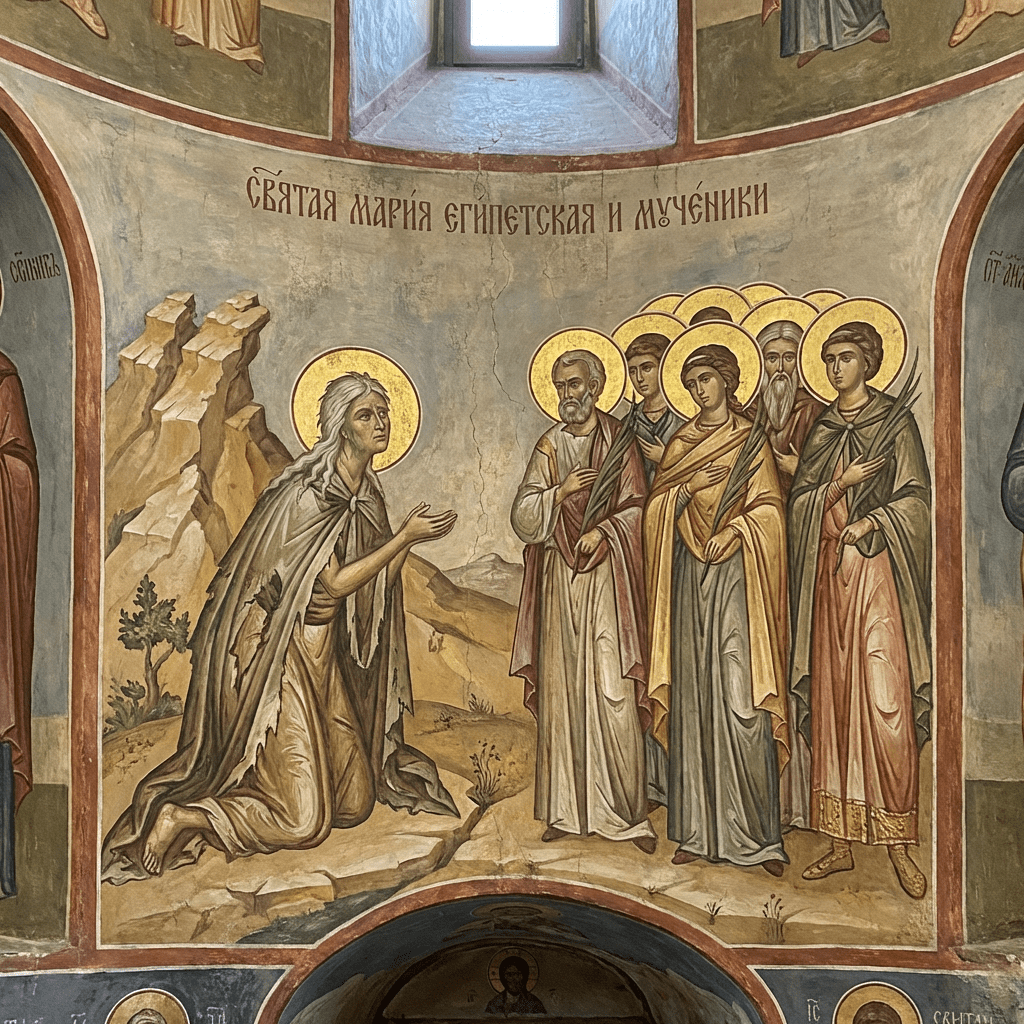
Commemorating Mary of Egypt & the Holy Martyrs Gerontios and Vasilides
Today we remember two very different, yet beautifully connected, witnesses of God’s transforming grace: Mary of Egypt, the great penitent, and Gerontios & Vasilides, the steadfast martyrs of the early Church. Their stories stand side by side as reminders that God meets His people in every kind of journey — in repentance, in courage, in surrender, and in unwavering faith.
Mary of Egypt: A Life Rewritten by Grace
Mary’s story is one of the most powerful testimonies to the mercy of God. Once lost in a life of deep brokenness, she encountered the living Christ in a moment that shattered her illusions and awakened her soul. Her decades in the desert were not punishment, but healing — a long, quiet conversation between her heart and God’s love.
Her life teaches us:
that no one is beyond redemption
that grace can rewrite any story
that holiness is born in surrender, not perfection
Mary reminds us that God’s mercy is not fragile — it is fierce, patient, and transformative.
Gerontios & Vasilides: Courage in the Face of Darkness
Gerontios and Vasilides stood firm in a world hostile to their faith. Their witness was not loud, but resolute; not dramatic, but faithful. They chose Christ over fear, truth over safety, and eternal hope over temporary comfort.
Their martyrdom teaches us:
that faith sometimes calls for costly courage
that the light of Christ shines brightest in dark places
that love for God can strengthen even trembling hearts
They remind us that the Church is built not only on miracles and teachings, but on the quiet bravery of those who refused to deny the One who saved them.
A Shared Legacy
Though their paths were different — one a penitent, the others martyrs — their lives converge in a single truth:
God’s grace meets us wherever we are and leads us into the fullness of life.
Mary shows us the power of transformation. Gerontios and Vasilides show us the power of steadfastness. Together, they call us to walk with humility, courage, and hope.
A Prayer for Today
May the repentance of Mary soften our hearts. May the courage of Gerontios and Vasilides strengthen our faith. And may the God who sustained them sustain us in our own journeys — whether in deserts of healing or moments of costly obedience.
Holy Mary of Egypt, pray for us. Holy Martyrs Gerontios and Vasilides, pray for us. May their memory be eternal.💕🙏✌️
This detailed Orthodox mural captures the poignant meeting between the penitent Saint Mary of Egypt and several martyrs.
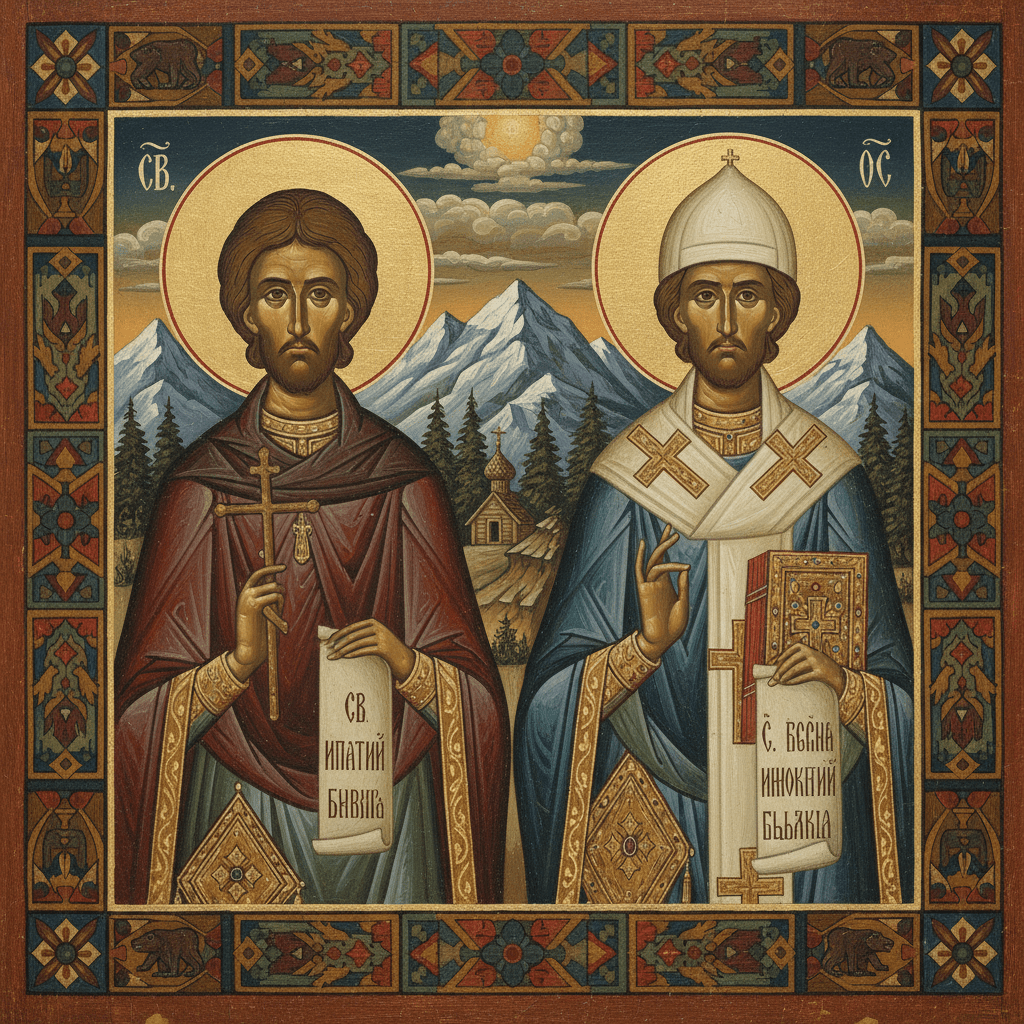
Commemorating Hieromartyr Hypatius, Bishop of Gangra, and Saint Innocent of Alaska
Today we remember two shepherds from very different corners of the world, united by the same Spirit and the same unwavering love for Christ’s flock.
Hieromartyr Hypatius of Gangra A gentle bishop, a defender of the faith, and a man whose holiness was known not by force but by the quiet strength of his life. Hypatius guided his people with humility, healed divisions, and stood firm for the truth proclaimed at the First Ecumenical Council. His martyrdom came not from enemies of the Church, but from those misled by anger and confusion — a reminder that the cost of discipleship often comes from unexpected places. Even in death, miracles flowed through him, revealing the mercy of God shining through a faithful servant.
Saint Innocent of Alaska Centuries later and half a world away, another bishop walked a very different landscape — the icy coasts and vast wilderness of Alaska. Innocent carried the Gospel not as a conqueror but as a friend. He learned the languages of the people, lived among them, honored their dignity, and translated Scripture and prayers so that Christ could be known in their own voice. His mission was marked by patience, compassion, and a deep respect for the cultures he encountered. Through him, the light of Christ took root in a new land.
Two saints, one witness: — Hypatius shows us the courage to stand firm in truth, even when misunderstood. — Innocent shows us the tenderness of mission, meeting people where they are with humility and love.
Together they remind us that the Gospel travels through both suffering and service, through steadfastness and gentleness, through the quiet fidelity of those who give their lives to God’s people.
May their prayers strengthen us to walk faithfully in whatever field God has entrusted to us — whether familiar ground or far‑off shores — with courage, compassion, and a heart anchored in Christ.💕✌️🙏
A traditional religious icon features two saints standing before a scenic mountain landscape with an ornate decorative border.
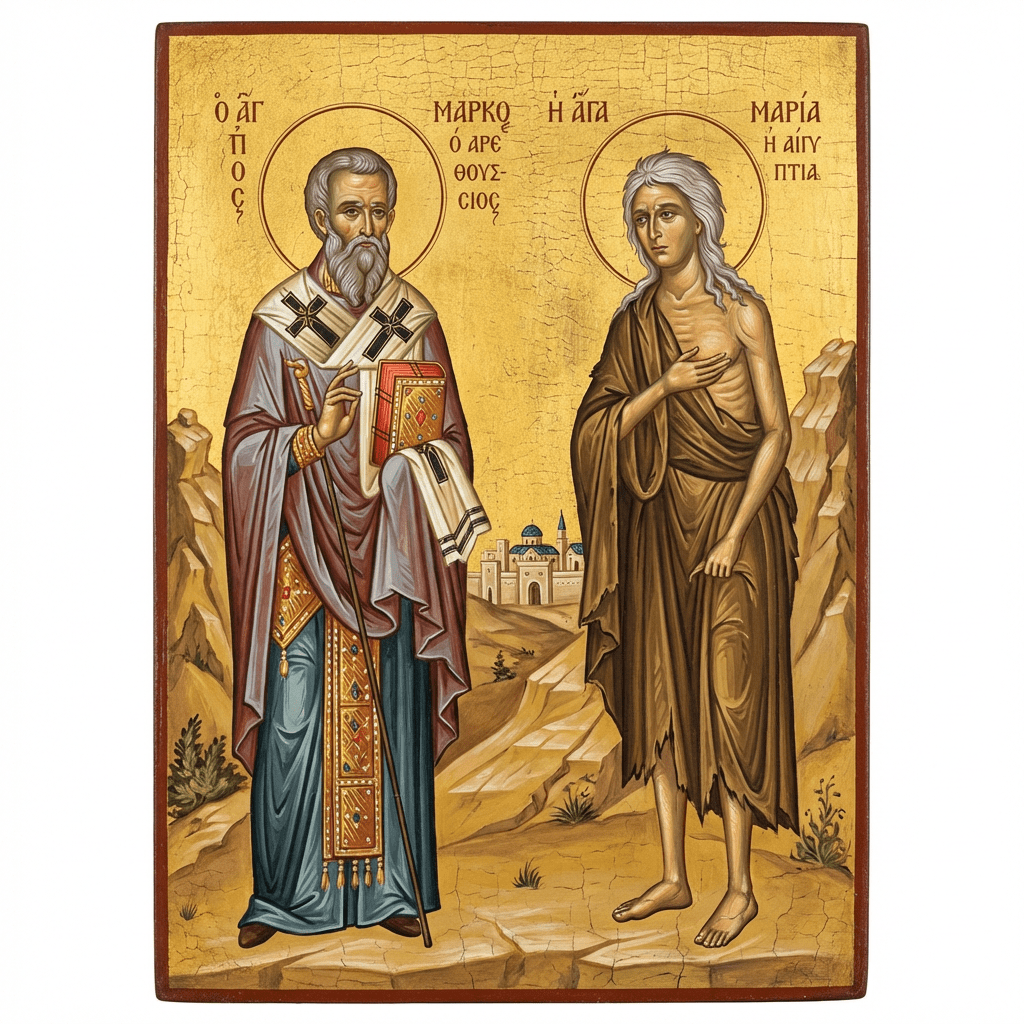
Today, we remember two saints whose lives were vastly different yet shared the same relentless mercy of God. This mercy seeks, restores, and strengthens the human heart.
Mary of Egypt’s life is a testament to grace’s transformative power. After years of wandering, she found a love stronger than her past and a mercy deeper than her wounds. She entered the desert not to escape the world but to be found by God. There, in silence, her heart healed, her soul renewed, and her life became a living icon of repentance and holiness.
Her story reminds us that no one is beyond God’s compassion. Grace can bloom in unexpected places.
Mark of Arethusa, a courageous bishop, faced persecution with gentleness. When pressured to compromise, he refused out of fidelity to Christ, even when tortured. He responded with patience and forgiveness, showing that true strength lies in love that refuses to surrender its integrity.
His life teaches us that peace is not weakness but the quiet power of a heart anchored in God.
Mary shows us the God who restores, while Mark shows us the God who sustains. Together, they reveal a faith that is tender, courageous, humble, and unshakable.
A Prayer for Today
Lord Jesus Christ, teach us the courage to be honest, the humility to be changed, and the strength to love even in difficult places. May their lives inspire us to walk in grace, truth, and peace. Amen.
May their memory be eternal, and may their stories guide us toward God’s heart. 💕✌️🙏
This detailed religious icon portrays Saint Mark of Arethusa and Saint Mary of Egypt in a desert landscape.
A Day of Praise, Protection, and Persevering Faith
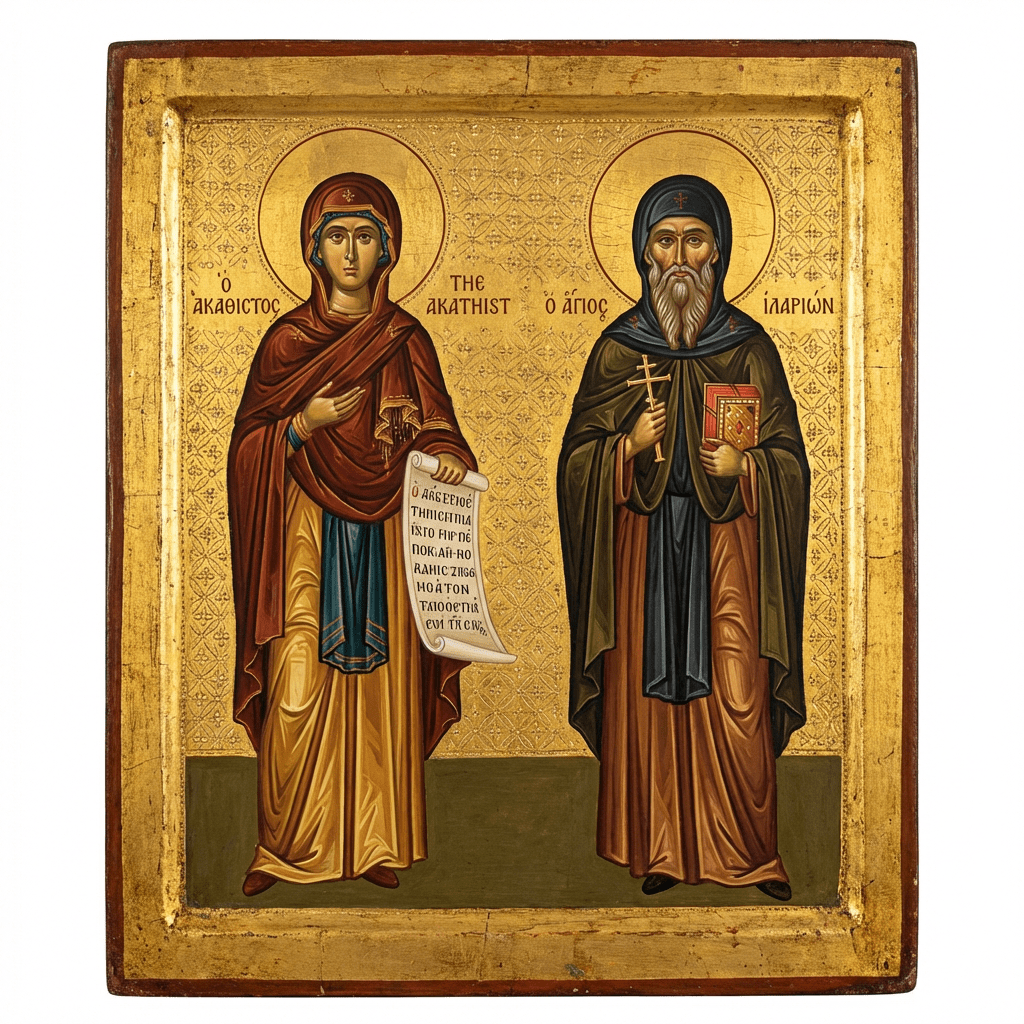
Today the Church gathers her voice in two beautiful harmonies: the joyful praise of the Akathist Hymn to the Theotokos, and the quiet, steadfast witness of Saint Hilarion the New, Abbot of Pelekete. Together they form a tapestry of devotion — one radiant with thanksgiving, the other woven with endurance and holy courage.
Saturday of the Akathist: A Song That Cannot Sit Down
On this day we stand — body and soul — before the Mother of God, offering the ancient hymn of gratitude that has carried generations through danger, sorrow, and uncertainty. The Akathist is the Church’s way of saying:
“You have not abandoned us.You have covered us with your protection.You have led us to Christ.”
It is a hymn born from deliverance, and every year it becomes our own prayer of trust. In its praises we remember that God’s mercy is not a memory but a living presence.
Saint Hilarion the New: A Shepherd of Steadfast Courage
Saint Hilarion, abbot of the monastery at Pelekete, lived during the storm of iconoclasm — a time when confessing the truth of the Incarnation came at great cost. He stood firm, not with anger or force, but with the quiet strength of a shepherd who refused to abandon his flock or his faith.
He endured exile, imprisonment, and suffering, yet remained gentle, prayerful, and unwavering. His life reminds us that holiness is not loud; it is faithful.
Two Witnesses, One Message
The Akathist teaches us to praise. Hilarion teaches us to persevere. Together they whisper the same truth:
God is faithful.God protects.God sustains those who trust in Him.
A Prayer for Today
Most Holy Theotokos, Shelter us beneath your mantle of mercy. Teach our hearts to stand in praise.
Holy Father Hilarion, Strengthen all who suffer for the sake of truth. Pray that we may endure with peace and courage.
May this day fill us with gratitude, steadfastness, and the quiet confidence that God is near.💕✌️🙏
This detailed religious icon portrays The Akathist and Saint Hilarion against a brilliantly patterned gold-leaf background.
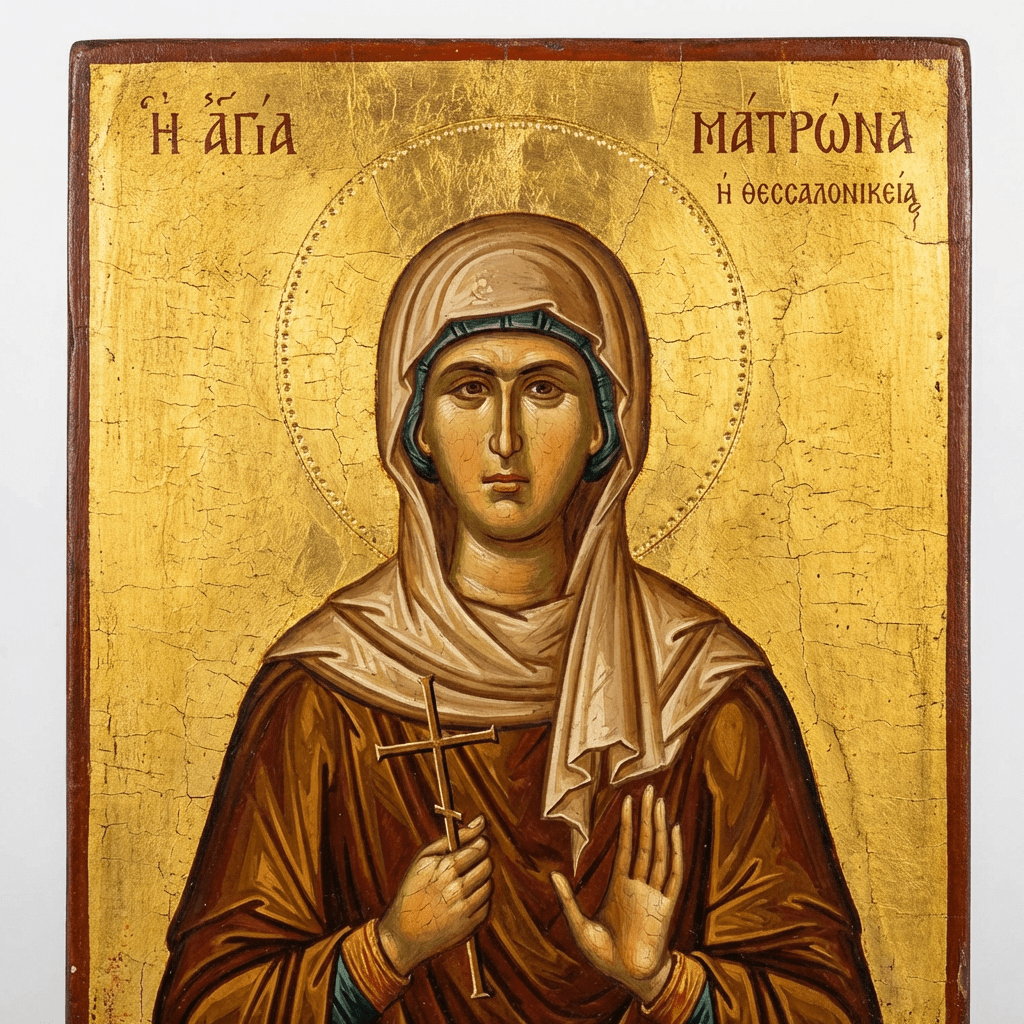
Today we remember Saint Matrona of Thessalonica, a quiet yet radiant witness to Christ whose courage shone in the midst of oppression and cruelty. Her life reminds us that holiness often appears in humble places, and that steadfast faith can outshine even the darkest powers.
A Servant in the House of the Proud
Matrona lived as a servant in the household of a harsh pagan mistress. Though she held no earthly status, her heart belonged wholly to Christ. She refused to bow to idols, refused to hide her faith, and refused to let fear silence her devotion. In a world that demanded compromise, she chose fidelity.
A Martyr of Gentle Strength
When her mistress discovered Matrona’s unwavering Christian faith, she unleashed brutal punishments—beatings, imprisonment, humiliation. Yet Matrona endured without bitterness. Her strength was not loud or defiant; it was the quiet, unshakable strength of a soul anchored in God.
Her martyrdom was not a moment of defeat, but a final act of love and loyalty to the One who had already given His life for her.
A Witness for All Who Suffer in Silence
Saint Matrona stands with all who endure hardship behind closed doors, all who suffer quietly, all whose faith is tested in hidden places. She reminds us that God sees what others overlook, and that no act of faithfulness—however small or unseen—is wasted in His sight.
Her Legacy
Matrona’s life teaches us that holiness is not reserved for the powerful or the celebrated. It is found in the servant, the overlooked, the one who chooses love over fear, truth over convenience, and Christ over every earthly demand.
Her witness echoes the words of the Apostle: “When I am weak, then I am strong.”
A Prayer for Today
Holy Martyr Matrona, Strengthen all who suffer quietly and alone. Teach us to remain faithful in the small, hidden places of our lives. Fill us with courage that is gentle, steadfast, and rooted in Christ. Pray that we may honor God with the same quiet devotion that marked your holy life. Amen 💕✌️🙏
This traditional Byzantine icon portrays Saint Matrona of Thessaloniki, a revered figure in Orthodox tradition.
Commemorating the Great Canon of St. Andrew of Crete
and the
Synaxis of the Archangel Gabriel
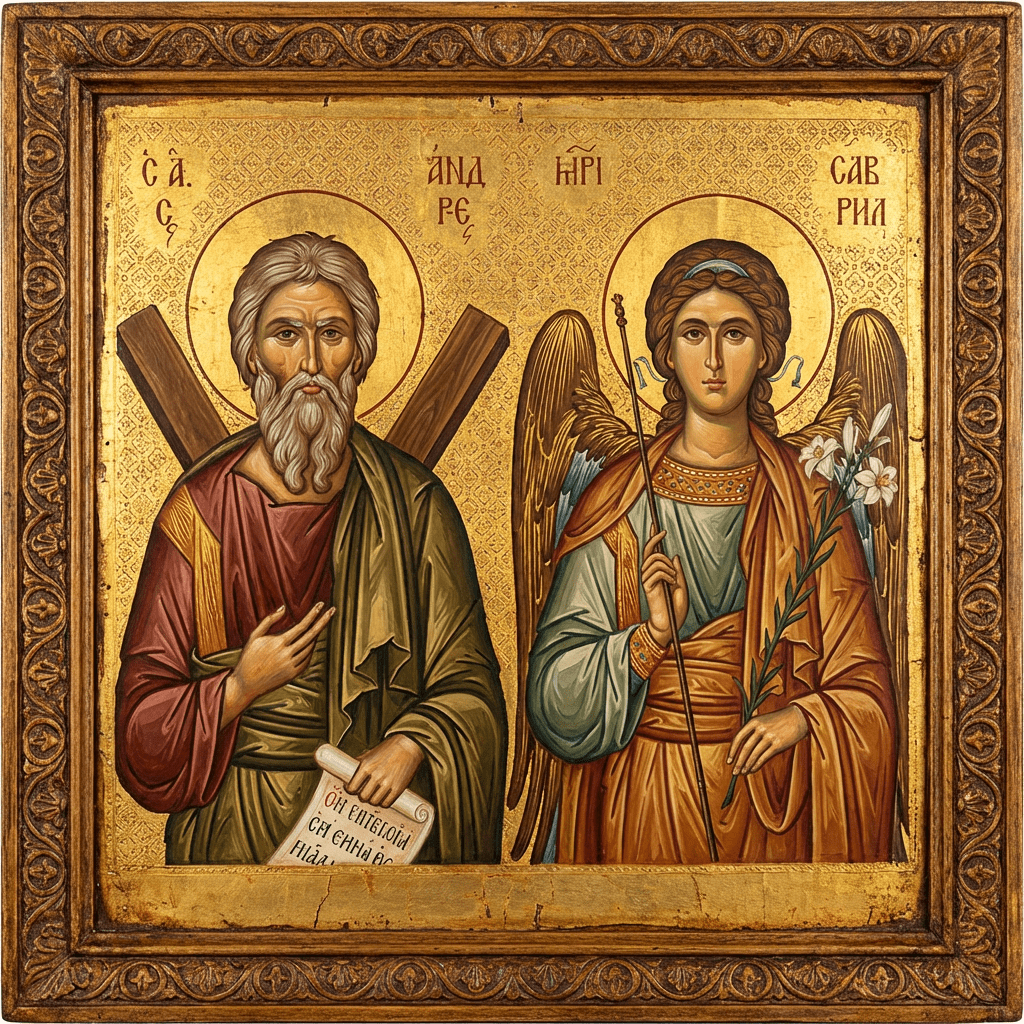
Today the Church invites us into a double feast of repentance and revelation, holding together the deep humility of St. Andrew’s Great Canon and the radiant glory of the Archangel Gabriel.
The Great Canon of St. Andrew of Crete
The Great Canon is one of the most profound works of repentance in the Christian tradition. St. Andrew leads us through Scripture not as a history lesson, but as a mirror— a journey into the heart where grace meets our deepest need.
His words teach us that repentance is not despair, but return. Not shame, but awakening. Not self‑condemnation, but the soul turning toward the Father who runs to meet us.
In this season, the Canon reminds us that every step toward God is met by His mercy.
Synaxis of the Archangel Gabriel
Today we also honor Gabriel, the herald of divine mysteries— the one who speaks God’s “Do not be afraid” into the trembling places of the human heart.
Through Gabriel,
the prophets were strengthened,
Daniel received understanding,
Zachariah heard the promise of a son,
and Mary received the word that changed the world.
Gabriel’s message is always the same: God is drawing near.God is acting.God is faithful.
A Prayer for This Day
O Lord, through the prayers of St. Andrew of Crete, grant us hearts that return to You with honesty and hope.Through the intercessions of the Archangel Gabriel, speak Your peace into our fears and Your courage into our calling.Renew us, restore us, and lead us deeper into the mystery of Your love. Amen.
A Word for Us Today
As we hold these two commemorations together, we are reminded that:
God meets us in our repentance
God strengthens us through His messengers
God draws near to the humble
God speaks hope into every trembling heart
May this day awaken us to mercy, deepen our repentance, and open our ears to the voice that still says, “Do not be afraid—God is with you.” 💕✌️🙏
A traditional Byzantine-style icon depicting Saint Andrew and Archangel Gabriel against an ornate gold background.
The statement “Jesus is the answer to all of our ills” is not a cliché — it is the heartbeat of the New Testament. Scripture consistently presents Jesus not merely as a helper, but as the Healer, the Restorer, the Redeemer, and the One in whom all things hold together.
Let’s explore how the Bible reveals this truth.
1. Jesus Heals Our Spiritual Ills
The deepest human illness is separation from God. Jesus addresses this first.
“For the Son of Man came to seek and to save the lost.” Luke 19:10
Our spiritual sickness — guilt, shame, alienation, fear — finds its cure in Christ.
He forgives sin
He restores fellowship
He removes condemnation
He gives new birth
Jesus is the answer because He heals the root, not just the symptoms.
2. Jesus Heals Our Emotional Ills
Human hearts carry wounds: grief, anxiety, trauma, rejection. Jesus meets us there.
“He has sent Me to bind up the brokenhearted.” Isaiah 61:1
Throughout the Gospels, Jesus:
comforts the grieving
welcomes the rejected
calms the fearful
restores the ashamed
He does not shame our emotions — He heals them.
3. Jesus Heals Our Physical Ills
The Gospels are filled with physical healings, not as random miracles but as signs of the Kingdom.
“He healed every disease and every affliction among the people.” Matthew 4:23
This teaches us:
God cares about the body
sickness is not God’s desire
healing is a foretaste of resurrection life
Even when physical healing is not immediate, Jesus remains the ultimate answer because He promises a future where sickness is no more.
4. Jesus Heals Our Moral Ills
Humanity is plagued by sin’s power — habits, addictions, destructive patterns. Jesus breaks these chains.
“If the Son sets you free, you will be free indeed.” John 8:36
He gives:
new desires
new strength
new identity
new power to walk in holiness
Jesus is not just a forgiver — He is a liberator.
5. Jesus Heals Our Social Ills
Broken relationships, injustice, division, hatred — these are societal illnesses. Jesus confronts them with His reconciling love.
“He is our peace… breaking down the dividing wall of hostility.” Ephesians 2:14
Jesus heals:
families
communities
nations
enemies
Where Jesus reigns, reconciliation becomes possible.
6. Jesus Heals Our Existential Ills
Every human wrestles with meaning, purpose, identity, and destiny. Jesus answers these longings.
“I am the way, the truth, and the life.” John 14:6
In Him we discover:
who we are
why we exist
where we are going
what our lives are for
Jesus is the answer because He is the Truth about God and the Truth about us.
7. Jesus Heals Our Ultimate Ill — Death
The final enemy is death. Jesus does not avoid it — He defeats it.
“I am the resurrection and the life.” John 11:25
Because of Jesus:
death is not the end
the grave is not final
resurrection is our future
eternal life is our inheritance
No other answer reaches this deep.
Conclusion: Why Jesus Is the Answer to All Our Ills
Jesus is the answer because:
He heals the spirit
He restores the heart
He strengthens the body
He frees the soul
He reconciles the community
He gives meaning to life
He conquers death
Every human ill finds its remedy in the person, presence, and power of Jesus Christ.
He is not one answer among many. He is the answer — the fullness of God’s love poured into human need.💕✌️🙏
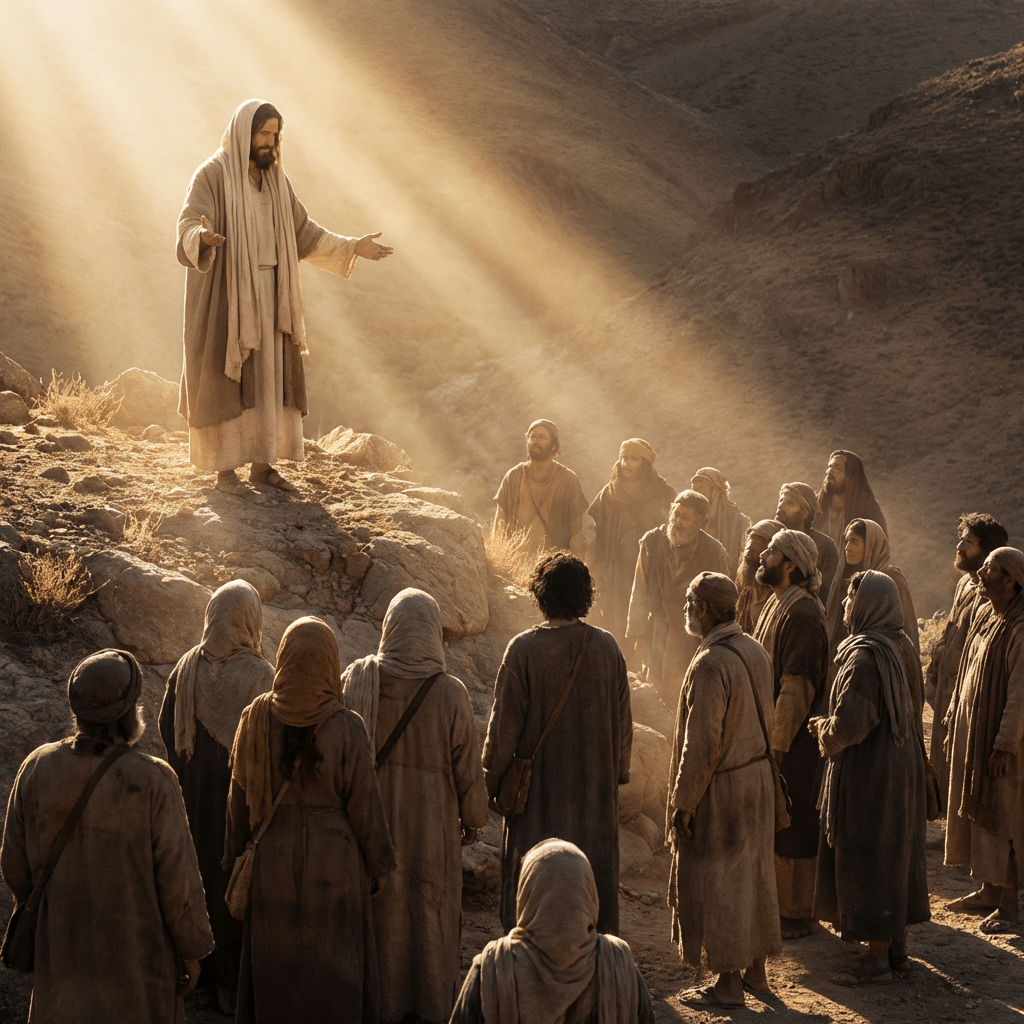
Jesus shares his teachings with a gathering of people under dramatic, golden sunbeams.
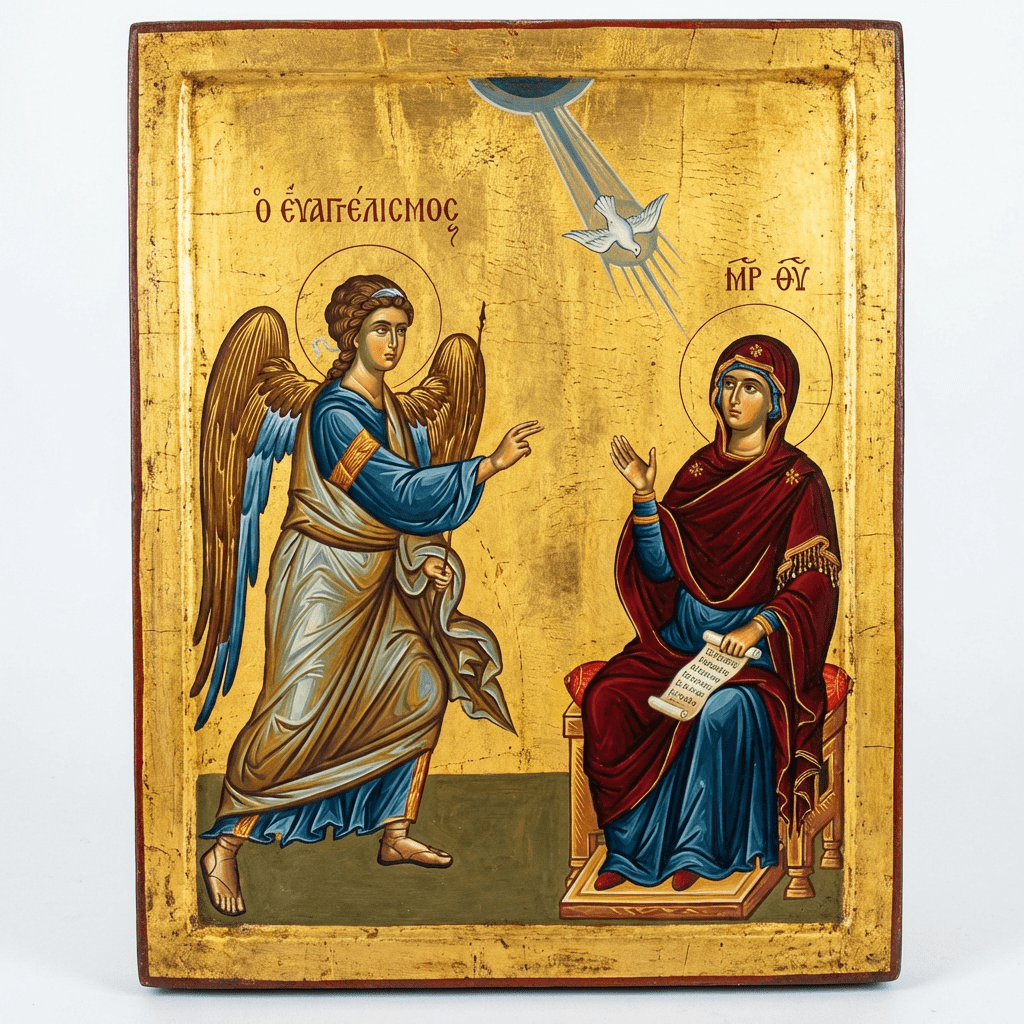
Today we rejoice in one of the most radiant moments in salvation history—the Annunciation of the Theotokos, when the Archangel Gabriel came bearing heaven’s most astonishing message: “Rejoice, O Full of Grace, the Lord is with you.”
In that quiet room in Nazareth, eternity touched time. The long‑awaited promise drew near. And the humble Virgin of Israel became the living temple of the Most High.
Mary’s response still echoes through the ages: “Behold, I am the handmaid of the Lord; let it be to me according to your word.” In her “yes,” the Word became flesh. In her surrender, the world received its Savior. In her faith, the new creation began to dawn.
Today we remember that:
God’s greatest works often begin in hidden places
Grace does not force—it invites
True strength is found in holy surrender
And the salvation of the world came through a young woman who trusted God more than she feared the unknown
May the Theotokos teach us to listen for God’s voice, to welcome His will, and to carry Christ into the world with the same humility and courage she showed on this blessed day.
Most Holy Theotokos, rejoice—for through you joy has come to all creation.💕✌️🙏
A beautiful traditional Byzantine icon illustrating the Annunciation scene with Gabriel and Mary.