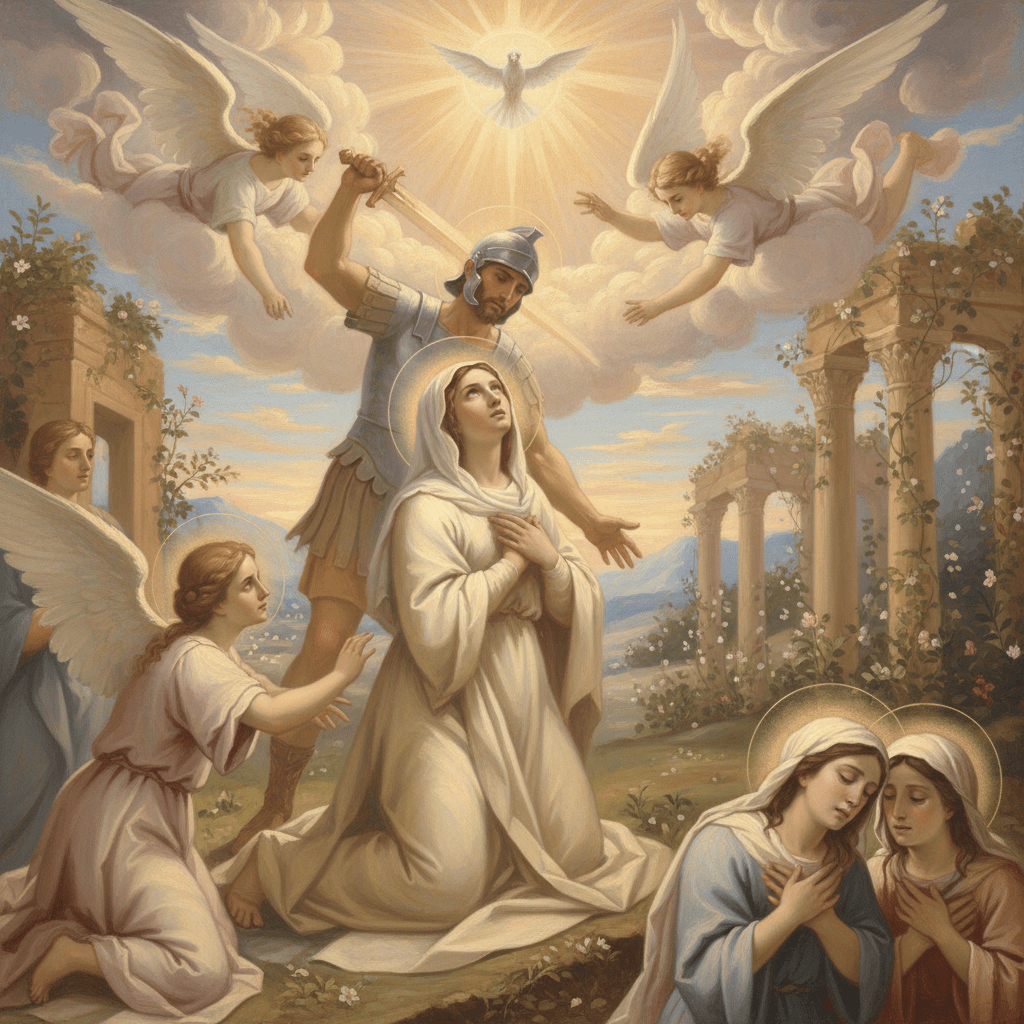
Today we honor Sabine the Martyr, a faithful believer from Egypt whose courage still speaks across the centuries. In a time of danger and persecution, Sabine held fast to Christ with a quiet strength that could not be shaken. Her witness reminds us that the love of God often shines brightest through ordinary people who choose faith over fear.
Her life and martyrdom call us to a deeper trust in the God who sustains His people in every trial. May her example inspire us to walk with the same courage, compassion, and unwavering devotion.
A Prayer in Her Memory Lord Jesus Christ, We thank You for the faithful witness of Sabine the Martyr. Strengthen us with the same courage that filled her heart. Teach us to love You with steadfast devotion, to stand firm in times of testing, and to shine Your light with humility and grace. May her memory encourage Your people today, and may her life remind us that nothing can separate us from Your love. Amen 💕✌️🙏
This evocative religious painting illustrates a saint’s faithful devotion during a moment of divine martyrdom.
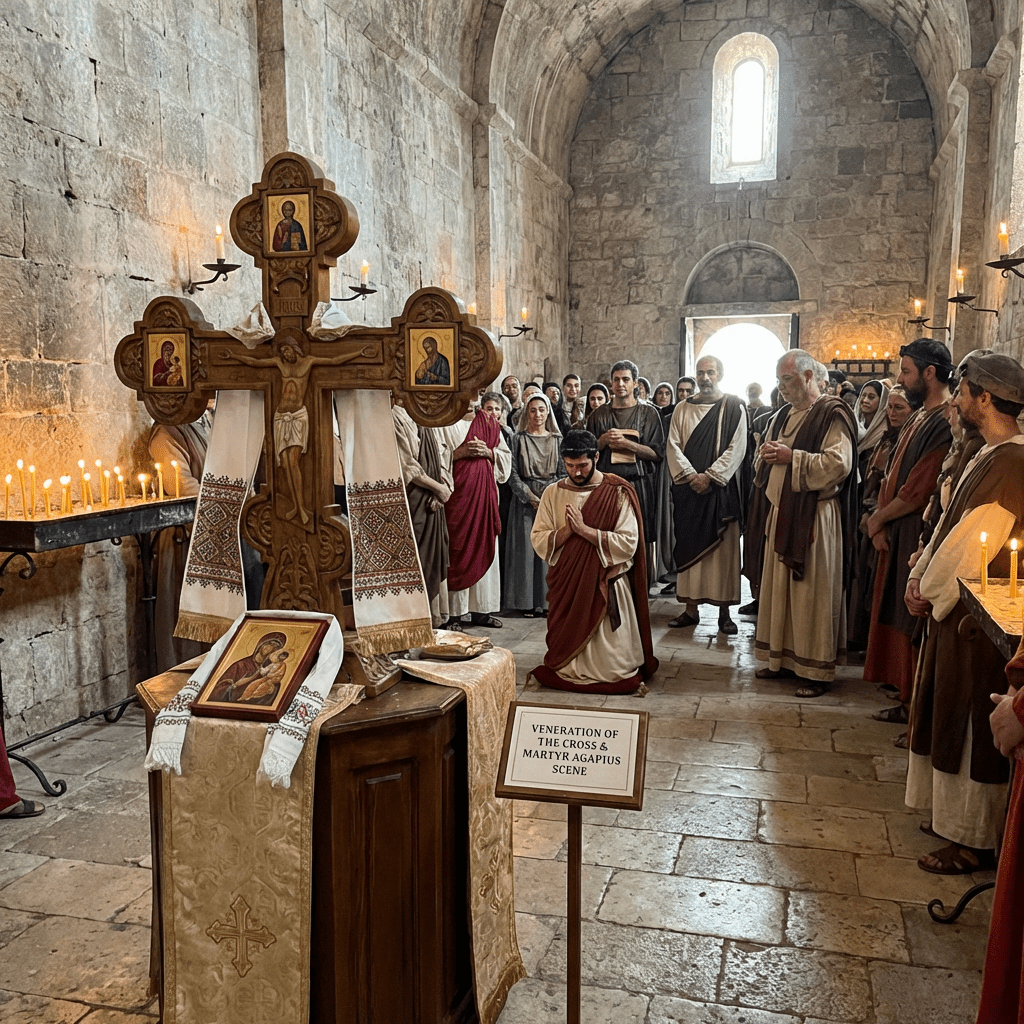
Commemoration of the Veneration of the Precious and Life‑Giving CrossandAgapius the Martyr and His Companions
Today the Church lifts her eyes to two radiant witnesses of Christ: the Precious and Life‑Giving Cross, and Agapius the Martyr with his holy companions, who sealed their confession with blood.
The Veneration of the Cross In the middle of the Lenten journey, the Cross rises before us like a tree of rest—reminding us that Christ’s victory is not distant, but already planted in our midst. We bow before the Cross not in sorrow alone, but in hope, for through it joy has come into all the world. Here the Crucified One gathers our wounds, our sins, our burdens, and transforms them by His self‑giving love. The Cross stands as the doorway to resurrection, the banner of mercy, and the sign that no darkness can overcome the Light.
Agapius the Martyr and His Companions Alongside the Cross, we remember Agapius and the brave believers who suffered with him—martyrs of steadfast courage in the face of cruelty. They refused to deny Christ, choosing instead the narrow path that leads to life. Their witness echoes the Cross itself: a love stronger than fear, a faith deeper than suffering, a hope anchored in the risen Lord.
Their blood became seed for the Church, and their memory strengthens all who struggle for faithfulness today.
A Unified Witness The Cross and the martyrs speak with one voice: that Christ’s love is victorious, that suffering is never the final word, and that every act of faith—large or small—participates in the triumph of God.
As we honor the Cross and the holy martyrs, may our hearts be renewed with courage, humility, and joy. May we take up our own crosses with trust, knowing that the Crucified and Risen Lord walks with us.
“Through the Cross joy has come into all the world.” May that joy strengthen us today.
Shalom and grace to all who walk in the shadow of the Cross and the light of the Resurrection. 💕✌️🙏
Actors in historical robes perform a solemn reenactment of a religious ceremony within an ancient stone church.
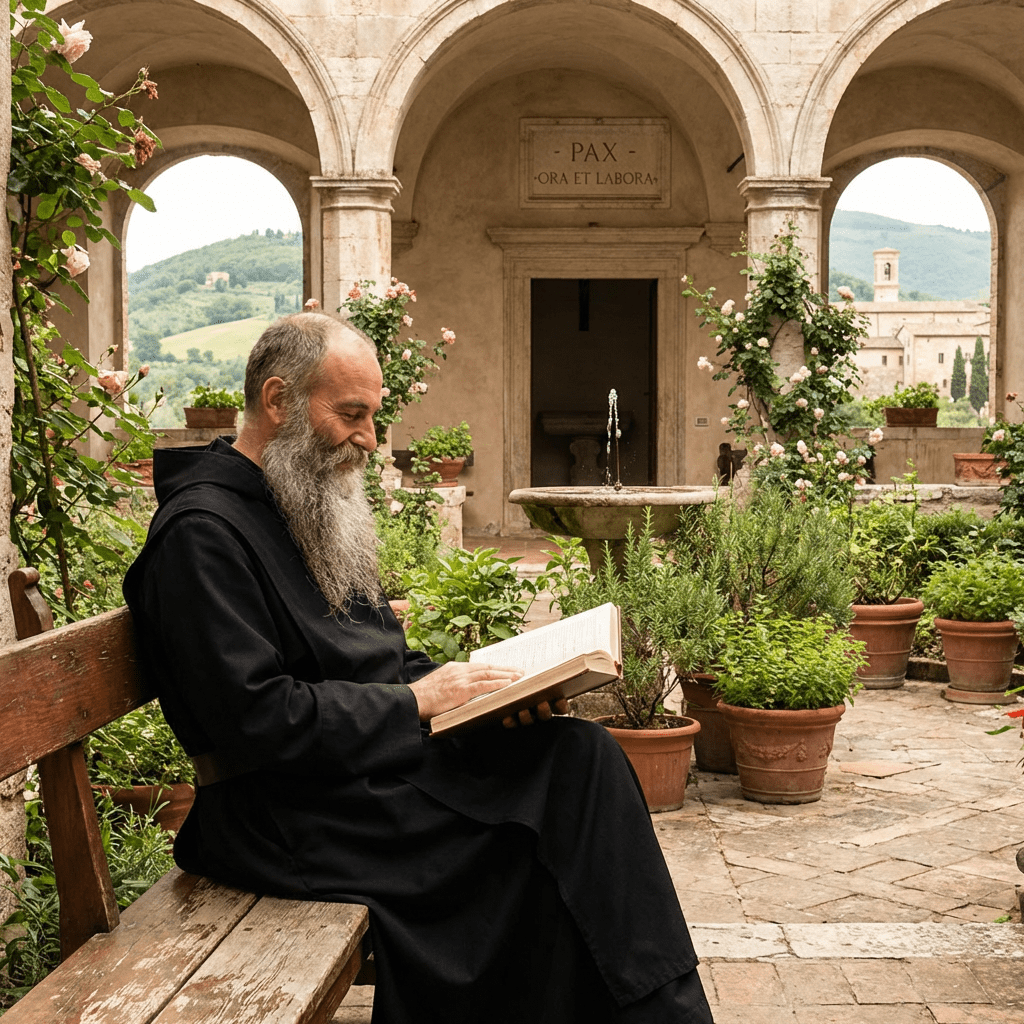
Today we remember Benedict of Nursia, the father of Western monasticism and a quiet architect of Christian community, prayer, and stability. Born in the late 5th century, Benedict stepped away from the noise and corruption of his world to seek God in stillness. What began as a solitary pursuit soon blossomed into a way of life that shaped generations.
Benedict’s Rule—simple, balanced, and deeply humane—invited believers into a rhythm of prayer, work, hospitality, and holy attentiveness. He taught that the sacred is found not only in the chapel but also in the kitchen, the fields, the workshops, and the daily acts of service done with love. His vision was not escape from the world but transformation within it.
In an age marked by instability, Benedict offered a path of peace, humility, and steady faithfulness. His communities became places of refuge, learning, and spiritual renewal—lamps of grace shining through the centuries.
May his life remind us that holiness grows in the ordinary, that prayer anchors the soul, and that God forms us through patient, daily obedience. May we, like Benedict, become people of quiet strength, generous hospitality, and unwavering hope.
“Let all be done so that God may be glorified.” — The Rule of St. Benedict
Blessed be his memory. 💕✌️🙏
A bearded monk enjoys a quiet moment of study in a beautiful, sunlit monastery courtyard.
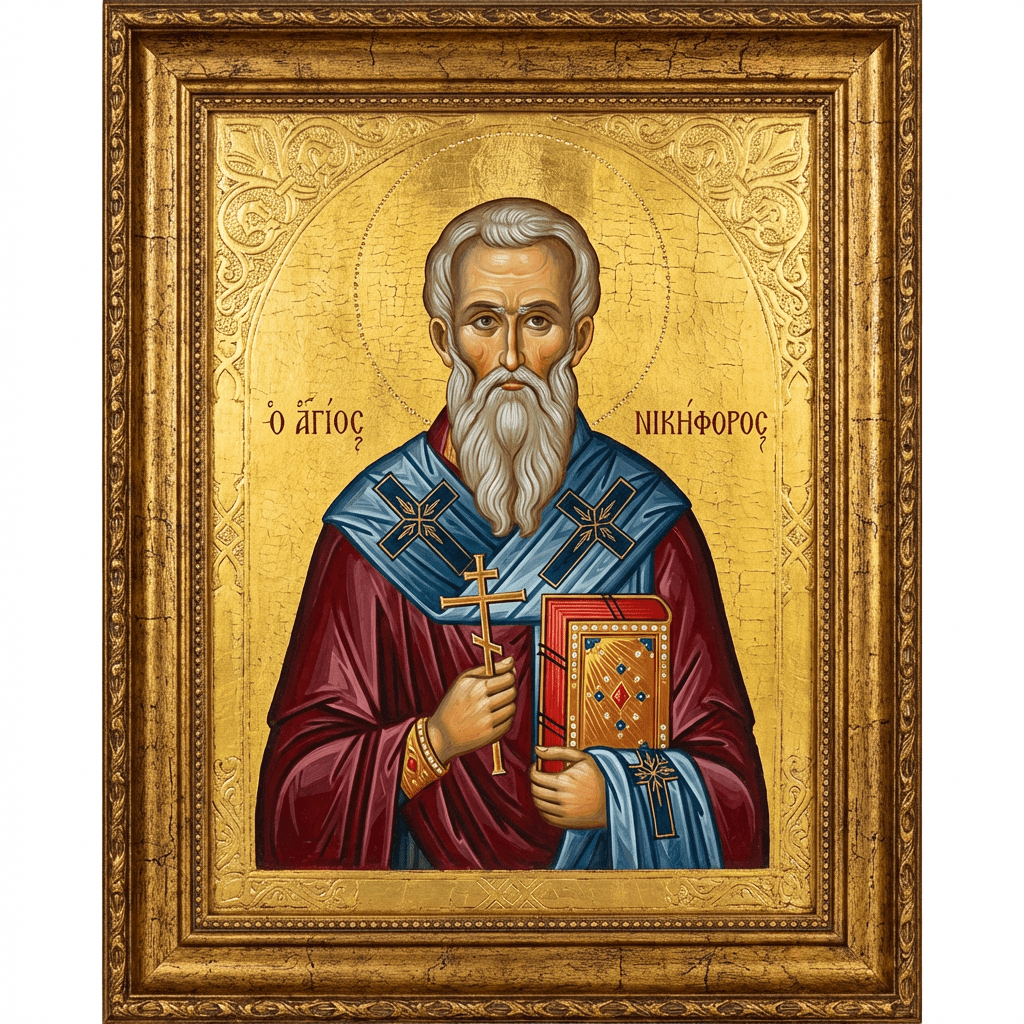
Commemoration of the Translation of the Relics of St. Nicephorus of Constantinople
March 13
Today the Church celebrates the Translation of the Holy Relics of St. Nicephorus, the steadfast Patriarch of Constantinople who defended the truth of the Incarnation during the storm of iconoclasm. His life, his exile, and even his repose became a testimony to the unshakeable faithfulness of God.
St. Nicephorus served as Patriarch from 806 to 815, a time when the veneration of holy icons was fiercely attacked. With clarity, humility, and unwavering courage, he stood for the teaching of the Church: that because Christ truly became man, His image may be depicted and honored.
For this confession, he was exiled by the emperor and spent the remaining years of his life in quiet suffering, praying for the Church he loved. He reposed in peace in 828, far from the city he once shepherded.
But God did not allow his witness to be forgotten.
In 846, after the triumph of Orthodoxy and the restoration of the holy icons, his relics were brought back to Constantinople in a solemn and joyful procession. The faithful welcomed him home with tears, hymns, and thanksgiving, honoring the shepherd who had suffered for the truth.
His return to the city became a symbol of the Church’s victory: Truth may be opposed, but it cannot be extinguished.Faith may be exiled, but it cannot be silenced.Christ’s light always prevails.
A Prayer in Honor of St. Nicephorus
O Christ our God, You strengthened Your servant Nicephorus to defend the truth with humility and courage.
Through his prayers, grant us steadfast hearts, faithful minds, and the grace to stand firm in love even when the world opposes the Gospel.
Restore in us the peace, hope, and clarity that shine from the lives of Your saints.
Amen 💕✌️🙏
This ornate icon of Saint Nikephoros captures the reverent style of traditional Orthodox religious art.
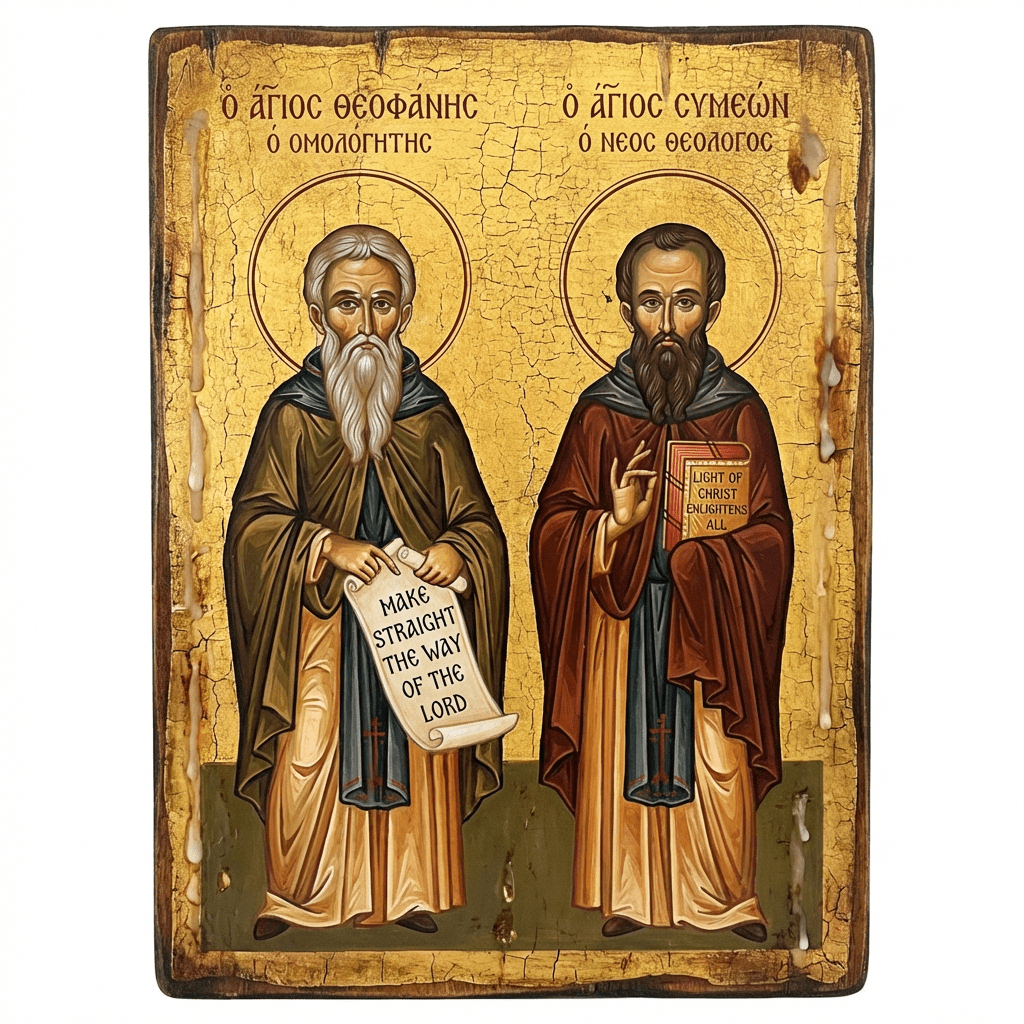
Commemoration of St. Theophanes the Confessor & St. Symeon the New Theologian
March 12
Today the Church honors two radiant saints whose lives, though separated by centuries, shine with the same fire of divine love: St. Theophanes the Confessor, defender of the holy icons, and St. Symeon the New Theologian, herald of the experience of God’s living grace.
Together they remind us that the Christian life is not merely belief—it is communion, transformation, and the unending pursuit of the face of Christ.
St. Theophanes the Confessor — The Faithful Witness
St. Theophanes (8th–9th century) was a nobleman who renounced wealth and privilege to embrace the monastic life. During the iconoclast persecutions, he stood boldly for the truth of the Incarnation, defending the veneration of holy icons with clarity and courage.
For his confession, he was imprisoned, tortured, and exiled—yet he never wavered. His writings strengthened the faithful, and his endurance became a living sermon. He teaches us that truth is worth suffering for, and that faithfulness in trial becomes a fragrance that blesses generations.
St. Symeon the New Theologian — The Prophet of Divine Light
St. Symeon (949–1022) is one of only three saints in the Church given the title “Theologian.” He proclaimed with boldness that every believer is called to experience the grace of God—not as an idea, but as living fire.
Through deep repentance, ceaseless prayer, and tears of compunction, Symeon taught that the Holy Spirit transforms the heart, illuminating the soul with the uncreated light of Christ. His writings remain a treasure of the Church, calling us to a faith that is personal, experiential, and filled with divine love.
He reminds us that God is not distant—He is near, present, and longing to be known.
A Prayer in Honor of St. Theophanes & St. Symeon
O Christ our God, You strengthened Theophanes to confess the truth and Symeon to proclaim the light of Your grace.
Through their prayers, purify our hearts, enlighten our minds, and draw us into deeper communion with You.
Teach us to stand firm in truth and to seek Your presence with humility and love, that our lives may shine with the radiance of Your Spirit.
Amen 💕✌️🙏
This traditional Byzantine icon features Saint Theophanes the Confessor and Saint Symeon the New Theologian holding sacred texts against a gold leaf background.
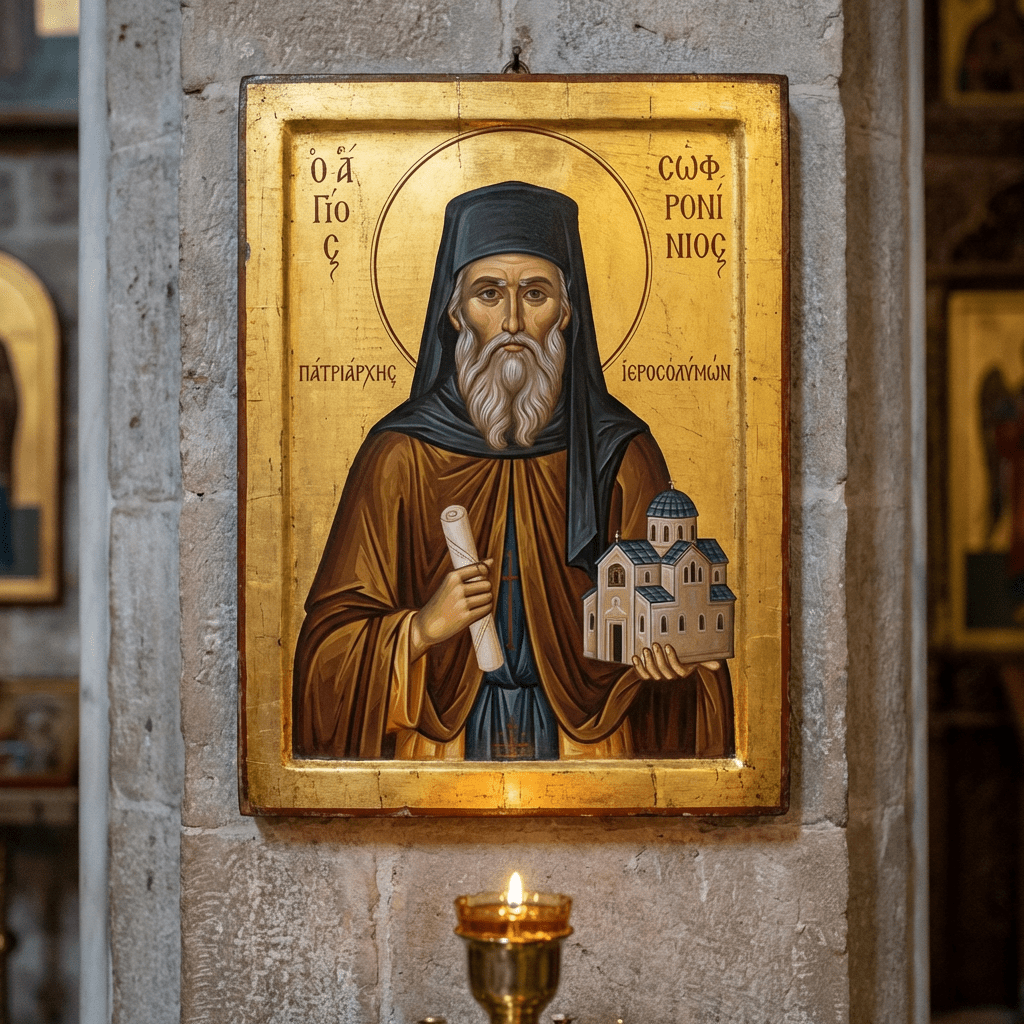
Today we honor St. Sophronius the Patriarch of Jerusalem, a shepherd of deep humility, a defender of the true faith, and a witness of hope during one of the most difficult moments in the history of the Holy City.
Born in Damascus and trained in both Scripture and philosophy, Sophronius became known as “the Wise”—yet his wisdom was always joined with gentleness and purity of heart. He traveled widely, seeking spiritual depth, learning from holy monks, and strengthening the Church with his writings and teachings.
In 634, he was chosen as Patriarch of Jerusalem, a time when the city faced both theological confusion and political turmoil. With clarity and courage, he defended the Orthodox confession of Christ’s two natures and two wills, standing firmly against the rising heresy of monothelitism. His voice became a beacon of truth in an age of compromise.
When Jerusalem fell to foreign armies, Sophronius did not abandon his flock. He remained with his people, comforting them, praying for them, and interceding for mercy. His heart broke for the suffering of the holy places, and he offered his tears as a sacrifice of love for the Church.
He reposed in peace in 638, leaving behind a legacy of faithfulness, humility, and unwavering devotion to Christ.
A Prayer in Honor of St. Sophronius
O Christ our God, You raised up Sophronius as a shepherd of truth and a guardian of Your holy Church.
Grant us the same courage to confess Your name, the same humility to serve Your people, and the same steadfast hope in times of trial.
Through his prayers, protect Your holy places, strengthen Your Church, and fill our hearts with the peace that comes from You alone.
Amen 💕✌️🙏
A traditional icon of Saint Sophronius of Jerusalem is displayed above a glowing votive candle.
A hermetic seal keeps something protected, uncontaminated, and whole. To say “Love is my hermetic” is to say:
Love is my protection
Love is my boundary
Love is what keeps my heart from being corrupted
Love is the atmosphere I choose to live in
This aligns deeply with Scripture.
“Above all, guard your heart, for everything you do flows from it.” Proverbs 4:23
Love becomes the guard of the heart.
2. God’s Love Is the Seal Over Our Lives
Scripture teaches that God Himself seals us with love.
“Set me as a seal upon your heart… for love is strong as death.” Song of Songs 8:6
The Holy Spirit is also called a seal (Ephesians 1:13). God’s love is not just an emotion — it is a covering, a mark, a protection.
When love is your hermetic, you are:
sealed by God
protected from bitterness
guarded from fear
kept from hatred
preserved in grace
3. Jesus Shows Us What a Life Sealed by Love Looks Like
Jesus lived with love as His hermetic. Nothing penetrated His heart except the Father’s love.
Insults didn’t corrupt Him
Betrayal didn’t harden Him
Violence didn’t turn Him into a mirror of His enemies
Suffering didn’t make Him bitter
“Having loved His own… He loved them to the end.” John 13:1
Love was His atmosphere, His boundary, His identity.
4. Love Protects Us From the World’s Contamination
Paul writes:
“Love… keeps no record of wrongs… bears all things… endures all things.” 1 Corinthians 13:5–7
Love is not fragile. Love is armor.
When love is your hermetic:
anger cannot take root
fear cannot dominate
resentment cannot grow
cynicism cannot poison you
despair cannot drown you
Love becomes the spiritual environment in which your soul stays healthy.
5. Love Is the Boundary of Christian Ethics
Jesus said:
“By this all people will know you are My disciples, if you love one another.” John 13:35
Love is the boundary line of Christian identity. It is the “hermetic seal” that distinguishes the people of God.
Not power
Not success
Not perfection
Not knowledge
Love is the mark.
6. Love Is the Hermetic That Keeps Us in God’s Will
Paul says:
“Let all that you do be done in love.” 1 Corinthians 16:14
Love becomes the filter for every action, every word, every decision.
Before I speak — love seals my tongue. Before I act — love seals my motives. Before I judge — love seals my perspective. Before I respond — love seals my emotions.
Love becomes the environment in which obedience becomes joyful.
7. The Holy Spirit Fills the Seal With Divine Love
We cannot seal ourselves. The Spirit does it.
“The love of God has been poured into our hearts through the Holy Spirit.” Romans 5:5
The Spirit:
fills the seal
strengthens the seal
renews the seal
expands the seal
Love is not a human achievement — it is a divine gift.
Conclusion: Love Is My Hermetic
To say “Love is my hermetic” is to declare:
I live sealed in God’s love
I refuse to let hatred, fear, or bitterness enter my heart
I choose the way of Jesus
I am protected, preserved, and empowered by divine love
Love is my boundary, my identity, my covering, and my strength
Love is not weakness. Love is the strongest seal in the universe. Love is the life of God guarding the life of His people. 💕✌️🙏
This intricate wax seal bearing the name of Hermes Trismegistus evokes the mysterious world of ancient alchemy and occult wisdom.
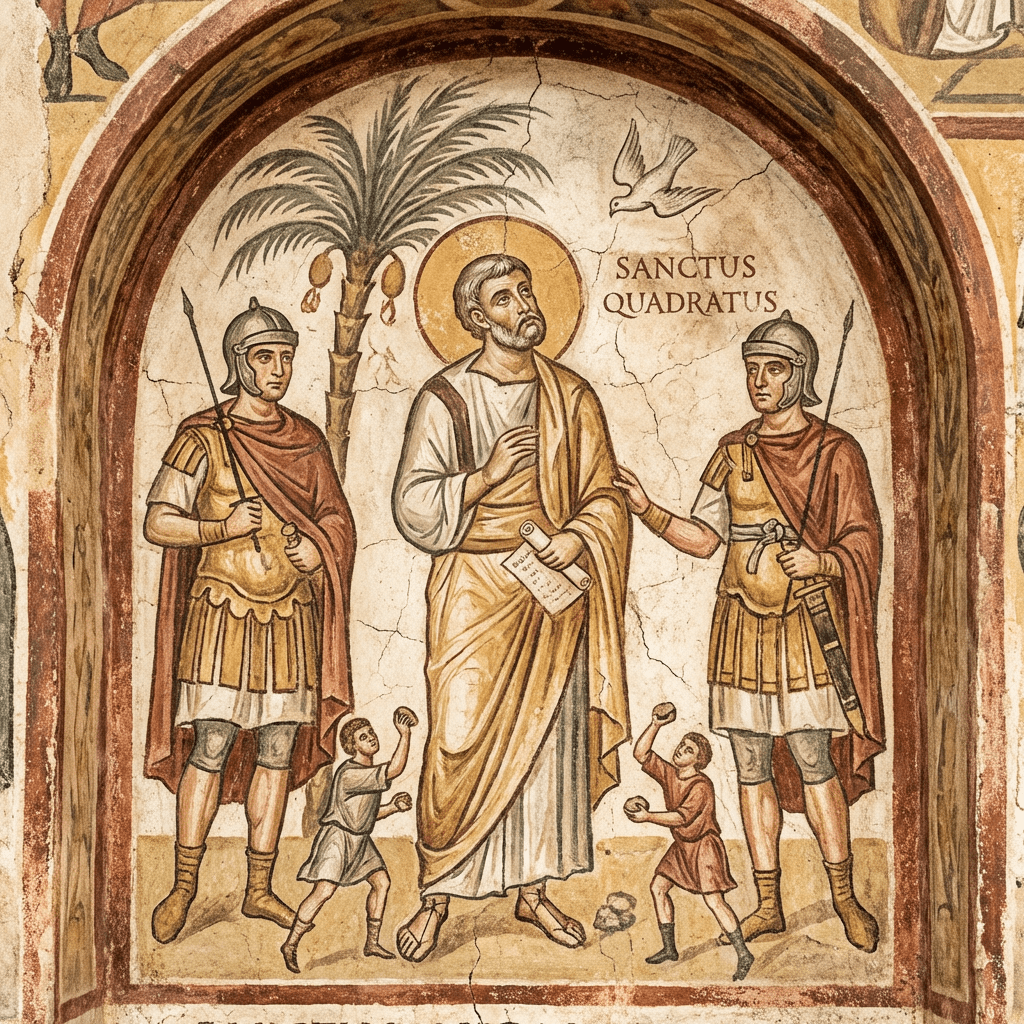
Commemoration of Quadratus the Martyr and His Companions
March 10
Today we honor St. Quadratus the Martyr and his holy companions, faithful witnesses who offered their lives for Christ during the persecutions of the 3rd century. Their courage shines like a beacon in the history of the Church, reminding us that the love of Christ is stronger than fear, suffering, or death itself.
Quadratus and his companions lived in a time when confessing Jesus openly could cost everything. Yet they refused to hide their faith. They strengthened one another, encouraged one another, and stood together as brothers in the Lord. When arrested and commanded to deny Christ, they answered with the boldness of the apostles:
“We belong to Christ, and we will not forsake Him.”
Their captors tried threats, torture, and promises of freedom, but nothing could break their devotion. United in faith and love, they endured their sufferings with patience, offering their lives as a fragrant sacrifice to God.
Their witness teaches us that holiness is not found in comfort, but in courage; not in ease, but in faithfulness; not in the absence of trials, but in trusting Christ through them.
A Prayer in Honor of St. Quadratus and His Companions
O Christ our God, You strengthened Quadratus and his companions to stand firm in the face of persecution.
Grant us the same steadfast faith— to confess Your name with boldness, to endure trials with patience, and to love You above all earthly things.
Through their prayers, protect Your Church, guide our hearts, and fill us with the courage of the saints.
Amen 💕✌️🙏
An ancient mural captures the scene of Saint Quadratus standing between soldiers and palm trees.
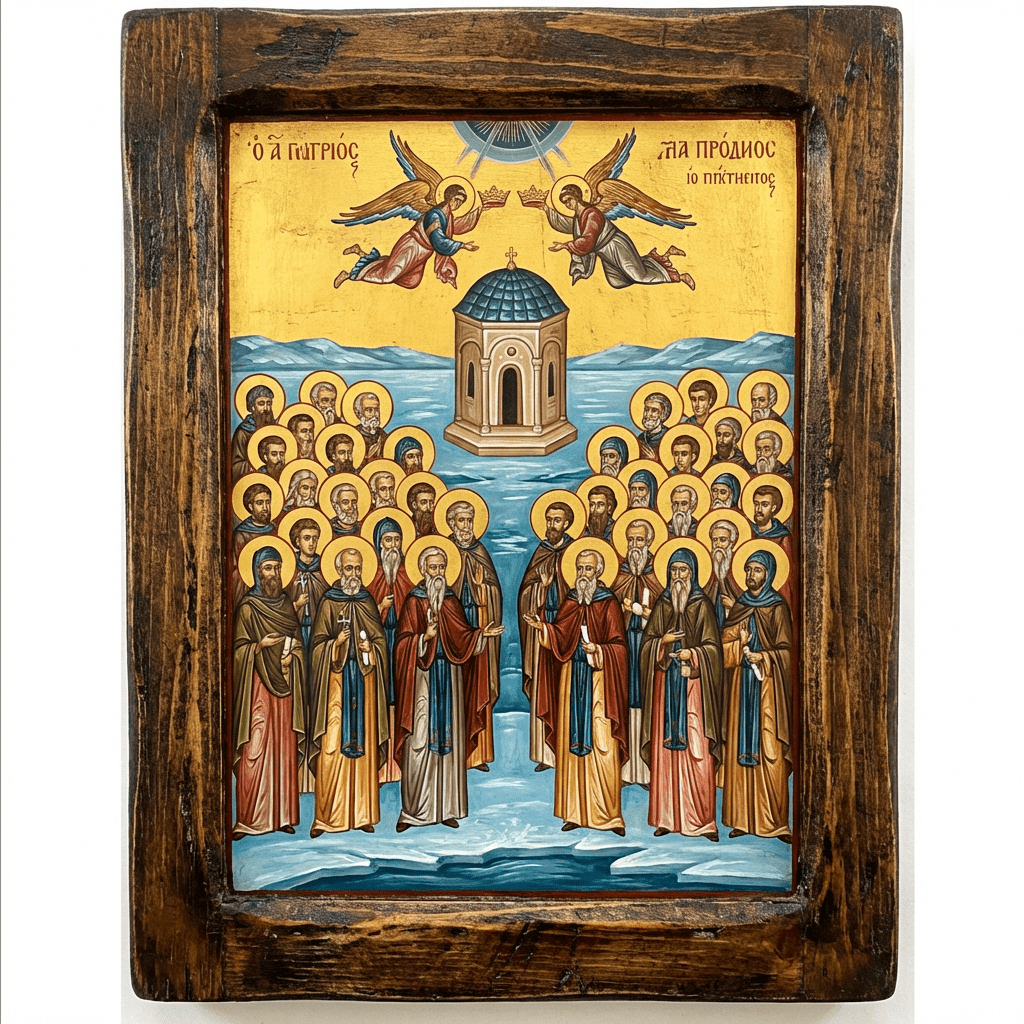
Today we honor the Forty Holy Martyrs of Sebastia, brave Christian soldiers who, in the year 320, bore witness to Christ with a courage that still stirs the heart of the Church.
Serving in the Roman army under the governor Agricola, these forty men refused to offer sacrifice to idols. Their loyalty to Christ was stronger than their fear of punishment, and their confession was simple and unwavering:
“We are Christians, and nothing can separate us from the love of Christ.”
Enraged by their steadfastness, the governor condemned them to a cruel death. On a freezing winter night, they were stripped and forced to stand upon the icy lake of Sebastia. Warm baths were placed nearby to tempt them to abandon their faith—but the martyrs held firm, encouraging one another with the words:
“Forty we entered the battle—let forty receive the crown.”
One soldier faltered and fled to the warm bath, where he died instantly. But in a miracle of grace, one of the guards—moved by the martyrs’ courage and the heavenly light that shone upon them—confessed Christ, cast off his armor, and joined them on the ice, restoring their number to forty.
By dawn, they had completed their earthly struggle and entered the joy of their Lord.
Their witness reminds us that: Faithfulness is stronger than fear.Unity strengthens the weary.Christ is worth every sacrifice.
A Prayer in Honor of the Forty Martyrs
O Christ our God, You strengthened the Forty Martyrs of Sebastia to endure suffering with courage and hope.
Grant us the same steadfast faith— to stand firm in trials, to encourage one another in love, and to trust in Your victory over every darkness.
Through their prayers, protect Your Church and kindle in us the fire of holy devotion.
Amen 💕✌️🙏
A detailed Orthodox icon depicts Saint Patricius and his companions gathered around a central shrine.


 Whispers of Grace