Tag: love

  • Honoring St. Sophronius of Jerusalem

    March 11

    Today we honor St. Sophronius the Patriarch of Jerusalem, a shepherd of deep humility, a defender of the true faith, and a witness of hope during one of the most difficult moments in the history of the Holy City.

    Born in Damascus and trained in both Scripture and philosophy, Sophronius became known as “the Wise”—yet his wisdom was always joined with gentleness and purity of heart. He traveled widely, seeking spiritual depth, learning from holy monks, and strengthening the Church with his writings and teachings.

    In 634, he was chosen as Patriarch of Jerusalem, a time when the city faced both theological confusion and political turmoil. With clarity and courage, he defended the Orthodox confession of Christ’s two natures and two wills, standing firmly against the rising heresy of monothelitism. His voice became a beacon of truth in an age of compromise.

    When Jerusalem fell to foreign armies, Sophronius did not abandon his flock. He remained with his people, comforting them, praying for them, and interceding for mercy. His heart broke for the suffering of the holy places, and he offered his tears as a sacrifice of love for the Church.

    He reposed in peace in 638, leaving behind a legacy of faithfulness, humility, and unwavering devotion to Christ.

    A Prayer in Honor of St. Sophronius

    O Christ our God, You raised up Sophronius as a shepherd of truth and a guardian of Your holy Church.

    Grant us the same courage to confess Your name, the same humility to serve Your people, and the same steadfast hope in times of trial.

    Through his prayers, protect Your holy places, strengthen Your Church, and fill our hearts with the peace that comes from You alone.

    Amen 💕✌️🙏
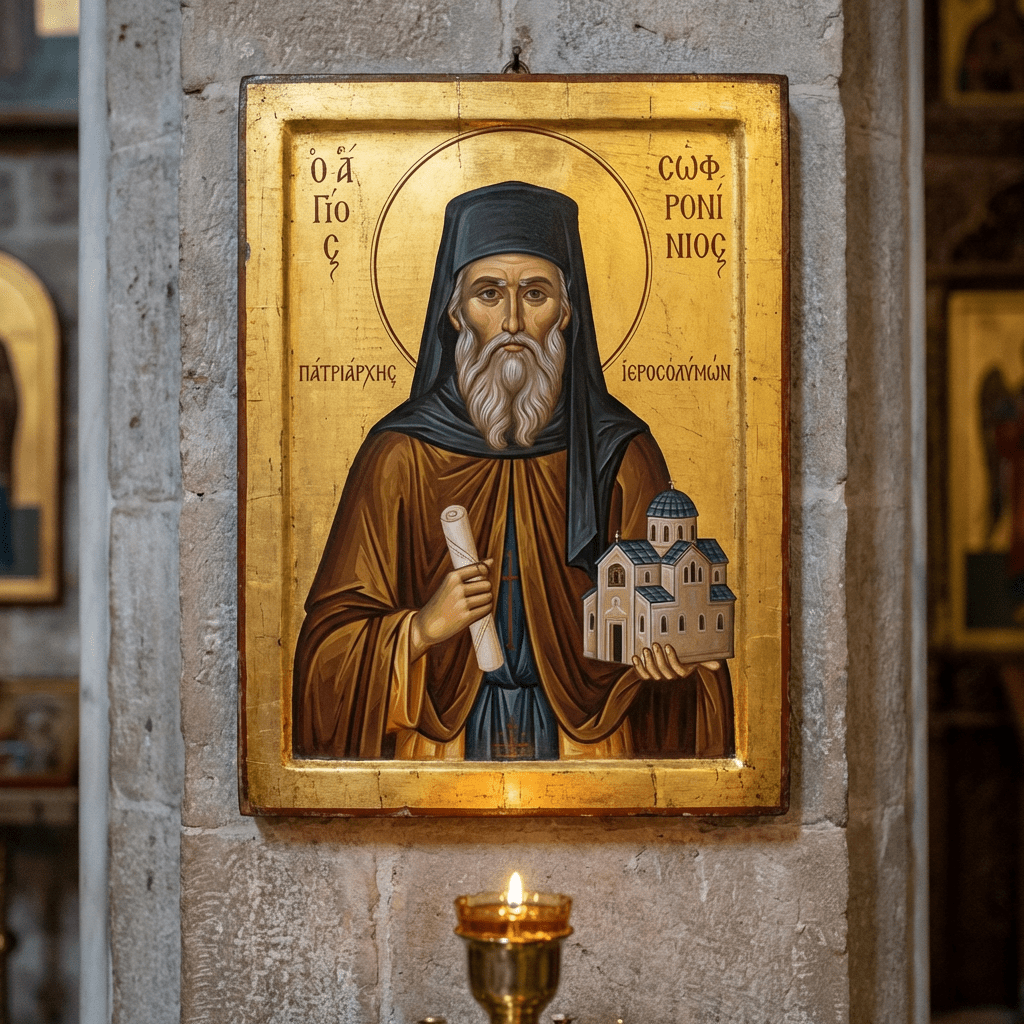
    Icon of Ο ΑΓΙΟC CΩΦΡΟΝΙΟC ΠΑΤΡΙΑΡΧΗC ΙΕΡΟCΟΛΥΜΩΝ holding a scroll and church model.
    A traditional icon of Saint Sophronius of Jerusalem is displayed above a glowing votive candle.
  • This Weeks Biblical Lesson: Understanding Love as a Spiritual Hermetic Seal

    “Love Is My Hermetic”

    1. What Does “Hermetic” Mean Spiritually?

    A hermetic seal keeps something protected, uncontaminated, and whole. To say “Love is my hermetic” is to say:

    • Love is my protection
    • Love is my boundary
    • Love is what keeps my heart from being corrupted
    • Love is the atmosphere I choose to live in

    This aligns deeply with Scripture.

    “Above all, guard your heart, for everything you do flows from it.” Proverbs 4:23

    Love becomes the guard of the heart.

    2. God’s Love Is the Seal Over Our Lives

    Scripture teaches that God Himself seals us with love.

    “Set me as a seal upon your heart… for love is strong as death.” Song of Songs 8:6

    The Holy Spirit is also called a seal (Ephesians 1:13). God’s love is not just an emotion — it is a covering, a mark, a protection.

    When love is your hermetic, you are:

    • sealed by God
    • protected from bitterness
    • guarded from fear
    • kept from hatred
    • preserved in grace

    3. Jesus Shows Us What a Life Sealed by Love Looks Like

    Jesus lived with love as His hermetic. Nothing penetrated His heart except the Father’s love.

    • Insults didn’t corrupt Him
    • Betrayal didn’t harden Him
    • Violence didn’t turn Him into a mirror of His enemies
    • Suffering didn’t make Him bitter

    “Having loved His own… He loved them to the end.” John 13:1

    Love was His atmosphere, His boundary, His identity.

    4. Love Protects Us From the World’s Contamination

    Paul writes:

    “Love… keeps no record of wrongs… bears all things… endures all things.” 1 Corinthians 13:5–7

    Love is not fragile. Love is armor.

    When love is your hermetic:

    • anger cannot take root
    • fear cannot dominate
    • resentment cannot grow
    • cynicism cannot poison you
    • despair cannot drown you

    Love becomes the spiritual environment in which your soul stays healthy.

    5. Love Is the Boundary of Christian Ethics

    Jesus said:

    “By this all people will know you are My disciples, if you love one another.” John 13:35

    Love is the boundary line of Christian identity. It is the “hermetic seal” that distinguishes the people of God.

    • Not power
    • Not success
    • Not perfection
    • Not knowledge

    Love is the mark.

    6. Love Is the Hermetic That Keeps Us in God’s Will

    Paul says:

    “Let all that you do be done in love.” 1 Corinthians 16:14

    Love becomes the filter for every action, every word, every decision.

    Before I speak — love seals my tongue. Before I act — love seals my motives. Before I judge — love seals my perspective. Before I respond — love seals my emotions.

    Love becomes the environment in which obedience becomes joyful.

    7. The Holy Spirit Fills the Seal With Divine Love

    We cannot seal ourselves. The Spirit does it.

    “The love of God has been poured into our hearts through the Holy Spirit.” Romans 5:5

    The Spirit:

    • fills the seal
    • strengthens the seal
    • renews the seal
    • expands the seal

    Love is not a human achievement — it is a divine gift.

    Conclusion: Love Is My Hermetic

    To say “Love is my hermetic” is to declare:

    • I live sealed in God’s love
    • I refuse to let hatred, fear, or bitterness enter my heart
    • I choose the way of Jesus
    • I am protected, preserved, and empowered by divine love
    • Love is my boundary, my identity, my covering, and my strength

    Love is not weakness. Love is the strongest seal in the universe. Love is the life of God guarding the life of His people. 💕✌️🙏

    Intricate wax seal with text 'SIGILLUM AMORIS DIVINI HERMES TRISMEGISTUS' on parchment amidst occult objects.
    This intricate wax seal bearing the name of Hermes Trismegistus evokes the mysterious world of ancient alchemy and occult wisdom.
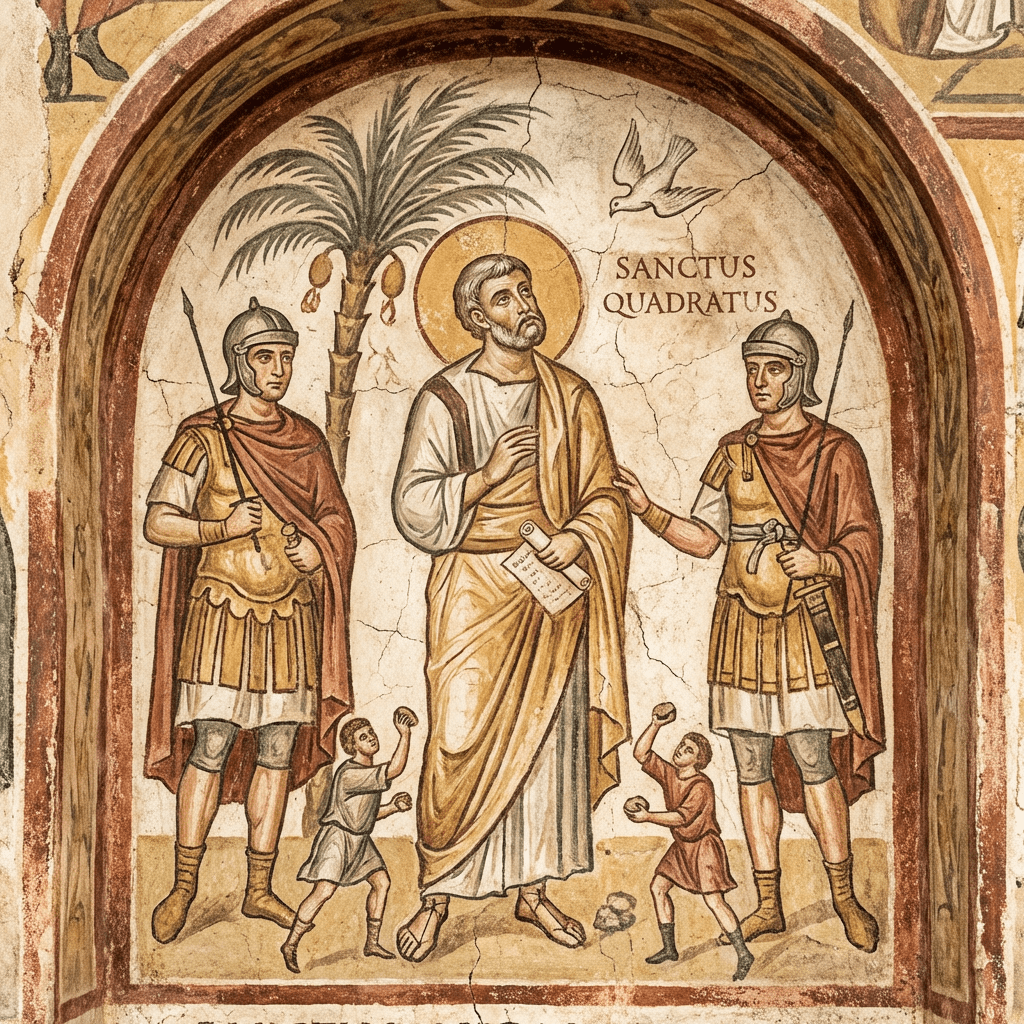
  • Honoring St. Quadratus the Martyr: A Legacy of Faith

    Commemoration of Quadratus the Martyr and His Companions

    March 10

    Today we honor St. Quadratus the Martyr and his holy companions, faithful witnesses who offered their lives for Christ during the persecutions of the 3rd century. Their courage shines like a beacon in the history of the Church, reminding us that the love of Christ is stronger than fear, suffering, or death itself.

    Quadratus and his companions lived in a time when confessing Jesus openly could cost everything. Yet they refused to hide their faith. They strengthened one another, encouraged one another, and stood together as brothers in the Lord. When arrested and commanded to deny Christ, they answered with the boldness of the apostles:

    “We belong to Christ, and we will not forsake Him.”

    Their captors tried threats, torture, and promises of freedom, but nothing could break their devotion. United in faith and love, they endured their sufferings with patience, offering their lives as a fragrant sacrifice to God.

    Their witness teaches us that holiness is not found in comfort, but in courage; not in ease, but in faithfulness; not in the absence of trials, but in trusting Christ through them.

    A Prayer in Honor of St. Quadratus and His Companions

    O Christ our God, You strengthened Quadratus and his companions to stand firm in the face of persecution.

    Grant us the same steadfast faith— to confess Your name with boldness, to endure trials with patience, and to love You above all earthly things.

    Through their prayers, protect Your Church, guide our hearts, and fill us with the courage of the saints.

    Amen 💕✌️🙏

    Mural of Sanctus Quadratus between two Roman soldiers, with a palm tree and a dove.
    An ancient mural captures the scene of Saint Quadratus standing between soldiers and palm trees.
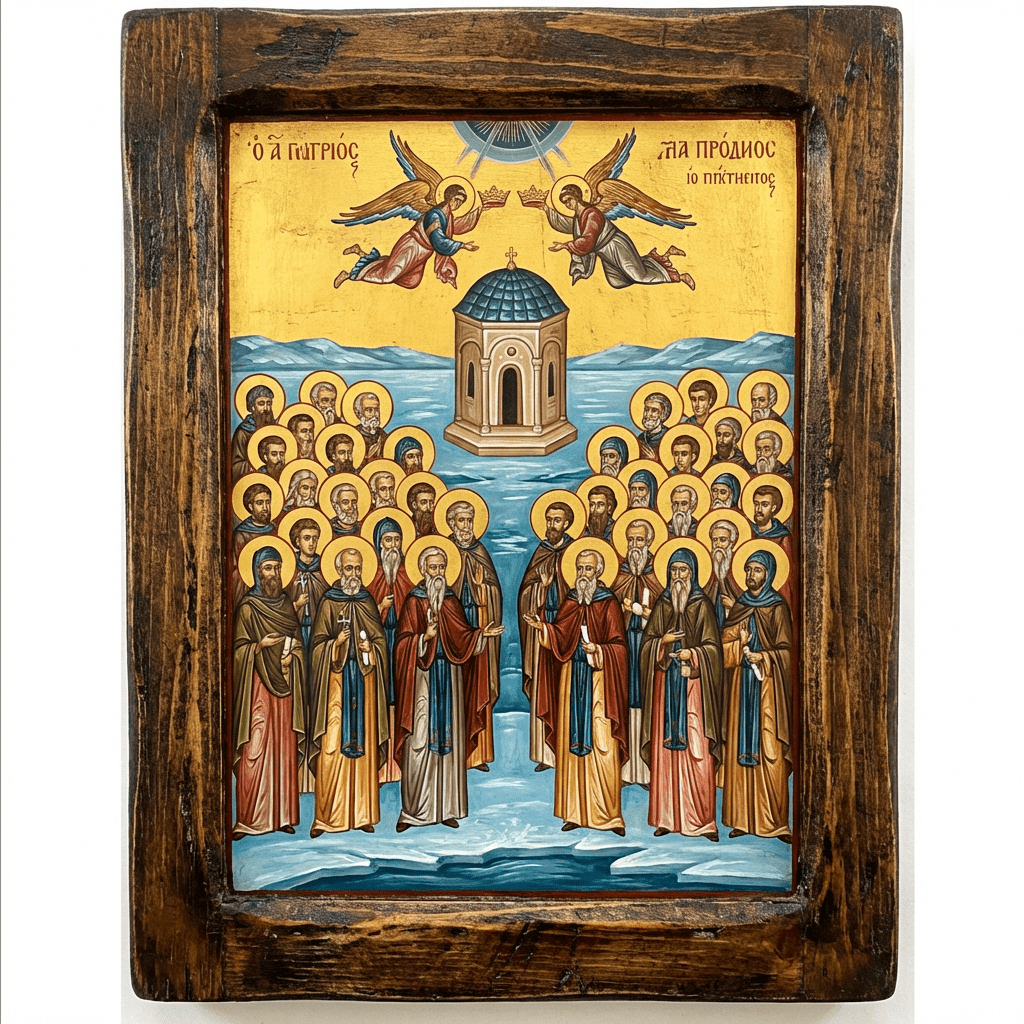
  • Commemoration of the Forty Holy Martyrs of Sebastia

    March 9

    Today we honor the Forty Holy Martyrs of Sebastia, brave Christian soldiers who, in the year 320, bore witness to Christ with a courage that still stirs the heart of the Church.

    Serving in the Roman army under the governor Agricola, these forty men refused to offer sacrifice to idols. Their loyalty to Christ was stronger than their fear of punishment, and their confession was simple and unwavering:

    “We are Christians, and nothing can separate us from the love of Christ.”

    Enraged by their steadfastness, the governor condemned them to a cruel death. On a freezing winter night, they were stripped and forced to stand upon the icy lake of Sebastia. Warm baths were placed nearby to tempt them to abandon their faith—but the martyrs held firm, encouraging one another with the words:

    “Forty we entered the battle—let forty receive the crown.”

    One soldier faltered and fled to the warm bath, where he died instantly. But in a miracle of grace, one of the guards—moved by the martyrs’ courage and the heavenly light that shone upon them—confessed Christ, cast off his armor, and joined them on the ice, restoring their number to forty.

    By dawn, they had completed their earthly struggle and entered the joy of their Lord.

    Their witness reminds us that: Faithfulness is stronger than fear. Unity strengthens the weary. Christ is worth every sacrifice.

    A Prayer in Honor of the Forty Martyrs

    O Christ our God, You strengthened the Forty Martyrs of Sebastia to endure suffering with courage and hope.

    Grant us the same steadfast faith— to stand firm in trials, to encourage one another in love, and to trust in Your victory over every darkness.

    Through their prayers, protect Your Church and kindle in us the fire of holy devotion.

    Amen 💕✌️🙏

    Orthodox icon of Saint Patricius with Greek text Ὁ ἍΓ ΠΑΤΡΙΟC and ΚΑΙ ΠΟΛΥΑΙΝΟC.
    A detailed Orthodox icon depicts Saint Patricius and his companions gathered around a central shrine.
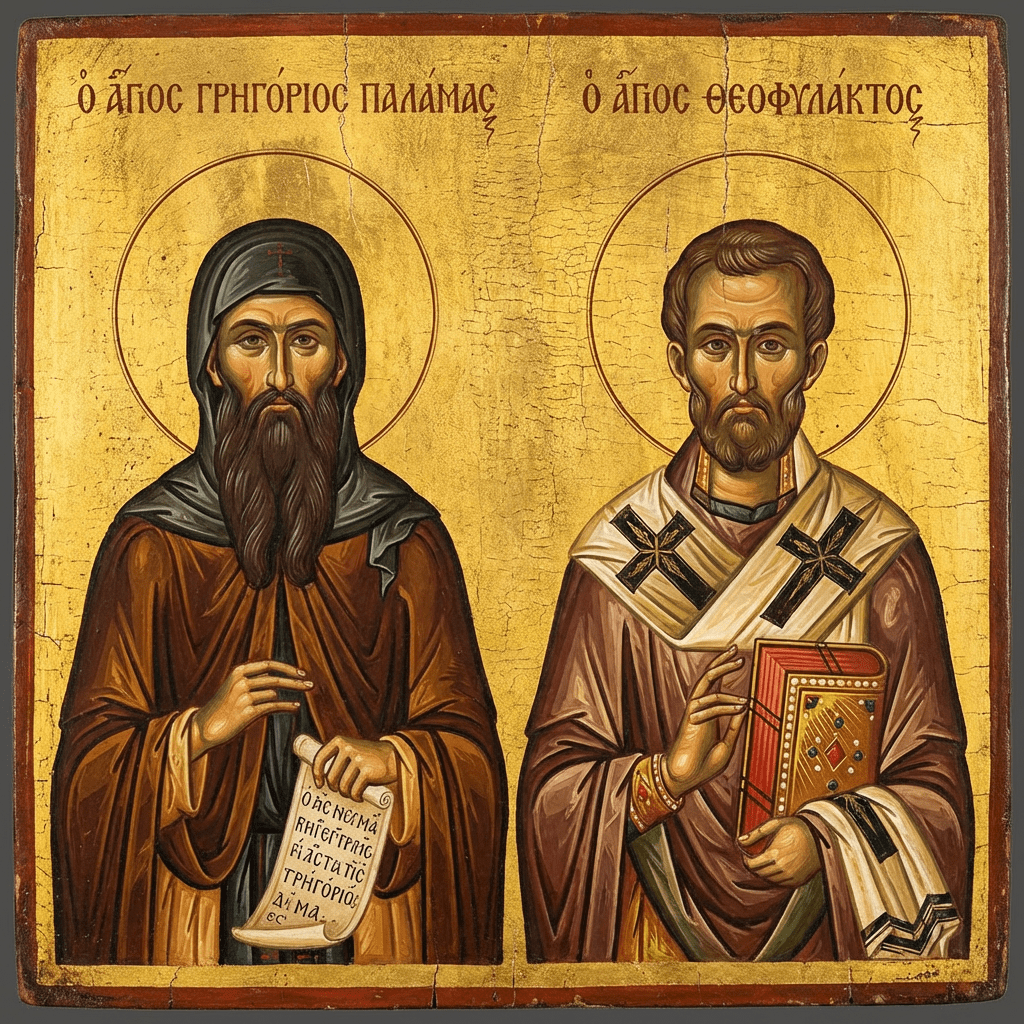
  • Honoring St. Gregory Palamas and St. Theophylact: Lessons of Faith

    Commemoration of St. Gregory Palamas & St. Theophylact, Bishop of Nicomedia

    Second Sunday of Great Lent

    Today the Church lifts up two radiant lights who, though separated by centuries, shine with the same unwavering devotion to Christ: St. Gregory Palamas, Archbishop of Thessalonica, and St. Theophylact, the gentle and long‑suffering Bishop of Nicomedia.

    Together they remind us that holiness is not shaped by comfort, but by faithfulness.

    St. Gregory Palamas — The Herald of Divine Grace

    St. Gregory (1296–1359) stands as one of the great defenders of the Church’s teaching on the uncreated grace of God. In an age of confusion, he proclaimed that God truly shares His life with us—not as an idea, but as transforming light.

    Through prayer, humility, and the hesychast tradition, he taught that every believer can experience the mercy, healing, and presence of God.

    His message remains timeless: God is not far away. His grace is real, His light is near, and His love is personal.

    St. Theophylact of Nicomedia — The Shepherd of Compassion

    St. Theophylact (8th–9th century) served as Bishop of Nicomedia during the time of the iconoclast persecutions. Known for his gentleness, charity, and deep love for the poor, he defended the holy icons with courage and clarity.

    For his faithfulness, he was exiled for thirty years—yet he never grew bitter. His patience became his sermon. His suffering became his witness. His love became his legacy.

    He teaches us that true strength is found in mercy, and that faithfulness in suffering becomes a fragrance that blesses generations.

    A Prayer in Honor of St. Gregory Palamas & St. Theophylact

    O Christ our God, You raised up Gregory as a teacher of divine grace and Theophylact as a shepherd of compassion.

    Through their prayers, enlighten our minds, soften our hearts, and strengthen our faith.

    Teach us to seek Your light with humility and to serve others with mercy, that we may walk in the fullness of Your love.

    Amen 💕✌️🙏

    Icon of Saint Gregory Palamas and Saint Theophylact with their names written in Greek above.
    This beautifully detailed Byzantine icon depicts Saint Gregory Palamas and Saint Theophylact against a radiant gold background.
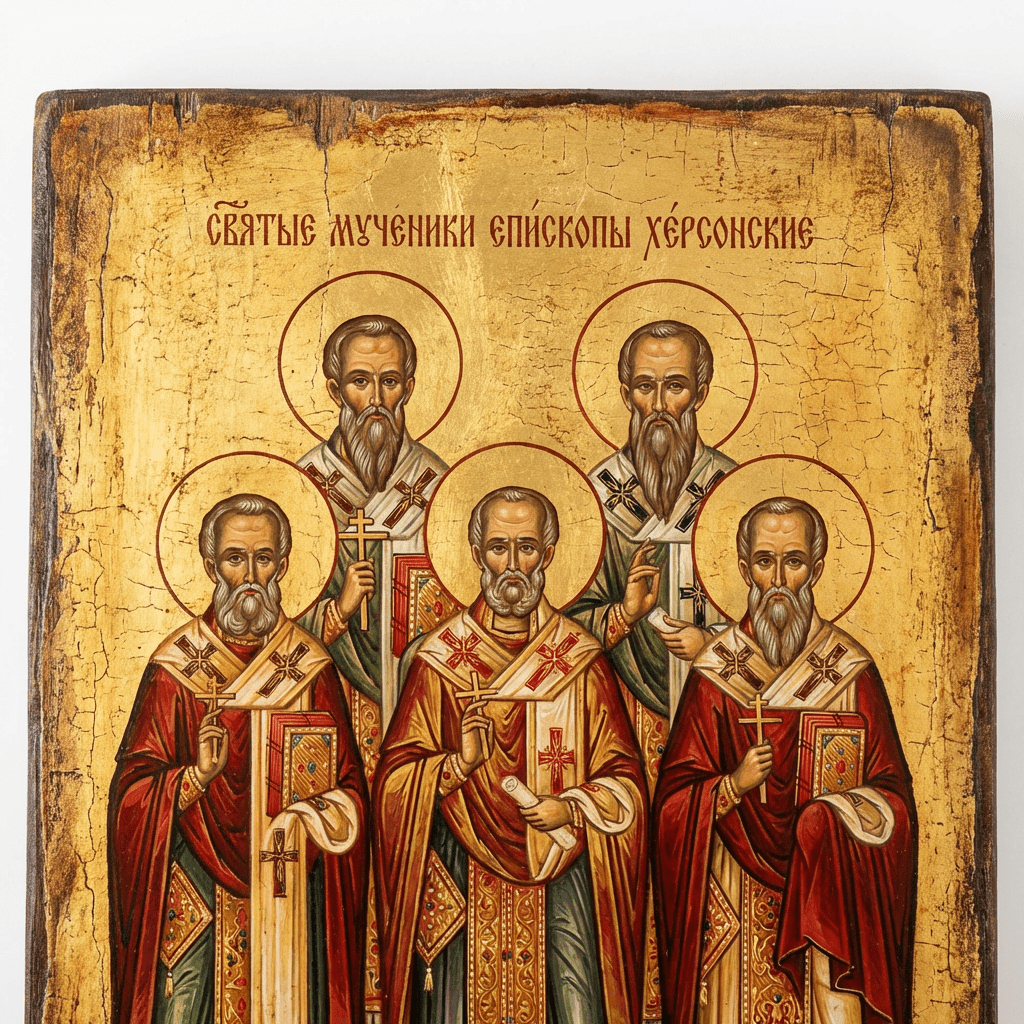
  • Commemoration of the Holy Martyred Bishops of Cherson

    March 7

    Today we honor the Holy Martyred Bishops of Cherson—Basil, Ephraim, Eugene, Agathodorus, Elpidius, Aetherius, and Capito—faithful shepherds who carried the light of Christ into the dark and dangerous lands of the Black Sea region during the 4th century.

    Sent by the Church to preach the Gospel in Cherson, these bishops faced fierce opposition, pagan hostility, and constant danger. Yet they did not shrink back. With apostolic courage, they proclaimed Christ among people who had never heard His name, enduring hardship, rejection, and persecution for the sake of the Kingdom.

    One by one, they sealed their ministry with their blood:

    • Basil, slain by a mob for destroying idols
    • Ephraim, tortured and killed for preaching Christ
    • Eugene, Agathodorus, and Elpidius, martyred together by pagan rulers
    • Aetherius, drowned at sea while traveling to strengthen the faithful
    • Capito, stoned by those who resisted the Gospel

    Their lives were different, but their witness was one: Christ is worth everything.

    They remind us that the Gospel advances not through comfort, but through courage; not through ease, but through faithfulness; not through earthly power, but through the quiet strength of those who love Christ more than life itself.

    A Prayer in Honor of the Martyred Bishops of Cherson

    O Christ our God, You strengthened the holy bishops of Cherson to preach Your Gospel with boldness and to lay down their lives for Your name.

    Grant us the same courage in our own generation— to speak Your truth with love, to endure hardship with patience, and to shine Your light in places of darkness.

    Through their prayers, protect Your Church and guide us in the path of faithfulness and peace. Amen 💕✌️🙏

    Orthodox icon of five bishops with text reading СВЯТЫЕ МУЧЕНИКИ ЕПИСКОПЫ ХЕРСОНСКИЕ.
    An ornate Russian Orthodox icon depicting five holy martyr bishops who served as early Christian missionaries in Cherson.

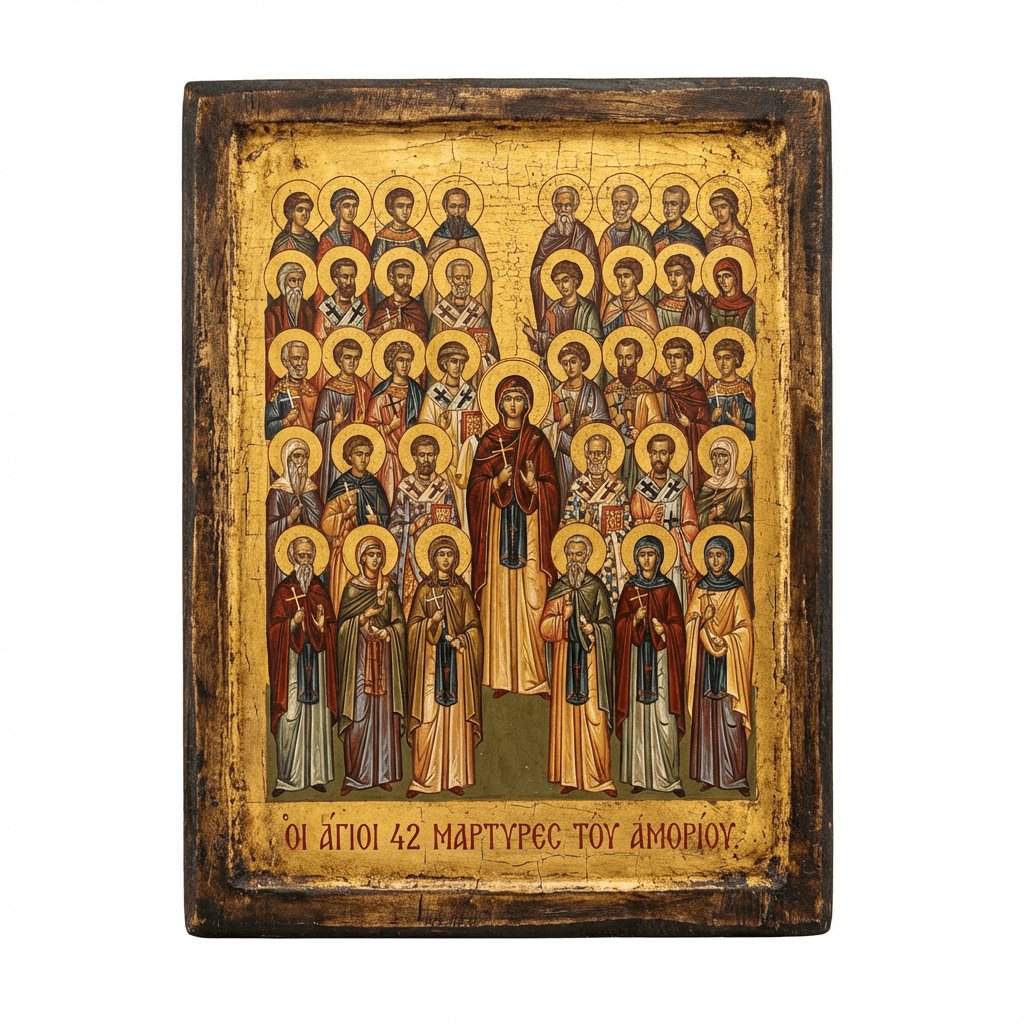
  • Commemoration of the 42 Holy Martyrs of Amorion

    March 6

    Today we remember the 42 Holy Martyrs of Amorion, faithful Christian soldiers and leaders who sealed their confession of Christ with their blood in the year 845. Captured during the fall of the city of Amorion in Phrygia, they endured seven long years of imprisonment—years marked by pressure, persuasion, and promises meant to break their faith.

    Yet their hearts remained unshaken.

    Though they were men of rank, influence, and earthly honor, they refused every offer to deny Christ. Their captors tried threats, flattery, and the promise of power, but the martyrs answered with the same steadfast conviction:

    “We belong to Christ, and we will not betray Him.”

    At last, seeing their unbreakable faith, their enemies condemned them to death. One by one, the 42 martyrs offered their lives with courage, trusting the promise of the Lord who said, “Be faithful unto death, and I will give you the crown of life.” (Revelation 2:10)

    Their witness shines across the centuries, reminding us that: Faithfulness is stronger than fear. Hope is stronger than suffering. Christ is worth everything.

    A Prayer in Honor of the 42 Martyrs

    Lord Jesus Christ, You strengthened the 42 Martyrs of Amorion to stand firm in the face of trial. Grant us the same courage to remain faithful in our own struggles. Teach us to love You above all earthly things, to endure with patience, and to trust in Your victory over every enemy.

    May their prayers surround us, and may their example inspire us to walk in steadfast hope and unwavering devotion.

    Amen 💕✌️🙏

    Religious icon of 42 saints with halos and the Greek text ΟΙ ΑΓΙΟΙ 42 ΜΑΡΤΥΡΕΣ ΤΟΥ ΑΜΟΡΙΟΥ.
    A hand-painted Byzantine-style icon representing the 42 Martyrs of Amorium against a gold background.
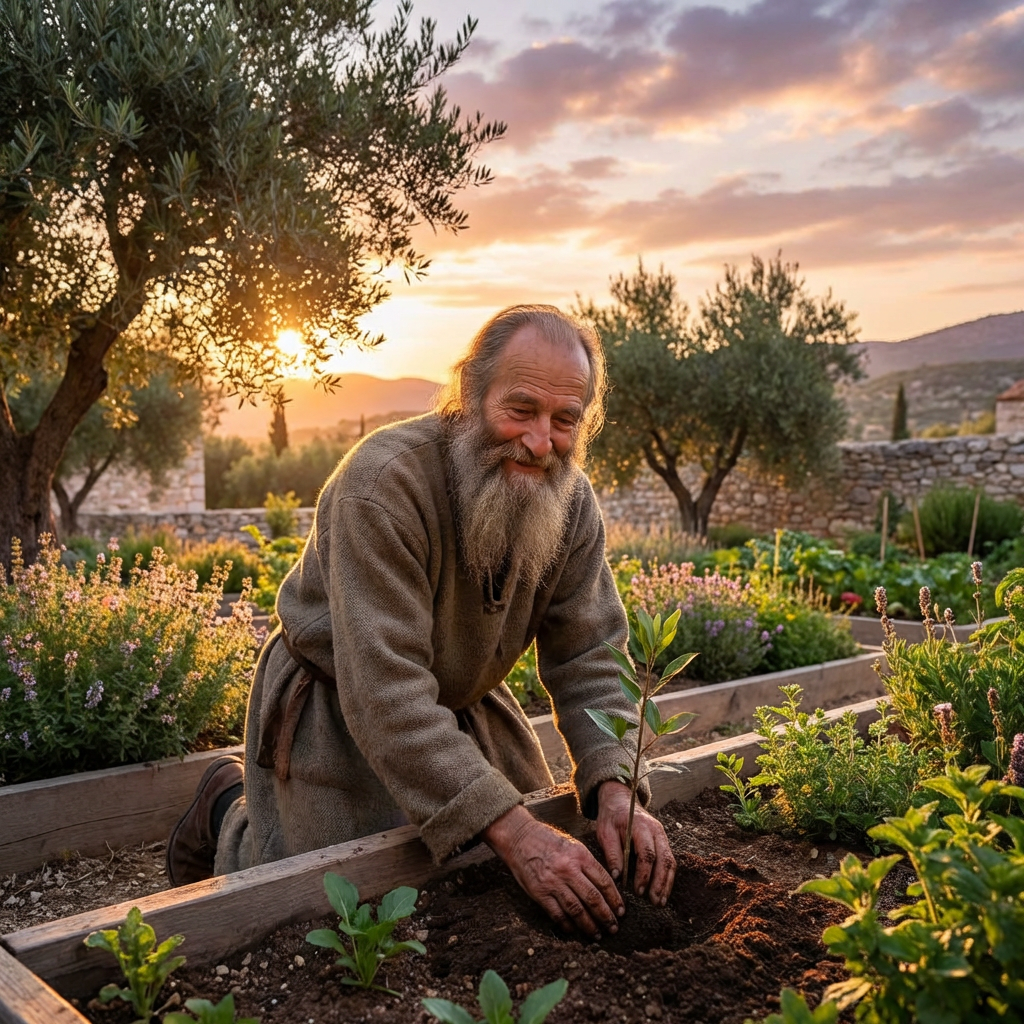
  • Embracing Humility: Lessons from St. Conon the Gardener

    Commemoration of St. Conon the Gardener

    Today the Church remembers St. Conon the Gardener, a humble and radiant saint whose life shows how holiness can bloom in the simplest soil. His witness reminds us that God often chooses ordinary people—quiet workers, laborers, and those hidden from the world—to reveal extraordinary grace.

    A Life Rooted in Simplicity and Faith

    St. Conon lived in the 3rd century in the region of Pamphylia. He was not a scholar, a priest, or a nobleman—he was a gardener. Yet his heart was rich with faith, purity, and love for Christ.

    His daily work became prayer. His garden became a place of communion with God. His humility became the soil where holiness took root.

    Conon teaches us that sanctity is not found in status, but in surrender.

    A Martyr’s Courage

    During a wave of persecution, Conon was arrested and ordered to sacrifice to idols. He refused with quiet strength, confessing Christ openly. He endured torture with patience, praying for his persecutors and entrusting his soul to God.

    His martyrdom proclaims:

    • Faithfulness in small things prepares us for great trials
    • Courage grows from a life of prayer
    • Love for Christ is stronger than fear
    • Even the humblest life can shine with divine glory

    The Spiritual Garden He Leaves Us

    St. Conon’s life invites us to cultivate:

    • Humility — finding God in ordinary tasks
    • Steadfastness — standing firm in faith when tested
    • Gentleness — tending the “garden” of our hearts with care
    • Prayerfulness — letting every moment become an offering

    His witness reminds us that God can transform the simplest life into a living icon of grace.

    A Prayer for His Feast

    Holy Conon, humble gardener and faithful martyr, teach us to cultivate our hearts with patience and prayer. Help us to root our lives in Christ, to grow in humility and courage, and to bear fruit that brings glory to God.

    St. Conon the Gardener, pray for us. 💕✌️🙏

    Elderly bearded man planting a small sapling in a raised garden bed at sunset.
    An elderly gardener smiles while carefully planting a sapling in a tranquil garden at sunset.
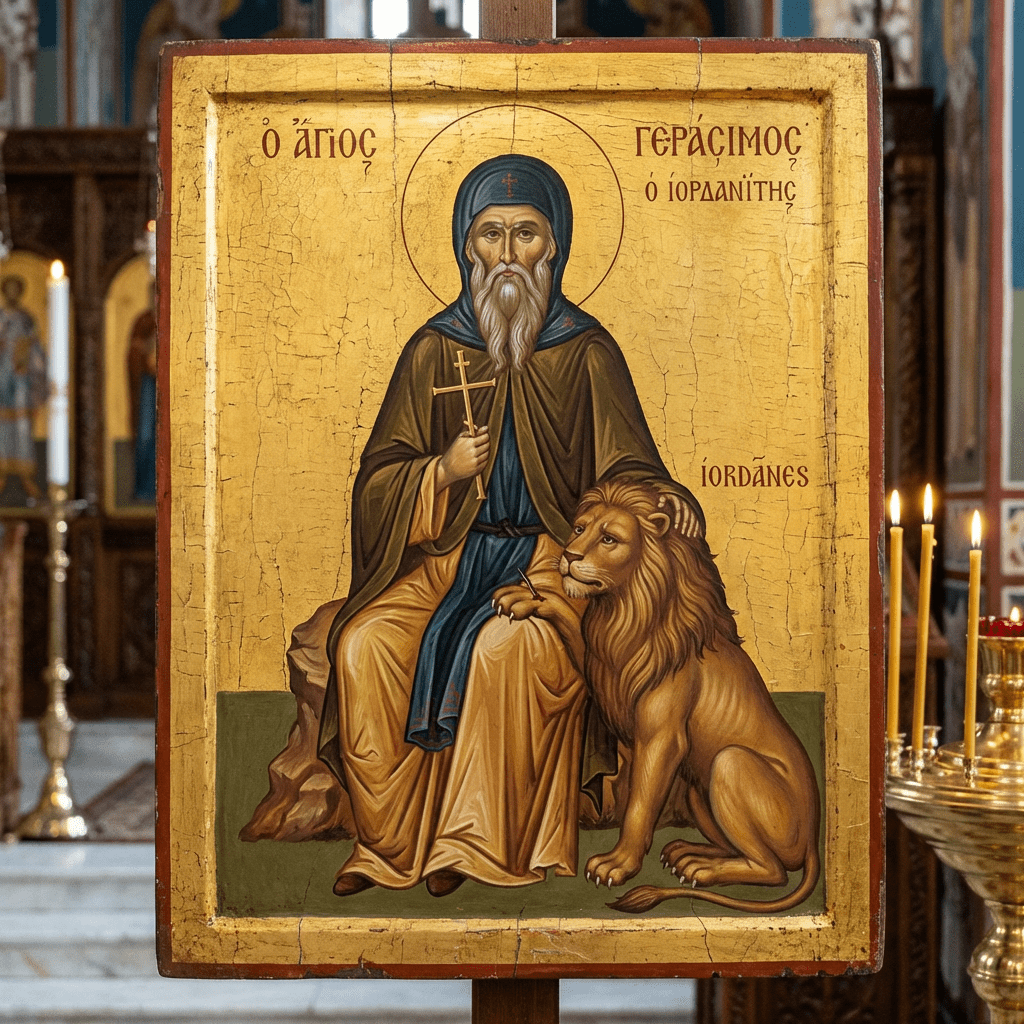
  • St. Gerasimus of the Jordan: A Life of Humility and Prayer

    Commemoration of St. Gerasimus of the Jordan

    Today the Church honors St. Gerasimus of the Jordan, one of the great desert fathers whose life shines with humility, gentleness, and deep communion with God. His story is woven into the very landscape of the Jordan wilderness, where prayer became breath, obedience became joy, and love extended even to the wild creatures of creation.

    A Father of the Desert

    St. Gerasimus lived in the 5th century, embracing the ascetic life with extraordinary devotion. He founded a monastery near the Jordan River, where he guided monks in a life of:

    • Simplicity
    • Silence
    • Prayer
    • Hospitality

    His rule emphasized obedience and humility, shaping a community where hearts were trained to listen for the voice of God.

    The Lion Who Became His Friend

    One of the most beloved stories of St. Gerasimus tells of a lion who approached him in pain, a thorn lodged in its paw. Gerasimus removed the thorn, cleaned the wound, and cared for the creature with tenderness. From that moment, the lion remained by his side—gentle, loyal, and transformed by love.

    This story reveals:

    • The harmony restored when a heart is at peace with God
    • The healing power of compassion
    • The saint’s deep humility and kindness

    Even creation recognized the holiness within him.

    A Life of Prayer and Purity

    Gerasimus was known for his profound stillness—hesychia—a quietness of soul that allowed him to dwell continually in God’s presence. He fasted with great discipline, prayed with tears, and lived with a purity that drew others toward repentance and peace.

    His life teaches us:

    • To seek God in silence
    • To let humility soften our hearts
    • To trust that grace transforms even the wilderness within us

    A Legacy That Endures

    Pilgrims still visit the monastery that bears his name, standing as a living witness to his holiness. His memory continues to inspire monks, pastors, and all who long for a deeper life with God.

    St. Gerasimus calls us to:

    • Walk gently
    • Pray deeply
    • Love generously
    • Trust God completely

    A Prayer for His Feast

    Holy Father Gerasimus, guide us into the stillness where God speaks, teach us humility and compassion, and help us walk the path of prayer with courage, gentleness, and joy.

    St. Gerasimus of the Jordan, pray for us. 💕✌️🙏

    Icon of Saint Gerasimos with text Ο ΑΓΙΟΣ ΓΕΡΑΣΙΜΟΣ Ο ΙΟΡΔΑΝΙΤΗΣ and IORDANES.
    A traditional Orthodox icon depicts Saint Gerasimos of the Jordan healing a lion in a serene church setting.
  • This Weeks Biblical Lesson; Finding Hope Amidst Despair: A Christian Perspective

    “Do Not Get Lost in a Sea of Despair” — God’s Call to Hope

    John Lewis’s words mirror the biblical command: “Do not fear, for I am with you… I will strengthen you, I will help you.” (Isaiah 41:10)

    Scripture never denies the reality of despair, but it refuses to let despair have the final word. God’s people often walked through injustice, exile, oppression, and suffering—yet God continually called them to hope rooted in His presence, not in circumstances.

    • Hope is not naïve optimism.
    • Hope is confidence in God’s character.
    • Hope is the refusal to surrender to darkness.

    “Be Hopeful, Be Optimistic” — The Christian Practice of Endurance

    Paul writes: “Rejoice in hope, be patient in suffering, persevere in prayer.” (Romans 12:12)

    Hope is not passive. It is a discipline. It is the daily decision to believe that God is still working, still healing, still redeeming.

    Biblical hope:

    • looks beyond the present moment
    • trusts God’s timing
    • strengthens weary hearts
    • fuels courageous action

    Hope is the engine of faithful resistance.

    “Our Struggle… Is the Struggle of a Lifetime” — Perseverance in Scripture

    John Lewis’s insight echoes Hebrews 12:1: “Let us run with perseverance the race set before us.”

    The Bible teaches that justice, mercy, and righteousness are not quick projects—they are lifelong callings.

    • Moses struggled for decades.
    • The prophets cried out for generations.
    • Jesus Himself endured misunderstanding, rejection, and violence.
    • The early church faced persecution, poverty, and oppression.

    The Christian life is not a sprint. It is a long obedience in the same direction, sustained by grace.

    “Never Be Afraid to Make Some Noise” — The Prophetic Voice

    Scripture is full of holy noise:

    • Moses confronting Pharaoh
    • Nathan confronting David
    • Elijah confronting Ahab
    • John the Baptist confronting Herod
    • Jesus confronting the powers of His day

    Biblical faith is not silent in the face of injustice. It speaks, protests, confronts, and refuses to bow to evil.

    This is not noise for noise’s sake. It is prophetic courage—the willingness to stand where God stands.

    “Get in Good Trouble, Necessary Trouble” — The Gospel’s Call to Righteous Resistance

    This phrase resonates deeply with Acts 5:29: “We must obey God rather than human beings.”

    Sometimes obedience to God creates conflict with unjust systems. Sometimes following Jesus means disrupting the status quo. Sometimes love requires resistance.

    Good trouble is:

    • standing with the oppressed
    • refusing to participate in evil
    • challenging systems that harm God’s children
    • choosing righteousness over comfort

    Jesus Himself was constantly in “good trouble”—healing on the Sabbath, overturning tables, defending the vulnerable, and confronting hypocrisy.

    Good trouble is not rebellion. It is faithfulness.

    Bringing It Together: A Gospel-Shaped Vision of Hope and Justice

    John Lewis’s words harmonize with the biblical story:

    • Hope in God’s faithfulness
    • Perseverance in long struggle
    • Courage to speak and act
    • Righteous resistance against injustice
    • Love that refuses to be silent

    This is the shape of Christian discipleship. This is the way of Jesus.

    A Closing Reflection

    The Christian life is not lived in ease but in faithfulness. We walk with hope, speak with courage, and act with love—trusting that God is at work in every struggle for justice, healing, and human dignity. 💕✌️🙏

    Sunlight pierces storm clouds over a lighthouse and rainbow with text HOPE SHINES THROUGH.
    A dramatic ray of sunlight pierces through dark storm clouds over a lighthouse, accompanied by a bright rainbow.