March arrives like a gentle turning of the page—an invitation to breathe again, to hope again, and to step into the quiet promise of renewal. As winter loosens its grip and the first hints of spring begin to stir, this month becomes a threshold of grace, reminding us that God is always doing something new.
A Month of Renewal and Awakening
March carries a unique spiritual rhythm. It is the month when:
Light grows stronger day by day
The earth begins to soften and open
Our hearts lean toward resurrection
Hope becomes something we can almost feel in the air
In the life of the Church, March often holds the deep, cleansing work of Great Lent—a season that mirrors nature’s slow rebirth with our own inner renewal.
A Blessing for the Month Ahead
May this new month be for you a doorway into peace. May the Lord bless your steps with clarity, your days with quiet strength, and your heart with the courage to begin again.
May every sunrise remind you of God’s faithfulness, every breeze whisper His nearness, and every small sign of spring awaken gratitude within you.
May Christ guide you, the Spirit renew you, and the Father surround you with love that does not fail. 💕✌️🙏
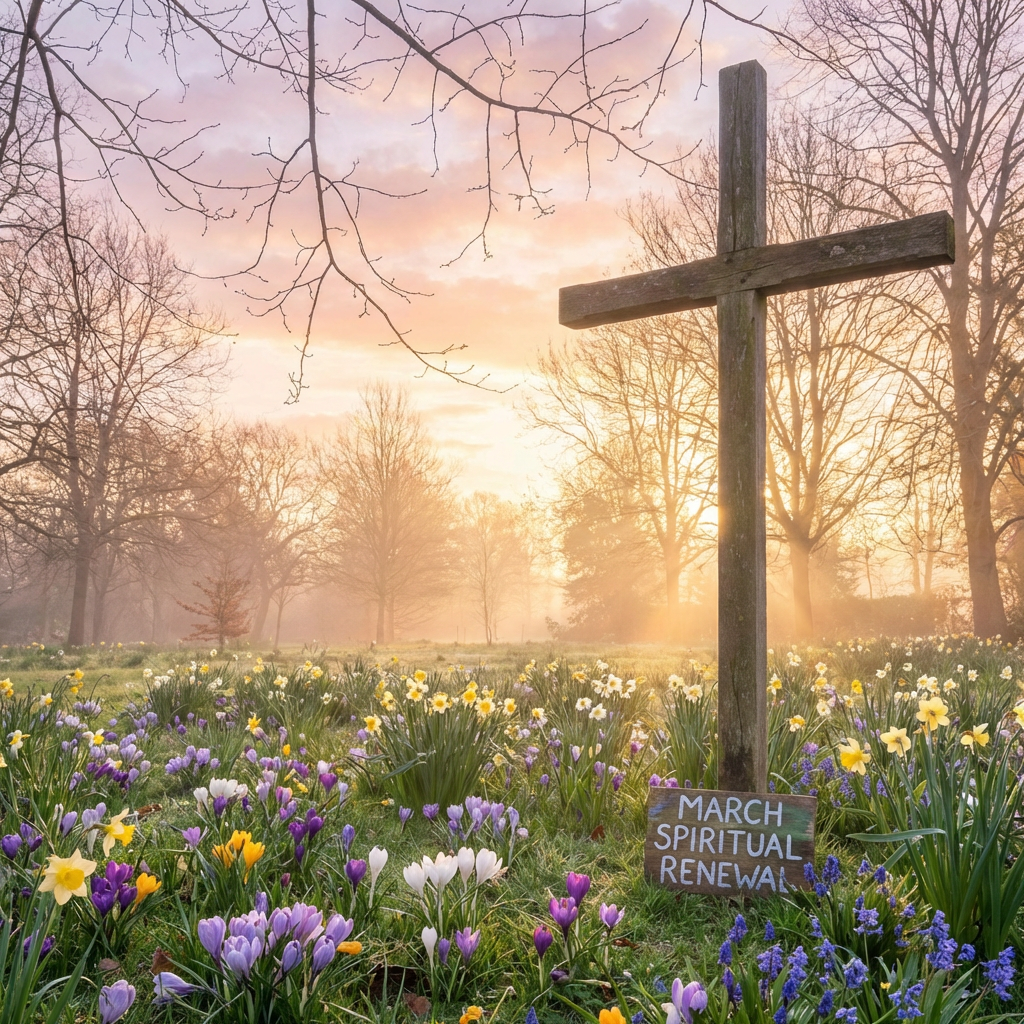
A wooden cross stands peacefully in a vibrant meadow of spring flowers as the morning sun begins to rise.
Today the Church celebrates a radiant convergence of faith: the Sunday of Orthodoxy, the triumph of the true confession of Christ, and St. Eudocia the Samaritan, a woman whose life was transformed by grace and became a witness to the power of repentance.
Together, they proclaim that truth is not an idea—it is a Person, and that every heart can be renewed by His light.
The Sunday of Orthodoxy — The Triumph of the True Faith
On this first Sunday of Great Lent, the Church rejoices in the restoration of the holy icons after years of persecution and confusion. This day is not merely about art or imagery—it is about the Incarnation.
Because God became visible in Jesus Christ, we can depict Him, honor Him, and behold His saving work.
The Sunday of Orthodoxy celebrates:
The victory of truth over distortion
The unity of the Church in the confession of Christ
The holiness revealed in the faces of the saints
The beauty of worship restored to its fullness
As we process with icons, we proclaim with joy: “This is the faith of the Apostles. This is the faith of the Fathers. This is the faith of the Orthodox.”
St. Eudocia the Samaritan — A Life Transformed by Grace
St. Eudocia’s story is one of the most powerful testimonies to repentance in the early Church. Once living a life far from God, she encountered the Gospel through the preaching of a monk—and everything changed.
She embraced:
A life of prayer
Radical repentance
Generosity to the poor
Deep devotion to Christ
Her transformation was so complete that she became a monastic leader and ultimately a martyr for the faith.
Eudocia reminds us that:
No one is beyond the reach of God’s mercy
Repentance is a doorway to joy
Holiness is possible for every soul
God writes new stories where we thought only endings existed
A Shared Message for the Heart
The Sunday of Orthodoxy proclaims the truth of Christ. St. Eudocia proclaims the power of His mercy.
Together they teach us:
Stand firm in the truth
Let the light of Christ reshape your life
Honor the image of God in every person
Begin again with courage and hope
This is the path of Great Lent: truth and repentance, beauty and renewal.
A Prayer for This Day
Lord Jesus Christ, You who reveal Yourself in the holy icons and transform hearts through Your mercy, strengthen us in true faith, renew us through repentance, and guide us into the light of Your Resurrection.
Holy Martyr Eudocia, pray for us.Triumphant confessors of Orthodoxy, intercede for us. 💕✌️🙏
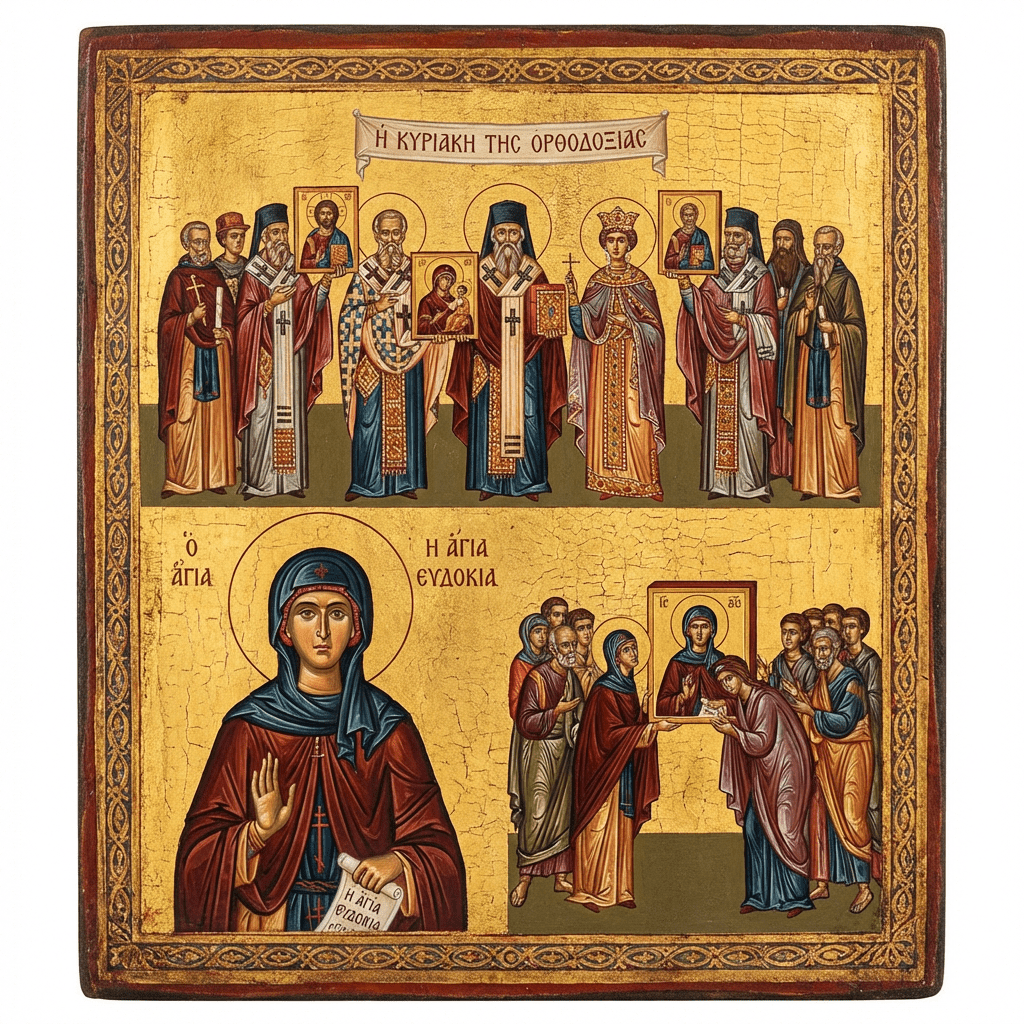
This detailed Byzantine icon commemorates the triumph of icons on the Sunday of Orthodoxy, featuring the prominent figure of Saint Eudokia.
Commemoration of the Miracle of the Kollyva, St. Basil the Confessor, and St. John Cassian
Today the Church remembers three luminous witnesses whose lives and miracles prepare our hearts for the journey of Great Lent. Each, in a different way, reveals God’s faithfulness: St. Theodore’s miracle of the kollyva, St. Basil’s steadfast confession, and St. John Cassian’s wisdom that shaped monastic life across the world.
The Miracle of the Kollyva
During the reign of Julian the Apostate, the emperor sought to defile the Christians of Constantinople by secretly contaminating all food in the markets during the first week of Lent. But God did not abandon His people.
St. Theodore the Tyro appeared in a vision to the Archbishop and instructed the faithful to eat kollyva—simple boiled wheat—so they would not be harmed.
This miracle teaches us:
God protects His people in times of danger
Fasting is not merely discipline, but trust
The saints intercede for us with love
Humble food can become a sign of divine care
The first Saturday of Great Lent remains dedicated to this miracle, reminding us that God provides for His people in every generation.
St. Basil the Confessor
St. Basil lived during the iconoclast persecutions, a time when confessing the truth of the Incarnation could cost one’s freedom or life. He refused to abandon the veneration of holy icons, not out of stubbornness, but out of love for the God who became visible for our salvation.
He is remembered for:
His unwavering confession of the faith
His endurance of suffering without hatred
His humility and gentleness
His pastoral care for the faithful
Basil’s life reminds us that truth and love must walk together, and that faithfulness often requires quiet courage.
St. John Cassian the Roman
A bridge between East and West, St. John Cassian carried the wisdom of the Egyptian desert to the wider Christian world. His writings on prayer, purity of heart, and spiritual struggle shaped monastic life for centuries.
He is honored for:
His deep understanding of the human heart
His teaching on inner stillness and watchfulness
His insistence that grace and effort work together
His ability to translate monastic wisdom for all believers
Cassian’s voice continues to guide those seeking a life of prayer, humility, and spiritual clarity.
A Shared Witness for the Lenten Journey
Together, these commemorations call us to:
Trust in God’s protection
Stand firm in truth with humility
Seek purity of heart through prayer
Embrace the simplicity and grace of Lent
Their lives form a tapestry of courage, wisdom, and divine care—gifts for every soul beginning the holy fast.
A Prayer for This Day
Lord, through the prayers of St. Theodore, St. Basil the Confessor, and St. John Cassian, strengthen us for the journey of Lent, purify our hearts, and teach us to walk in humility, courage, and love.
May their witness guide us into the light of Your Resurrection. 💕✌️🙏
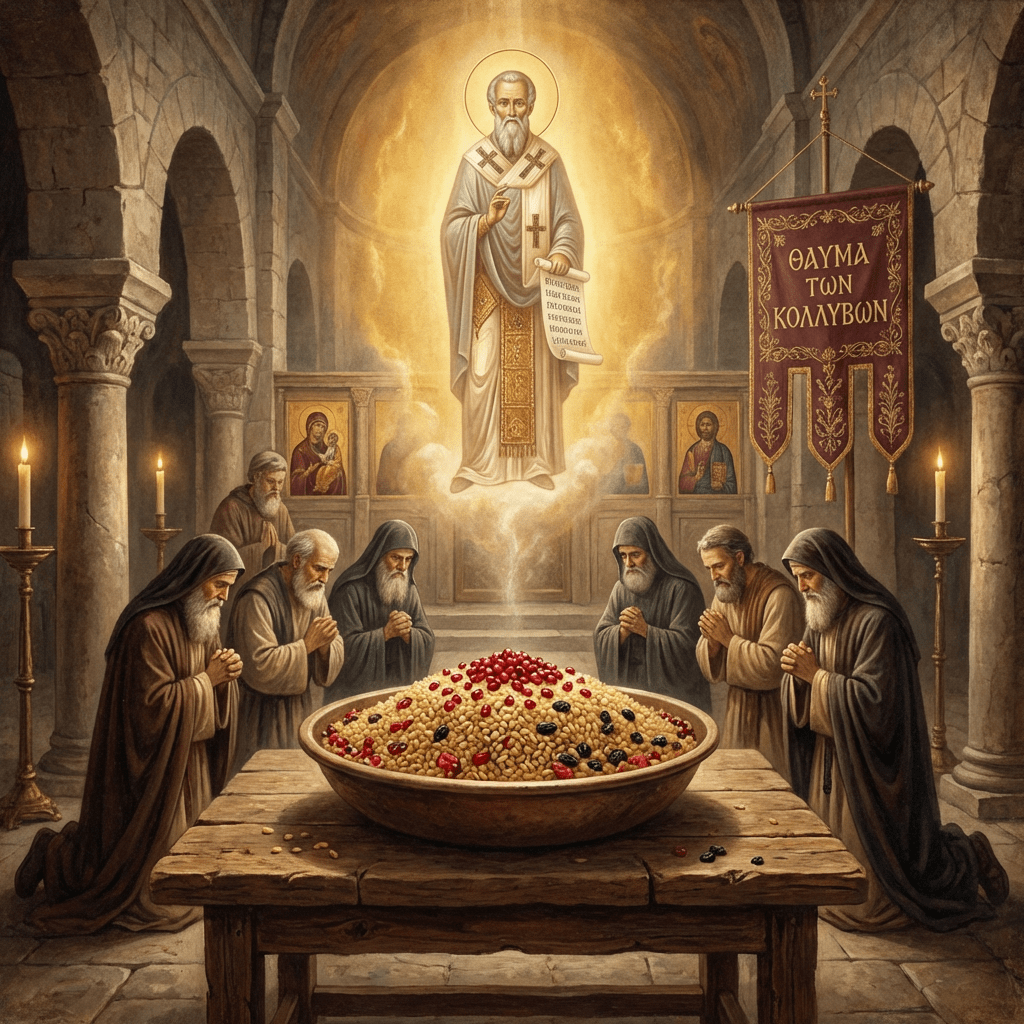
Monks gather in prayer as Saint Theodore appears above a bowl of traditional koliva in this religious scene.
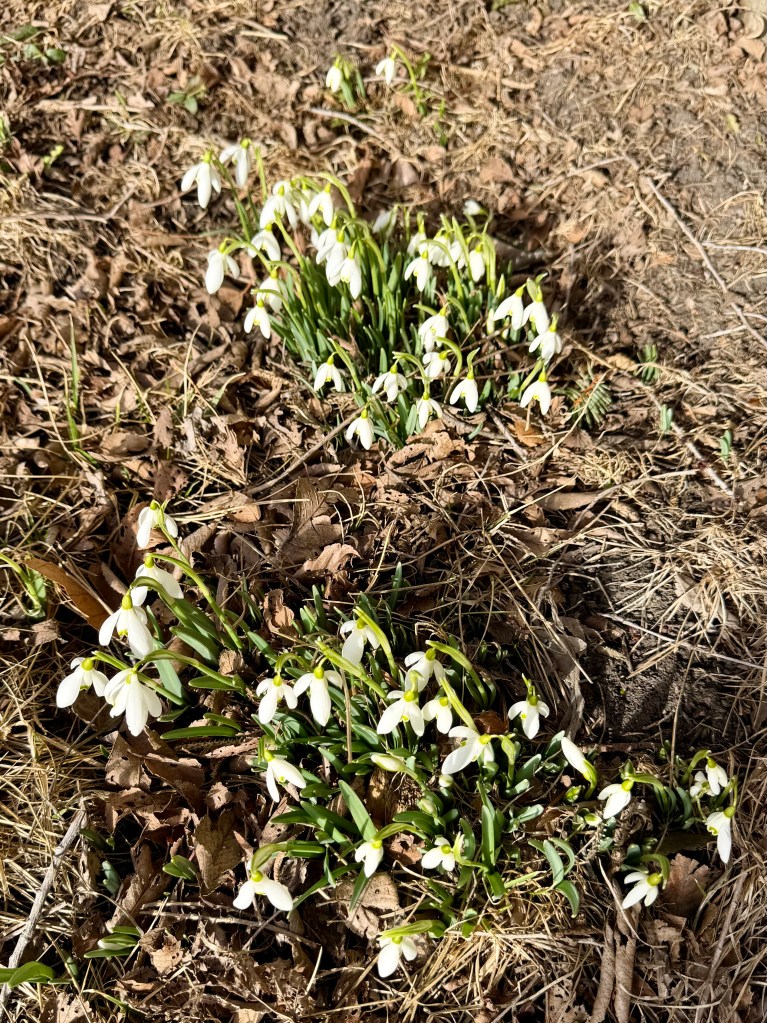
Before the world remembers how to be warm, before the trees wake, before the earth turns green again— the snowdrop rises.
Small. Humble. Brave.
It pushes through frozen ground, bowing its white head in quiet grace, reminding us that hope often blooms long before we feel ready.
Spring begins not with noise, but with a whisper: Life is returning.Light is coming.Winter is not the final word.
May we, like the snowdrop, find the courage to rise again— even in cold seasons— trusting that God’s renewal is already unfolding beneath the surface. 💕✌️🙏
Commemoration of St. Procopius the Confessor, St. Rospose, and St. Ephraim of Katounakia
Today the Church remembers three radiant witnesses whose lives—though separated by centuries—shine with the same light of faithfulness, humility, and unwavering devotion to Christ. Each reveals a different facet of holiness: steadfast confession, quiet endurance, and the deep inner stillness of hesychastic prayer.
St. Procopius the Confessor
St. Procopius stands among the great confessors of the faith—those who suffered for Christ not through martyrdom, but through courageous endurance. He lived during a time when confessing the truth of the Gospel meant facing imprisonment, exile, and humiliation.
He is remembered for:
His unwavering confession of Christ in the face of persecution
His endurance of suffering without bitterness
His gentle spirit, which strengthened the faithful around him
His witness that truth is worth suffering for
Procopius teaches us that holiness is often revealed not in dramatic acts, but in the quiet, steady refusal to abandon Christ.
St. Rospose (Rhipsime/Rospos)
Though little is known about St. Rospose, the Church preserves her memory as one who shone with purity and devotion. Her life is a reminder that God treasures even the hidden saints—those whose names are whispered in prayer and whose holiness is known fully only to Him.
She embodies:
Purity of heart
Faithfulness in obscurity
The beauty of a life offered quietly to God
Her remembrance invites us to honor the countless unknown saints whose prayers uphold the world.
St. Ephraim of Katounakia
St. Ephraim, one of the modern elders of Mount Athos, lived a life of profound humility, obedience, and inner stillness. A disciple of Elder Joseph the Hesychast, he became a spiritual father to many, known for his gentleness, discernment, and radiant peace.
He is honored for:
His deep life of prayer and hesychasm
His compassion and spiritual wisdom
His humility and quiet joy
His ability to guide souls with tenderness and truth
Ephraim’s life shows that sanctity is not distant or unreachable—it is found in the daily offering of the heart to God.
A Shared Witness
Though their paths differed, these saints share a single message:
Stand firm in truth
Live with humility
Seek God in every moment
Let love and prayer shape your life
Their lives remind us that holiness is not uniform—it blossoms uniquely in every soul that yields to God.
A Prayer for Their Feast
Holy Procopius, steadfast confessor, strengthen us to stand firm in faith.
Holy Rospose, pure and hidden saint, teach us the beauty of quiet devotion.
Holy Ephraim of Katounakia, gentle elder, guide us into the peace of Christ through prayer.
May their intercessions lead us deeper into the love and light of God. 💕✌️🙏
Today the Church honors St. Porphyrius of Gaza, a shepherd whose life radiated courage, compassion, and unwavering devotion to Christ in the midst of spiritual darkness. His ministry transformed an entire city—not through force, but through prayer, humility, and steadfast love.
A Shepherd Formed in the Desert
Porphyrius began his journey as a monk in the Egyptian desert, where years of prayer and ascetic struggle shaped his heart. He later lived in Jerusalem near the Holy Sepulchre, embracing a life of simplicity and deep communion with God.
His early years teach us:
Holiness grows in hidden places
Prayer prepares the heart for mission
God shapes leaders long before they are seen
A Bishop Sent to a Difficult Vineyard
Porphyrius was appointed Bishop of Gaza at a time when paganism still dominated the city. Temples, idols, and hostility toward Christians were everywhere. Yet he entered this mission field with gentleness and courage.
He is remembered for:
Strengthening the small Christian community
Confronting injustice and spiritual oppression
Interceding tirelessly for his flock
Working with humility even amid fierce opposition
Through his prayers and perseverance, the hearts of many were softened, and the light of Christ began to shine in a place long overshadowed by fear.
A Miracle of Faith and Perseverance
Porphyrius’ ministry is marked by the destruction of the great pagan temple of Marnas—an event that symbolized the triumph of Christ over the powers of darkness. But this victory came not through violence, but through:
Persistent prayer
Patient endurance
Wise leadership
The support of faithful believers
His life shows that God’s power is revealed through those who trust Him completely.
A Legacy of Compassion and Holiness
Despite the challenges he faced, Porphyrius remained a man of mercy. He cared for the poor, comforted the suffering, and lived with humility until his final breath.
His witness calls us to:
Stand firm in faith
Serve with compassion
Pray without ceasing
Trust God in difficult places
A Prayer for His Feast
Holy Bishop Porphyrius, strengthen us with your courage, teach us to persevere in prayer, and guide us to bring Christ’s light into every place of darkness.
St. Porphyrius of Gaza, faithful shepherd and wonderworker, pray for us.
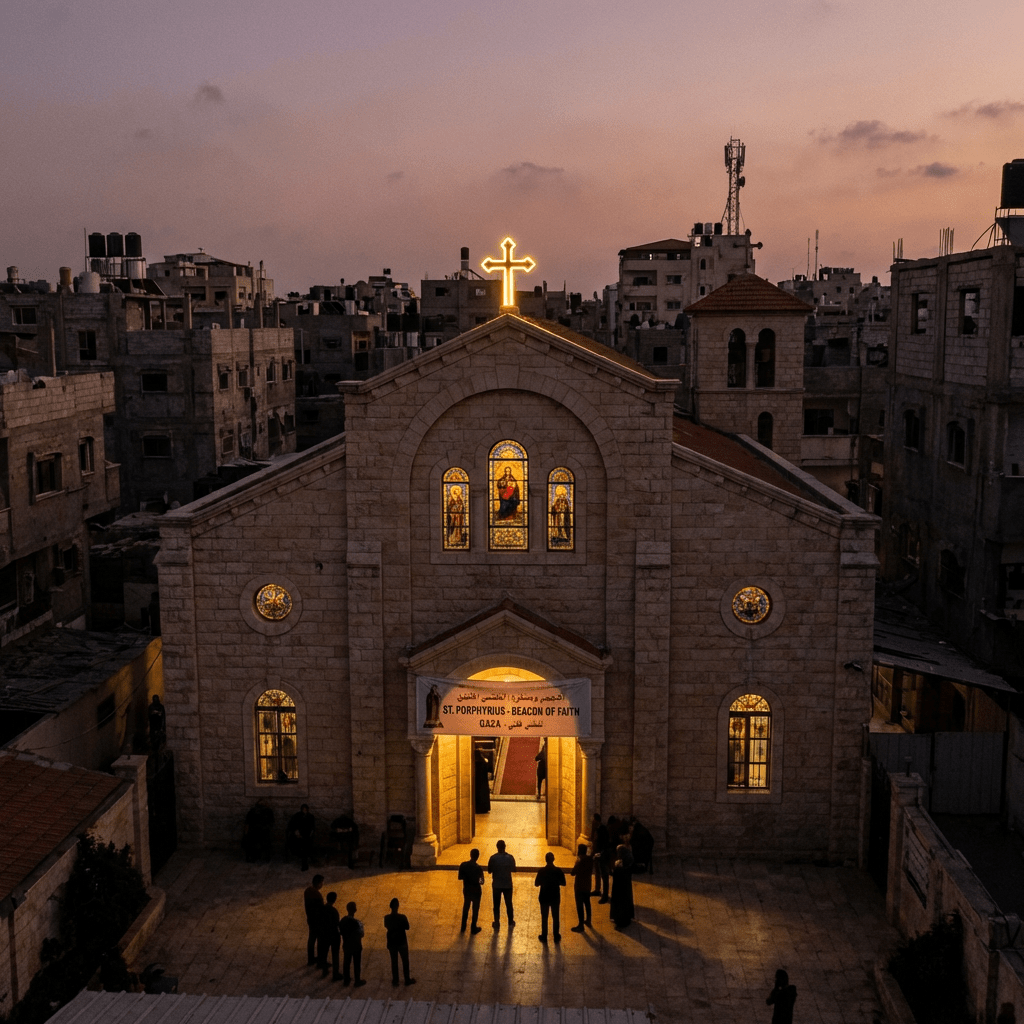
The historic St. Porphyrius Church glows at dusk as people gather in front of its illuminated entrance in Gaza.
Commemoration of St. Tarasius, Patriarch of Constantinople
Today the Church honors St. Tarasius, a gentle yet courageous patriarch whose life stands as a testament to humility, wisdom, and unwavering devotion to the truth of Christ. His leadership helped heal the Church during one of its most painful seasons, restoring unity and renewing the beauty of holy worship.
A Humble Servant Called to Lead
Tarasius did not begin his life as a bishop. He served as a respected imperial official—known for integrity, fairness, and deep faith. When the Church was torn by the iconoclast controversy, he was called unexpectedly to the patriarchal throne.
He accepted the role only on one condition: that the veneration of holy icons be restored and the unity of the Church renewed.
His humility became the foundation of his strength.
Defender of the Holy Icons
As Patriarch, Tarasius guided the Church with clarity and compassion. He presided over the Seventh Ecumenical Council (Nicaea II), which affirmed:
The honor given to icons is not worship
Icons point us to the Incarnate Christ
The beauty of the Church’s tradition is rooted in the mystery of God made visible
Through his leadership, peace was restored, and the faithful once again embraced the fullness of Orthodox worship.
A Shepherd of Mercy and Justice
St. Tarasius was known not only for theological courage but for pastoral tenderness.
He:
Cared for the poor with generosity
Defended the oppressed
Encouraged repentance and reconciliation
Lived simply, even as patriarch
His life reminds us that true authority in the Church is expressed through service.
A Legacy of Peace and Faithfulness
St. Tarasius teaches us:
To stand firm in truth with gentleness
To seek unity without compromising faith
To lead with humility, not ambition
To let Christ’s compassion shape every decision
His memory calls us to be peacemakers in a divided world.
A Prayer for His Feast
Holy Patriarch Tarasius, guide us into unity, strengthen us in truth, and teach us to serve with humility and love. May your prayers help us honor Christ in all things and walk the path of peace.
St. Tarasius of Constantinople, wise shepherd and defender of the faith, pray for us. 💕✌️🙏
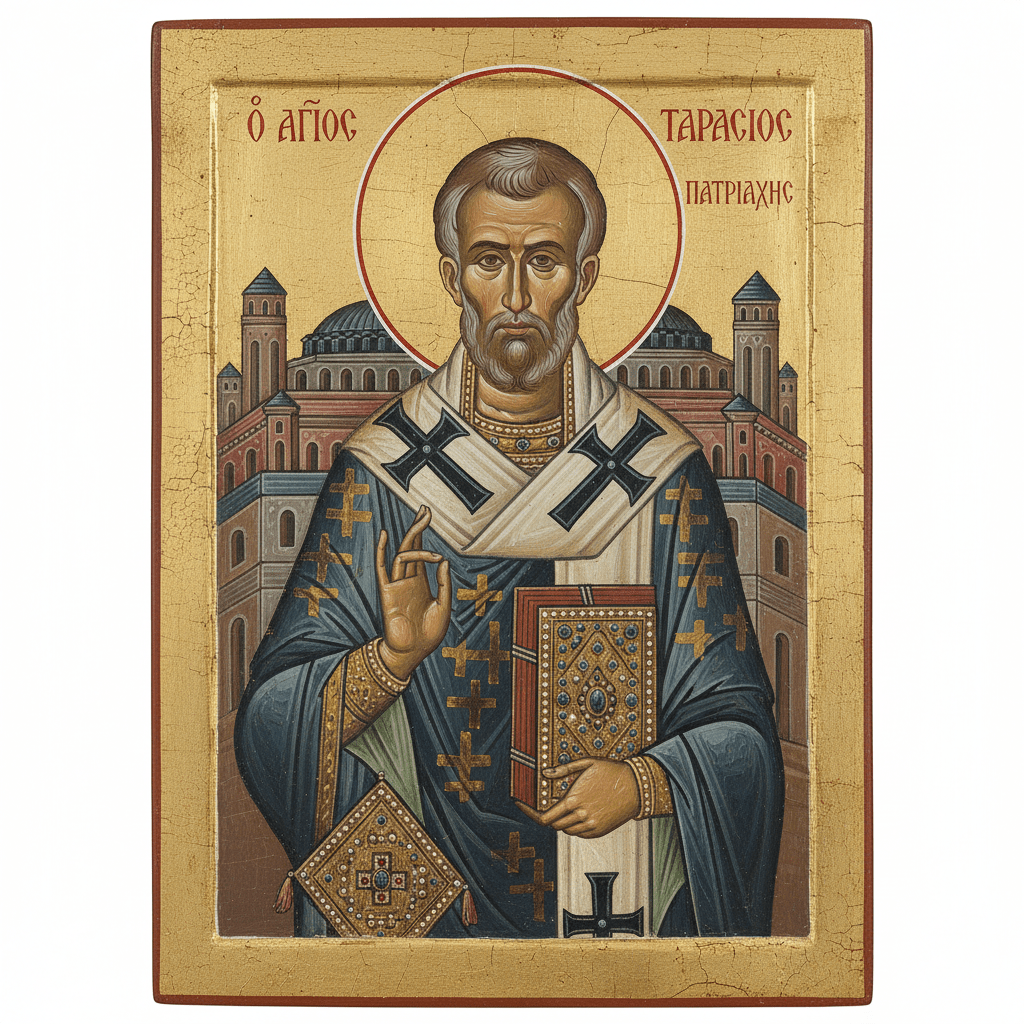
This traditional Byzantine icon depicts Saint Tarasios, the Patriarch of Constantinople, holding a jeweled Gospel book.
Today the Church celebrates a mystery woven through history—the rediscovery of the precious head of St. John the Baptist, the Forerunner of the Lord. These holy findings remind us that God brings hidden things to light, restores what was lost, and honors those who bore witness to His truth.
The First Finding
After St. John the Baptist was beheaded at the command of Herod, his disciples buried his body, but his head was secretly taken and hidden. Years later, a pious woman—guided by divine prompting—discovered the sacred relic and preserved it with reverence.
This first finding reveals:
God’s care for His saints
The enduring honor given to John, the greatest born of women
The way holiness shines even when the world tries to silence it
The Second Finding
Over time, the relic was again concealed and forgotten. During the fourth century, through prayer and divine revelation, monks were led to rediscover the head of the Forerunner—still a source of blessing, healing, and spiritual strength.
This second finding teaches us:
God restores what is lost
The truth cannot remain hidden
The saints continue to intercede for the faithful
The rediscovery of the relic renewed devotion and strengthened the Church during a time of theological struggle and confusion.
The Forerunner’s Enduring Witness
St. John the Baptist continues to call us to:
Repentance
Humility
Courage
Preparation for the coming of Christ
His life and martyrdom proclaim the same message as his preaching: “Behold, the Lamb of God.”
Even in death, his relics became a sign of God’s presence and a reminder that the light of Christ cannot be extinguished.
A Prayer for This Day
Holy Forerunner John, you who prepared the way of the Lord, guide us to repentance, strengthen us with your courage, and intercede for us as we seek to follow Christ with pure hearts.
St. John the Baptist, pray for us.💕✌️🙏
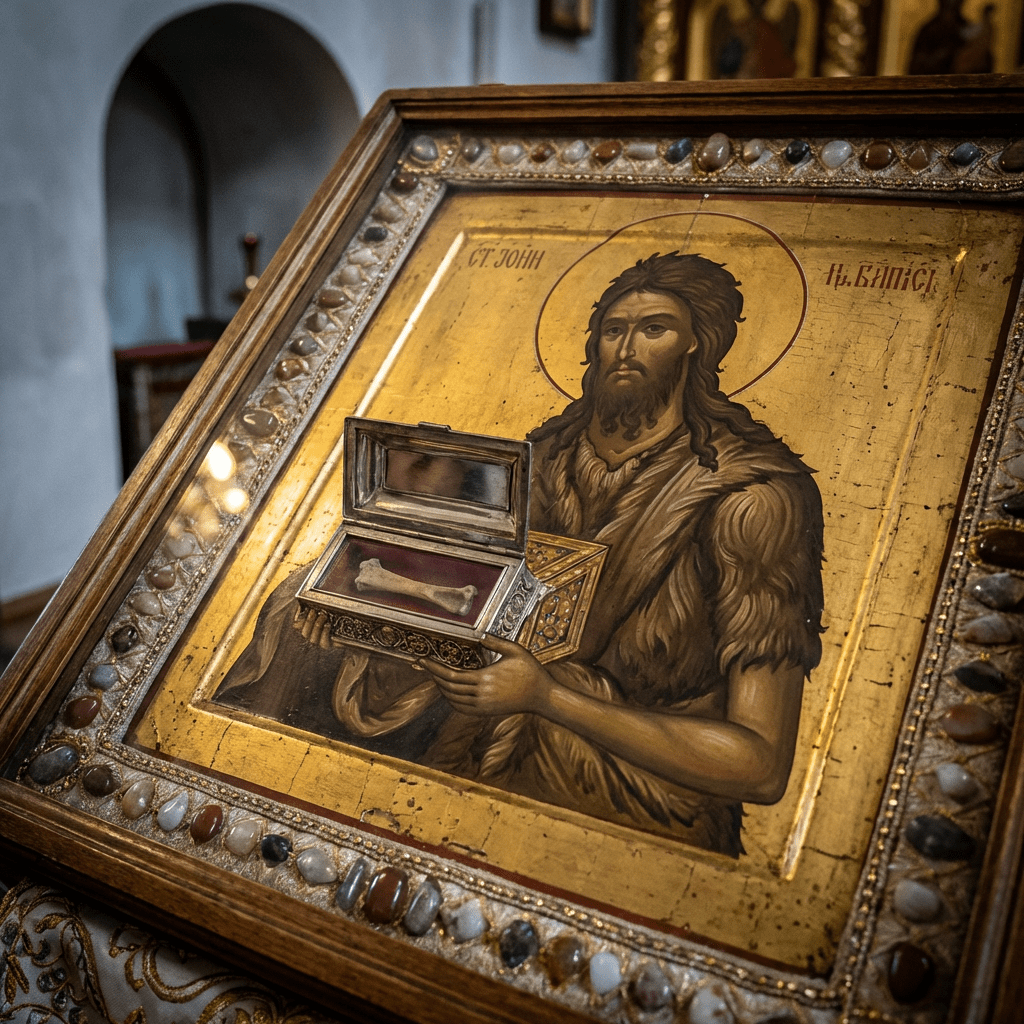
A golden Orthodox icon depicts Saint John the Baptist alongside an ornate silver box containing a sacred bone fragment.
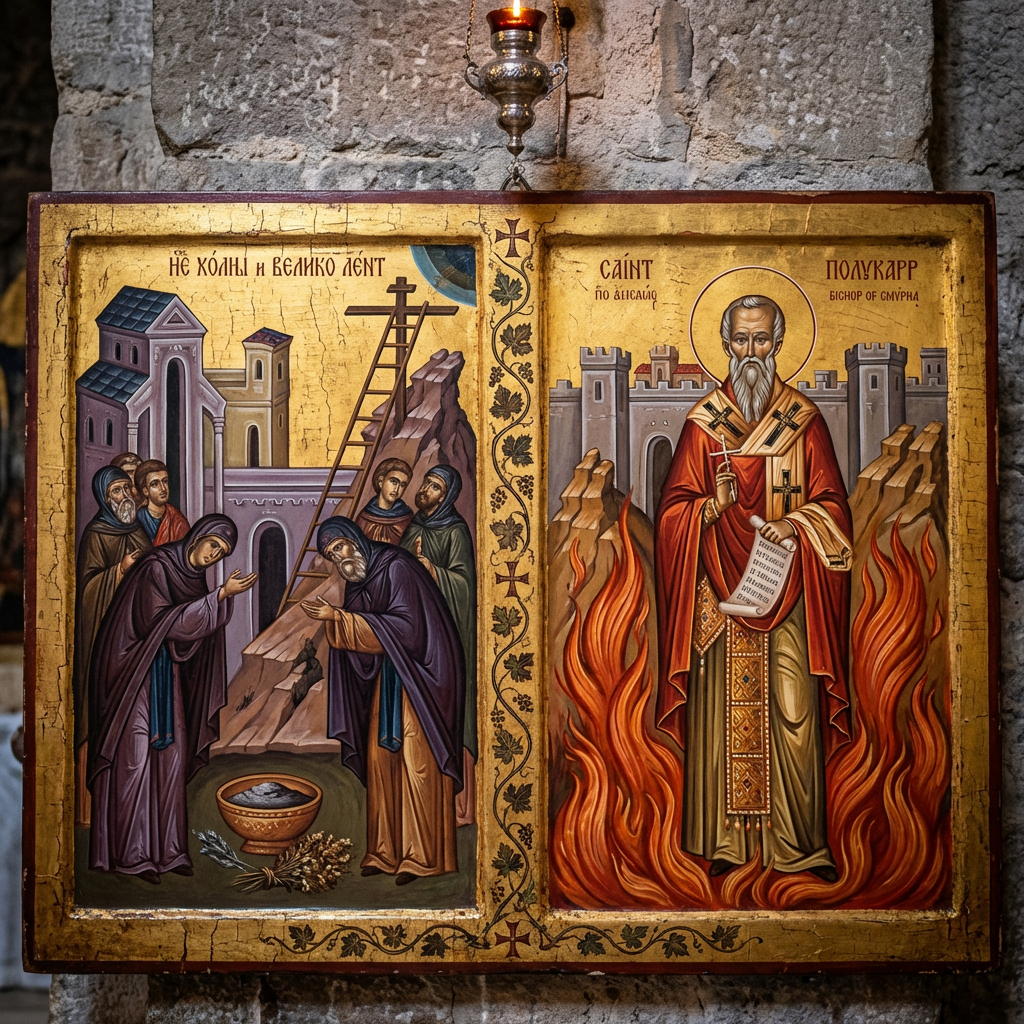
Today the Church stands at a sacred threshold. Pure Monday opens the door to Great Lent—a season of repentance, renewal, and return. And on this same day, we honor St. Polycarp of Smyrna, a bishop whose steadfast faith and gentle courage illuminate the path we now begin.
Together, these commemorations call us to purity of heart, endurance, and unwavering trust in Christ.
Pure Monday — Great Lent Begins
Pure Monday marks the first step of our Lenten journey. It is a day of cleansing, quietness, and new beginnings.
The Church invites us to:
Lay aside distractions
Purify our hearts through prayer and fasting
Seek reconciliation with God and neighbor
Enter Lent with humility and hope
The hymns of the day remind us that Lent is not a burden but a gift—a time to rediscover who we are in Christ and who Christ is for us.
Pure Monday whispers to the soul: “Begin again. God is waiting.”
St. Polycarp of Smyrna — A Faithful Shepherd and Martyr
St. Polycarp, a disciple of the Apostle John, stands as one of the most beloved figures of the early Church. His life was marked by gentleness, wisdom, and a deep pastoral love for his flock.
He is remembered for:
His apostolic teaching, preserving the faith handed down to him
His humility and peace, even in persecution
His fearless martyrdom, offering his life as a witness to Christ
When commanded to deny Christ, Polycarp replied with words that echo through the centuries: “Eighty and six years have I served Him, and He has done me no wrong.”
His martyrdom was not an act of defiance but of devotion—an offering of love to the One who first loved him.
A Unified Message for the Day
Pure Monday and St. Polycarp together teach us:
Begin Lent with sincerity
Stand firm in faith with gentleness
Let love guide every step of repentance
Remember that holiness is a journey, not a moment
As we enter Great Lent, Polycarp’s witness strengthens our resolve, reminding us that the path of Christ is walked with courage, humility, and trust.
A Prayer for This Day
Lord, as we begin the holy journey of Great Lent, purify our hearts, renew our spirits, and strengthen us through the prayers of Your martyr Polycarp. Grant us the courage to follow You faithfully and the grace to walk this season with love and humility.
Pure Monday blessings to all, and St. Polycarp of Smyrna, pray for us. 💕✌️🙏
This ornate diptych icon portrays the life and martyrdom of Saint Polycarp against a stone backdrop.
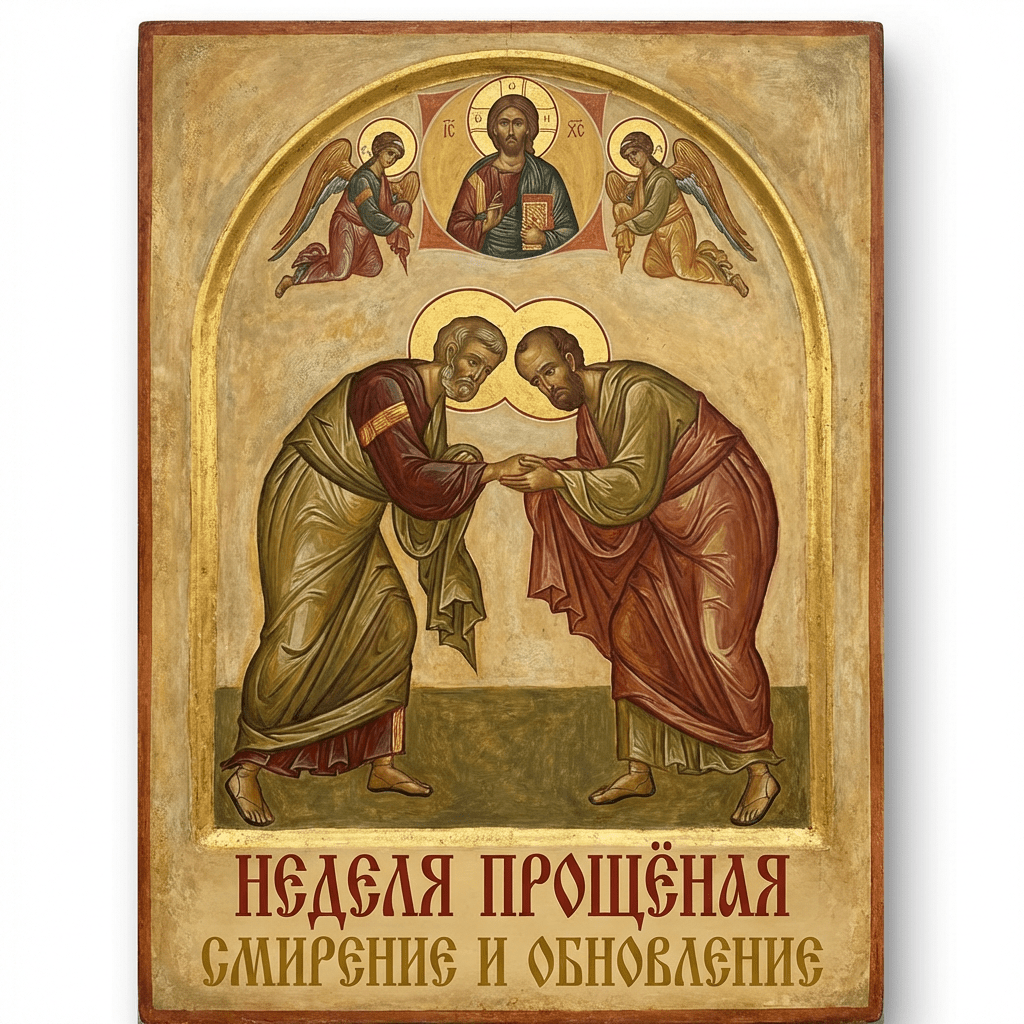
Forgiveness Sunday (Cheesefare) & The Finding of the Relics of the Martyrs in the Quarter of Eugenius
Today the Church invites us into a moment of profound tenderness and holy remembrance—the doorway into Great Lent and the witness of early martyrs whose hidden faith was revealed through the discovery of their sacred relics. Together, these commemorations call us to humility, reconciliation, and courage.
Forgiveness Sunday (Cheesefare)
On this final day before Great Lent begins, the Church places forgiveness at the very center of our spiritual journey. We cannot walk toward Pascha carrying resentment, bitterness, or the weight of old wounds. Christ calls us to lay them down.
Forgiveness Sunday teaches us:
To seek peace with one another
To release the burdens of anger and pride
To begin Lent with a clean heart
To imitate Christ, who forgives even from the Cross
In the evening’s Forgiveness Vespers, we bow before one another and say the words that heal the soul: “Forgive me.” And we hear in return: “God forgives.”
This is not ritual—it is transformation.
The Finding of the Relics of the Martyrs in the Quarter of Eugenius
In the early centuries, during times of persecution, many martyrs were buried in secret. Their names were known to God, even when hidden from the world.
The discovery of their relics in the Quarter of Eugenius became a moment of joy and spiritual renewal. It revealed:
The faithfulness of those who suffered for Christ
The Church’s unbroken memory of her martyrs
The triumph of truth over violence
The presence of holiness even in forgotten places
Their witness reminds us that God sees every sacrifice, every act of faith, every hidden moment of courage.
A Unified Message for the Day
Forgiveness Sunday and the discovery of the martyrs’ relics share a single truth: The path to resurrection is paved with humility, courage, and love.
The martyrs show us how to stand firm in faith. Forgiveness Sunday shows us how to soften our hearts. Together, they prepare us for the holy journey ahead.
A Prayer for This Day
Lord, as we enter the sacred season of Lent, grant us the humility to forgive, the courage to seek reconciliation, and the strength to follow the example of Your holy martyrs. Purify our hearts, renew our spirits, and lead us into the joy of Your Resurrection.
May the martyrs of Eugenius intercede for us, and may the peace of Forgiveness Sunday rest upon our hearts.💕✌️🙏
This traditional Orthodox icon illustrates the themes of reconciliation and humility for Forgiveness Sunday.
 Whispers of Grace