I express my gratitude for this ministry and wholeheartedly recommend it to those seeking to deepen their theological education and prepare for ministry.
Bishop Lisa Bennett’s words reminded me of the opportunity to receive meaningful theological education without financial burden.
St. Matthew’s is more than a place for lessons; it’s a place of formation. My studies invite me to examine my faith, grow in understanding the Ancient Faith and sacramental worship, and consider serving Christ and His people.
This opportunity extends beyond one community or country. St. Matthew’s equips people to bring faithful sacramental ministry into their communities through education and clergy preparation.
Bishop Lisa’s clarity about St. Matthew’s mission is essential. Its mission is education, formation, ordination, consecration, and extending sacramental worship, not financial support for families, churches, or regional ministries. This distinction allows the Seminary to remain faithful to its ministry.
Perhaps this presents a challenge to students. When others freely give their time, knowledge, resources, and financial support, our education should never end with us. We are called to serve Christ, the Church, and the people God places before us.
I’m grateful to be a student at St. Matthew’s Ancient Faith Seminary and highly recommend it to those seeking theological education and ministry preparation.
Thank you, Bishop Lisa Bennett, for your leadership, teaching, and commitment to making theological formation accessible to those who might otherwise find it beyond reach. Thank you to everyone whose prayers, generosity, teaching, and service make this ministry possible.
May God bless St. Matthew’s, its leadership, clergy, teachers, supporters, and students. May our knowledge become wisdom, our faith become lived faith, and our worship lead us deeper into service.
Together, may we carry the blessing of Bethlehem to the hungry and thirsty. 💕✌️🙏
Dear friends, I wanted to share my recent life experiences. This season has been one of change, reflection, learning, and discernment. I don’t have all the answers, but perhaps that’s part of the journey.
My studies remain important. I’ve enjoyed being a student at St. Matthew’s Ancient Faith Seminary, exploring the historic Christian faith, the Divine Liturgy, and the Church’s sacramental life. This journey has been challenging but encouraged me to deepen my beliefs and consider God’s role in my ministry.
My spiritual journey has taken unexpected turns. Raised Catholic and serving as an independent community chaplain, I’ve been drawn to historic Christian traditions, especially Orthodoxy. At the same time, my connection with the Society of Friends offers another place to listen, reflect, worship, and seek the Spirit. I’m learning that spiritual growth isn’t linear.
Here in Rantoul, I seek meaningful ways to serve my community. I’m exploring deeper involvement in community life, like the Rantoul Rotary Club, and considering how my chaplaincy experience can support students and families.
Writing and Bible study remain important. I develop lessons and reflections on God’s grace, goodness, love, and the Triune God. Recently, I’ve focused on thanksgiving and how gratitude grows from recognizing God’s grace in our lives.
I’ve learned that I don’t need to know the end goal to take the next step faithfully.
There are still questions and uncertainties. Some days I feel confident, while others require me to stop, pray, and listen.
I remain grateful for friends who encourage me, teachers who challenge me, opportunities to serve, unexpected lessons, and God’s presence, which doesn’t depend on my understanding.
Despite the changes, I continue learning, serving, writing, praying, and listening for God’s next step.
Thank you to those who walk alongside me, pray for me, encourage me, and remain part of my journey.
I pray to travel the road ahead with humility, gratitude, compassion, and grace.
I have been thinking lately about how quickly life changes and how often God leads us along roads we never expected to travel.
This is one of those seasons for me.
There is much for which I am grateful. I continue studying, writing, serving through ministry, and exploring where God may be calling me next. My studies at St. Matthew’s Ancient Faith Seminary have given me much to think and pray about, particularly concerning the ancient Christian faith, worship, ministry, and my own spiritual journey.
Yet I also want to be honest with you: I do not have everything figured out.
There have been moments of uncertainty and even disorientation as I have asked questions about where I belong, how I can best serve, and what God wants the next chapter of my life and ministry to become. Perhaps some of you understand that feeling.
But I am beginning to realize that not knowing the entire road ahead doesn’t mean we are lost.
Sometimes God gives us enough light for only the next step.
So I continue taking those steps. I continue studying. I continue writing. I continue praying. I continue gathering with people, listening to their stories, offering encouragement when I can, and trying to remain available to whatever opportunities God places before me.
And somewhere along the way, I am rediscovering something simple but important: ministry isn’t ultimately about titles, positions, institutions, or accomplishments. It is about people.
If something I write encourages someone, that matters.
If sitting with someone helps them feel less alone, that matters.
If a prayer offers someone hope, that matters.
If gathering around a table helps strangers become friends, that matters.
I don’t know exactly what lies ahead, but I am becoming increasingly peaceful about that.
My desire is simply to use the life and experience God has given me to encourage others and leave something good behind. I want the years ahead to be filled with meaning, compassion, learning, faith, and service.
Thank you for being part of my journey. Thank you for your prayers, friendship, encouragement, patience, and support.
Please continue to keep me in your prayers as I discern the road ahead. And know that I continue to hold each of you in mine.
The journey isn’t finished. Perhaps, in some ways, a new chapter is only beginning.
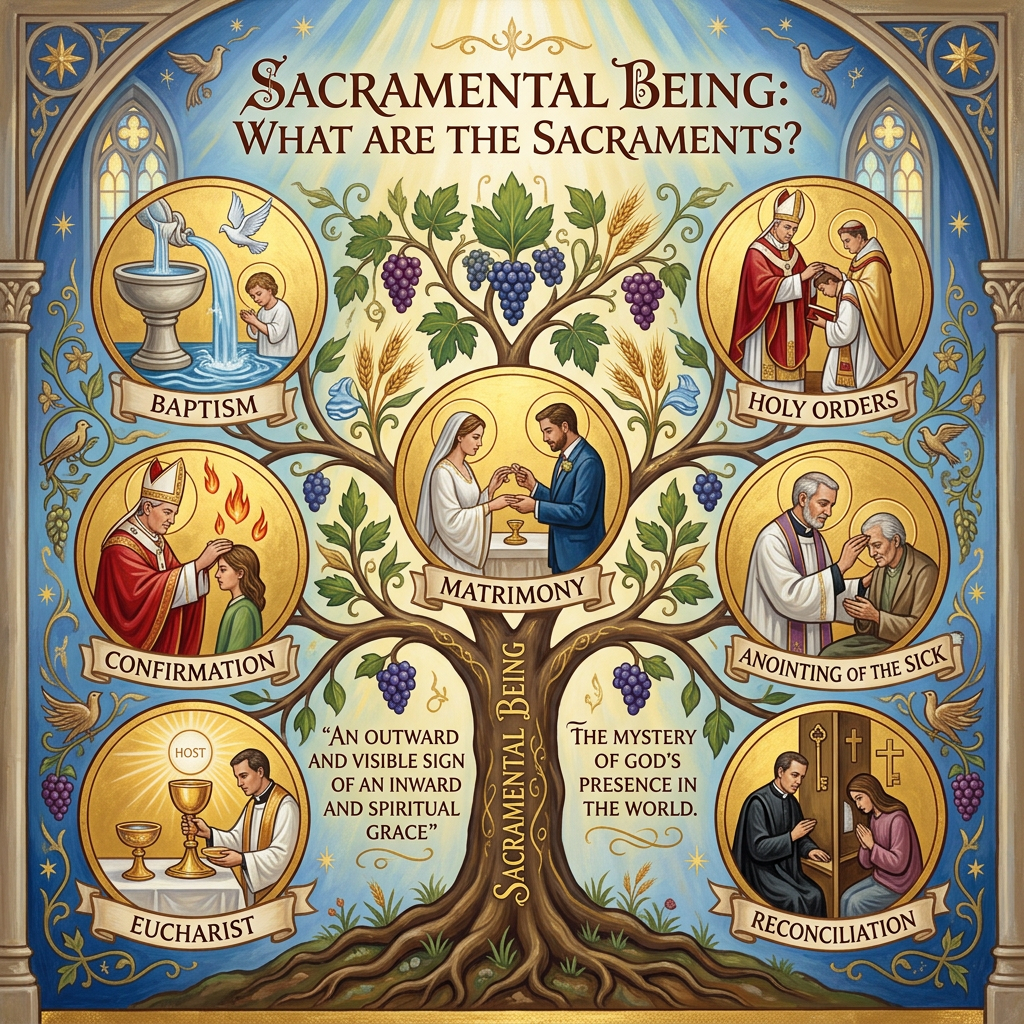
This chapter explains what it means to live sacramentally as a Christian. Building on the previous chapter’s idea that physical and spiritual reality are interconnected, the author argued that Christians participate in the life of Christ through the Church and, especially, through the sacraments.
The sacraments are presented as physical actions through which believers participate in spiritual realities. The chapter discusses baptism, the Eucharist, marriage, priesthood, ordination, and sacred objects as examples of how the physical world can communicate and participate in divine life. The central message is that Christianity is not merely something to believe intellectually. It is a life with Christ in which the whole person, body and soul, participates.
Most Important Ideas I came away with?
1. The Sacraments Reconnect Us With the Life of Christ
The chapter continues the earlier analogy of God as the Arche, the ultimate source of life and being. Humanity’s separation from God through the Fall resulted in death and corruption. Christ, however, reconnects humanity to its divine source.
The sacraments are therefore not merely symbolic religious ceremonies. They are presented as ways in which human beings participate in the life of Christ.
2. Baptism Is Entry Into a New Life
Baptism represents a person’s entrance into the sacramental life of the Church. The chapter describes our old humanity as connected to Adam and therefore affected by mortality.
Through baptism, the believer is connected to Christ as the new source of life. The chapter’s electricity analogy describes baptism as being “plugged in” to Christ.
This also emphasizes that salvation concerns the whole human person. Christianity does not seek simply to save an invisible soul while disregarding the body. The person, body and soul together, is renewed in Christ.
3. The Eucharist Is at the Heart of Sacramental Life
If baptism connects us to Christ, the chapter describes the Eucharist, or Holy Communion, as the continuing nourishment of that relationship.
The Incarnation is crucial to this understanding. God the Son became physically human in Jesus Christ. Therefore, the spiritual and physical come together in Christ Himself.
The chapter presents Communion not merely as remembering Jesus but as actually participating in His life. In the author’s electrical analogy, baptism plugs us into Christ, while the Eucharist provides the “electricity” or divine life that flows from Him.
4. Marriage Is a Sacramental Union Rather Than Merely a Contract
The chapter contrasts a secular, contractual understanding of marriage with a sacramental understanding.
A contract primarily joins two individuals through agreed obligations. Sacramental marriage, however, represents a deeper union in which two people share a common life.
The chapter uses the image of a lock and key, two distinct parts forming one mechanism. Marriage therefore becomes a place of spiritual transformation in which spouses learn to suffer together, rejoice together, care for one another, and move beyond an exclusively individual understanding of life.
5. Priesthood and Sacred Objects Reflect Sacramental Reality
The chapter describes the priesthood as essential to the Church’s sacramental life. Through ordination, authority and responsibility are handed down through generations of the Church, much as something precious is transmitted through a family.
The chapter also explains why sacramental Christianity treats certain physical objects with particular reverence. If physical and spiritual reality are interconnected, physical things may participate in spiritual realities.
This helps explain why sacramental Christianity places importance upon physical actions, sacred places, sacred objects, water, bread, wine, oil, and other material elements within worship.
What Question Do I Still Have?
If the sacraments truly unite physical and spiritual reality and allow us to participate in the life of Christ, how should receiving the sacraments transform the way I live, treat other people, and experience ordinary life outside the church?
For me, this question moves the discussion from understanding the sacraments intellectually toward actually living sacramentally.
Personal Reflection
This chapter I read helped me see why the physical dimension of Christianity is so important. Faith is not simply something that occurs within the mind or even within the soul. We are physical and spiritual beings, and therefore our relationship with Christ involves the whole person.
I particularly appreciated the progression from baptism to Eucharist. Baptism represents entering into the life of Christ, while Communion represents continuing to receive and participate in that life. Through these sacraments, Christianity becomes more than believing certain truths about Jesus. It becomes participation in Him.
The discussion of marriage also challenged me. If marriage is sacramental rather than merely contractual, then marriage cannot be understood principally by asking, “What am I receiving from this relationship?” Rather, it calls two people toward a shared life of sacrifice, growth, faithfulness, and love.
Perhaps the deepest lesson for me is that sacramental Christianity brings together what modern thinking often separates: body and soul, visible and invisible, physical and spiritual, belief and participation.
This challenges me to move beyond simply studying Christianity toward experiencing and living my faith. The sacraments remind me that following Christ is not merely about understanding Him. It is about participating in His life and allowing His life to transform mine.
A richly detailed tree illustrates the seven Catholic sacraments and their spiritual meaning.
Chapter 5 explores sacramental thinking, especially the difference between modern Western ways of understanding reality and the more integrated worldview found in ancient cultures and sacramental Christianity.
Modern thinking often separates reality into two categories, the natural or physical world and the supernatural or spiritual world. The chapter challenges this separation. Sacramental thinking understands physical and spiritual reality as deeply interconnected. Physical things, actions, relationships, and experiences can therefore possess deeper spiritual meaning.
The chapter also introduces participatory knowledge. Some truths cannot be fully understood simply by observing or intellectually analyzing them. They must be known through participation and relationship. Christian truth, therefore, is not merely something we think about. It is something we enter into, experience, and ultimately live.
What Are the 3–5 Most Important Ideas?
1. The Physical and Spiritual Are Not Completely Separate
Modern Western culture tends to distinguish the natural world from the supernatural world. The chapter explains that ancient people generally did not think this way.
Sacramental thinking sees physical and spiritual realities as interconnected. A visible action or physical object can participate in and communicate a deeper spiritual reality.
This helps explain why physical things and actions are so important within sacramental Christianity.
2. Creation Possesses Meaning Beyond Its Physical Properties
A sacramental worldview sees the universe as filled with meaning. The physical world is not simply a collection of objects and processes without significance.
Nature, human relationships, history, beauty, worship, and our individual lives participate in a much larger reality. We are therefore part of a greater story rather than isolated individuals creating meaning entirely for ourselves.
This gives ordinary life a sense of cosmic and spiritual significance.
3. Not All Truth Is Known Objectively or Subjectively
The chapter challenges the common distinction between objective knowledge, which deals with measurable facts, and subjective knowledge, which deals with personal feelings or experiences.
It offers a third category: participatory knowledge.
For example, I may study everything available about another person, but I do not truly know that individual in the fullest sense until I enter into a relationship with that person. Participation gives us knowledge that observation alone cannot provide.
4. Knowing God Requires Participation and Relationship
This concept becomes especially important for Christianity. If truth is ultimately personal and revealed in God, knowing truth involves more than studying theological ideas.
Christian faith becomes a relationship with Christ.
Because God became human in Christ, humanity can encounter divine truth personally. Christianity is therefore not simply accepting certain propositions about God. It involves participating in God’s life and developing communion with Him.
5. Moral and Spiritual Growth Affect Our Ability to Recognize Truth
One of the most challenging ideas in the chapter is that our character can influence our ability to perceive reality.
Pride, selfishness, resentment, and other vices may prevent us from seeing situations and people clearly. By contrast, virtues such as humility and compassion can help us recognize truths that we might otherwise overlook.
Therefore, spiritual understanding requires more than increased intellectual knowledge. It also requires personal and moral transformation.
What Question Do I Still Have?
If knowing God requires participation rather than intellectual understanding alone, what practices within sacramental Christianity help us participate more deeply in Christ and recognize spiritual reality within everyday life?
This question seems especially important because the chapter explains the theory of sacramental thinking while pointing toward the practical Christian life that will be discussed next.
Personal Reflection
I found this chapter particularly thought-provoking because it challenges me to reconsider the tendency to separate my “spiritual life” from ordinary life.
If sacramental thinking is correct, then God is not relevant only during prayer, worship, or theological study. Creation, relationships, beauty, suffering, service, and even ordinary experiences can become places where deeper spiritual realities are encountered.
The discussion of participatory knowledge was especially meaningful to me. There is a significant difference between knowing aboutsomeone and actually knowing that person. The same can be true of faith. I can study Scripture, theology, doctrine, and the history of Christianity, yet Christianity ultimately calls me beyond knowing information about Christ toward knowing Christ Himself.
The chapter also challenges me personally because it suggests that spiritual growth and moral growth cannot be separated. Humility, compassion, love, and other virtues may actually help us see reality more clearly.
For me, the central lesson is this: Christian faith is not merely something to understand intellectually; it is a reality to enter, participate in, and live. Sacramental thinking invites us to see the entire world differently, recognizing that the visible and invisible, physical and spiritual, ordinary and sacred may be more deeply connected than we normally realize. 💕✌️🙏
A priest guides a student through an open book in a warmly lit library.
Greetings in the love and grace of our Lord Jesus Christ.
I want to take a moment to thank each of you for your continued love, prayers, encouragement, and faithful support. Your kindness means more than words can express, and I thank God for every person who walks alongside this ministry journey.
By God’s grace, I am doing well and staying busy as I continue caring for the life and calling He has entrusted to me. In this season, I am pursuing my MBA in Business Administration at Atlanta College of Liberal Arts and Sciences. My desire is not simply to earn a degree, but to grow in wisdom, leadership, and practical knowledge so that I may become an expert in Business Administration and use those skills to serve and bless our increasingly complex world.
As an ordained chaplain, I remain committed to serving others through devotionals, personal correspondence, community ministry, and words of encouragement that reach people across the globe. My heart is to create spaces where people can pause, reflect, rest, and rediscover God’s nearness in their lives. Whether through a devotional thought, a note of encouragement, a prayer, or a reflection for life’s various seasons, my goal is always to point hearts toward the faithfulness and love of Christ.
My ministry continues to be guided by compassion, clarity, and complete trust in God’s unfailing love. I believe that even in difficult times, the Lord remains present, working quietly and powerfully in our lives. It is a privilege to walk alongside others as they seek comfort, guidance, hope, and spiritual renewal.
Please know that I deeply appreciate your comments, messages, and prayer requests. While I am not always able to respond personally to every communication due to the demands of ministry, education, and daily responsibilities, I do read them and keep them in prayer whenever possible.
May the Lord bless you, strengthen you, and surround you with His peace. Thank you for being part of this ministry and for your continued friendship, encouragement, and support. Your prayers and kindness help make this work possible, and I am truly grateful.
With love, prayers, and gratitude,
Chaplain Edwin Everly
MBA Candidate, Business Administration
Atlanta College of Liberal Arts and Sciences
“May the Lord direct your hearts into God’s love and Christ’s perseverance.” (2 Thessalonians 3:5)
Key Scripture: “Where there is no vision, the people perish: but he that keepeth the law, happy is he.” (Proverbs 29:18 KJV)
Introduction
God did not create us to wander aimlessly through life. He created each person with purpose, destiny, and divine assignments. Throughout Scripture, we find men and women who accomplished great things because they knew their purpose, trusted God’s plan, and persevered despite obstacles.
Success from a biblical perspective is not merely the accumulation of wealth, possessions, or status. True success is faithfully fulfilling God’s purpose for our lives while developing Christlike character along the journey.
Let us examine the biblical principles that form the foundation of lasting achievement and effective Christian living.
1. Purpose: The Foundation of Achievement
Every significant accomplishment begins with a clear purpose.
Before Noah built the ark, God gave him a clear assignment. Before Nehemiah rebuilt Jerusalem’s walls, he carried a burden and vision in his heart. Before Paul journeyed throughout the known world preaching the Gospel, he received a divine calling.
Without purpose, people drift.
“For I know the plans I have for you, saith the Lord, plans for good and not for evil, to give you an expected end.” (Jeremiah 29:11)
An “expected end” implies a destination. God works with goals and purposes. If we do not know where we are going, we will have difficulty recognizing whether we are making progress.
Application
Ask yourself:
What has God called me to do?
What burden has He placed on my heart?
What am I building for His glory?
Purpose gives direction to every other decision.
2. Defending Your Purpose
Once purpose is established, it must be protected.
Nehemiah faced opposition when rebuilding Jerusalem’s walls. His enemies attempted distractions, criticism, intimidation, and compromise.
Nehemiah responded:
“I am doing a great work, so that I cannot come down.” (Nehemiah 6:3)
Purpose must be defended against:
Distractions
Discouragement
Fear
Negative influences
Time-wasting activities
Not every opportunity is from God. Not every invitation deserves a “yes.”
When God gives an assignment, we must learn to guard it carefully.
3. Goal Setting: Turning Vision Into Action
Vision provides direction, but goals provide steps.
Jesus Himself demonstrated intentionality.
“I must work the works of him that sent me, while it is day.” (John 9:4)
Everything Christ did was purposeful.
Many people wish for success, but wishes without plans produce frustration.
Habakkuk was instructed:
“Write the vision, and make it plain upon tables, that he may run that readeth it.” (Habakkuk 2:2)
A written goal transforms a dream into a destination.
Practical Principle
Vision answers “Why?”
Goals answer “What?”
Plans answer “How?”
Without these, life tends to drift with circumstances rather than advance toward purpose.
4. Self-Discipline: Doing What Is Needed
God honors discipline.
The Apostle Paul compared the Christian life to an athlete preparing for competition.
“But I keep under my body, and bring it into subjection.” (1 Corinthians 9:27)
Self-discipline means doing what is right even when feelings say otherwise.
Many people wait until they feel motivated.
Biblical maturity teaches the opposite.
Pray when you do not feel like praying.
Study when you do not feel like studying.
Serve when you do not feel like serving.
Continue working when enthusiasm fades.
Character is revealed when obedience continues beyond emotion.
5. Consistency: Small Daily Actions Produce Great Results
The greatest achievements usually do not happen suddenly.
They develop through faithful daily effort.
Jesus taught:
“He that is faithful in that which is least is faithful also in much.” (Luke 16:10)
The Kingdom principle is consistency.
A little prayer every day.
A little study every day.
A little kindness every day.
A little progress every day.
These seemingly small actions accumulate into significant results over time.
The giant oak tree began as a tiny acorn.
Likewise, great ministries, businesses, families, and accomplishments are often built one faithful day at a time.
6. Present Your Best Self
As believers, we represent Christ.
“And whatsoever ye do, do it heartily, as to the Lord, and not unto men.” (Colossians 3:23)
God deserves our best effort.
This does not mean perfection.
It means excellence.
Whether serving in ministry, performing a job, managing finances, or interacting with others, we should strive to reflect integrity, diligence, and honor.
People should see Christ’s character in our work ethic and attitude.
7. Repetition Produces Mastery
God often teaches through repetition.
Israel learned through repeated instruction.
The disciples learned through repeated teaching.
Spiritual growth itself is a process of continual practice.
“Exercise thyself rather unto godliness.” (1 Timothy 4:7)
Excellence rarely arrives instantly.
Skills grow through repetition.
Knowledge grows through repetition.
Character grows through repetition.
What we repeatedly do becomes what we eventually become.
Success is often the result of doing ordinary things extraordinarily well for a long time.
8. Attitude: Viewing Setbacks Through God’s Perspective
Every believer experiences disappointments.
Joseph was sold into slavery.
David fled from Saul.
Paul endured imprisonment.
Yet God used each setback for a greater purpose.
“And we know that all things work together for good to them that love God.” (Romans 8:28)
What appears to be failure may actually be divine redirection.
Sometimes God closes one door to lead us toward a better one.
A godly attitude recognizes:
Setbacks are temporary.
Lessons are valuable.
God’s plan is still unfolding.
Every trial can become preparation.
What the world calls failure, God often uses as training.
9. Patience: Trusting God’s Timing
Modern culture demands immediate results.
God often works differently.
“But let patience have her perfect work.” (James 1:4)
Many biblical promises required years of waiting.
Abraham waited for Isaac.
Joseph waited for promotion.
David waited for the throne.
God develops character through the waiting process.
Great things take time.
Growth takes time.
Wisdom takes time.
Spiritual maturity takes time.
Patience is not passive. It is trusting God while continuing faithfully in obedience.
10. Perseverance: Never Give Up
The difference between success and failure is often persistence.
“Let us not be weary in well doing: for in due season we shall reap, if we faint not.” (Galatians 6:9)
Every worthwhile pursuit will encounter obstacles.
There will be:
Delays
Criticism
Setbacks
Disappointments
Unexpected challenges
Perseverance means refusing to quit.
The enemy often attacks just before breakthrough.
God’s people must develop a holy determination that says:
“I will continue trusting God. I will continue walking by faith. I will continue moving forward.”
11. Action: Begin Now
Many people spend their lives waiting for the perfect time.
Scripture consistently calls us to action.
“Be ye doers of the word, and not hearers only.” (James 1:22)
Progress begins when action begins.
Speed is not the determining factor.
Direction is.
A person moving slowly toward God’s purpose will accomplish more than a person standing still while waiting for ideal circumstances.
The best time to obey God is now.
The best time to begin is now.
The best time to move forward in faith is now.
Conclusion
God’s pattern for achievement is clear:
Discover your purpose.
Defend that purpose.
Establish clear goals.
Practice self-discipline.
Remain consistent.
Give your best effort.
Master skills through repetition.
Maintain a godly attitude.
Exercise patience.
Persevere through difficulties.
Take action immediately.
As believers, our ultimate goal is not simply success in the eyes of the world, but faithfulness before God.
“Well done, thou good and faithful servant.” (Matthew 25:21)
May we live with purpose, walk with discipline, persevere through every challenge, and faithfully pursue the calling God has placed upon our lives until the work He has entrusted to us is complete. Amen 💕✌️🙏
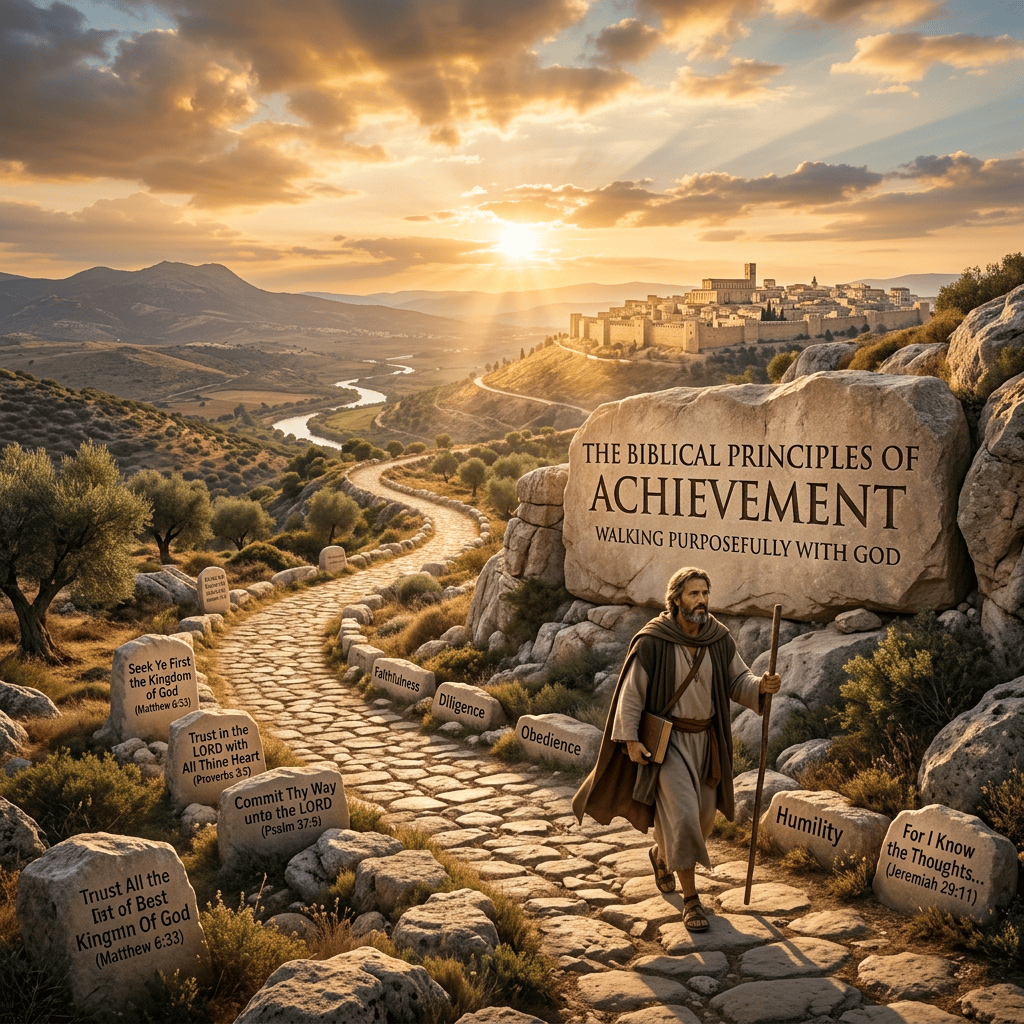
A traveler follows a scripture-marked path toward a sunlit hilltop city, guided by faith and biblical principles.
Scripture Reading: John 17:20-23; Galatians 2:20; Romans 12:1-2
Throughout history, people have sought to understand who they are, why they exist, and how they may experience a deeper sense of spiritual fulfillment. Within yogic philosophy, yoga is often described as “union,” the joining of the individual self with ultimate reality. This concept invites practitioners to become more aware of their thoughts, habits, dietary choices, and spiritual development as they pursue greater harmony and understanding.
While Scripture presents a different theological framework, it also speaks to humanity’s deep longing for connection and wholeness. The Bible teaches that our ultimate fulfillment is found not in discovering our union with an impersonal reality, but in a living relationship with the personal God who created us and revealed Himself through Jesus Christ.
In John 17, Jesus prayed for His followers, saying, “that they all may be one, as You, Father, are in Me, and I in You.” This divine invitation is not merely intellectual or religious. It is relational. Through faith, believers are united with Christ and brought into fellowship with God by grace.
Just as yogic discipline encourages self-examination, Scripture calls believers to examine their hearts. The Apostle Paul writes in Romans 12:2, “Be transformed by the renewing of your mind.” Spiritual growth involves becoming aware of our thoughts, attitudes, and behaviors so that they may be aligned with God’s truth. We are invited to reflect honestly upon the beliefs we entertain, the habits we cultivate, and the influences that shape our lives.
Our daily choices also matter. The foods we consume, the activities we pursue, and the rhythms we establish can affect our physical, emotional, and spiritual well-being. While Christianity does not typically define spirituality through dietary practices, it does teach stewardship of the body as a gift from God. Caring for ourselves wisely can support a life of service, worship, and devotion.
The pursuit of spiritual progress is another area where meaningful reflection may occur. In yogic traditions, progress is often associated with increased awareness and harmony. In the Christian life, growth is recognized through the fruit of the Spirit: love, joy, peace, patience, kindness, goodness, faithfulness, gentleness, and self-control. These qualities are not achieved through self-effort alone but are produced through the gracious work of the Holy Spirit within us.
Perhaps the deepest lesson is that true transformation begins with grace. We do not strive to earn God’s acceptance. Rather, because we are already loved and accepted in Christ, we are free to grow, learn, and mature spiritually. Our practices of prayer, meditation upon Scripture, self-examination, and healthy living become responses to God’s love rather than attempts to obtain it.
Reflection Questions
What thoughts or habits most influence your spiritual life today?
In what ways are you experiencing the renewing work of God’s grace?
How do your daily choices reflect your desire to honor God?
What evidence of spiritual growth can you identify in your life?
How might a deeper awareness of God’s presence reshape your relationship with yourself and others?
Closing Prayer
Dear Gracious Father, thank You for creating us with a desire to know You and walk in Your ways. Help us to examine our hearts with honesty and humility. Renew our minds, guide our daily choices, and shape our character through Your Spirit. May we grow in the grace and knowledge of Jesus Christ, discovering ever more deeply the joy of life in communion with You. Amen.
I value your feedback. If you have questions, comments, or suggestions, please share them. I’m a one-man ministry here, and I’ll respond to everyone. May God bless you and your loved ones. 💕✌️🙏
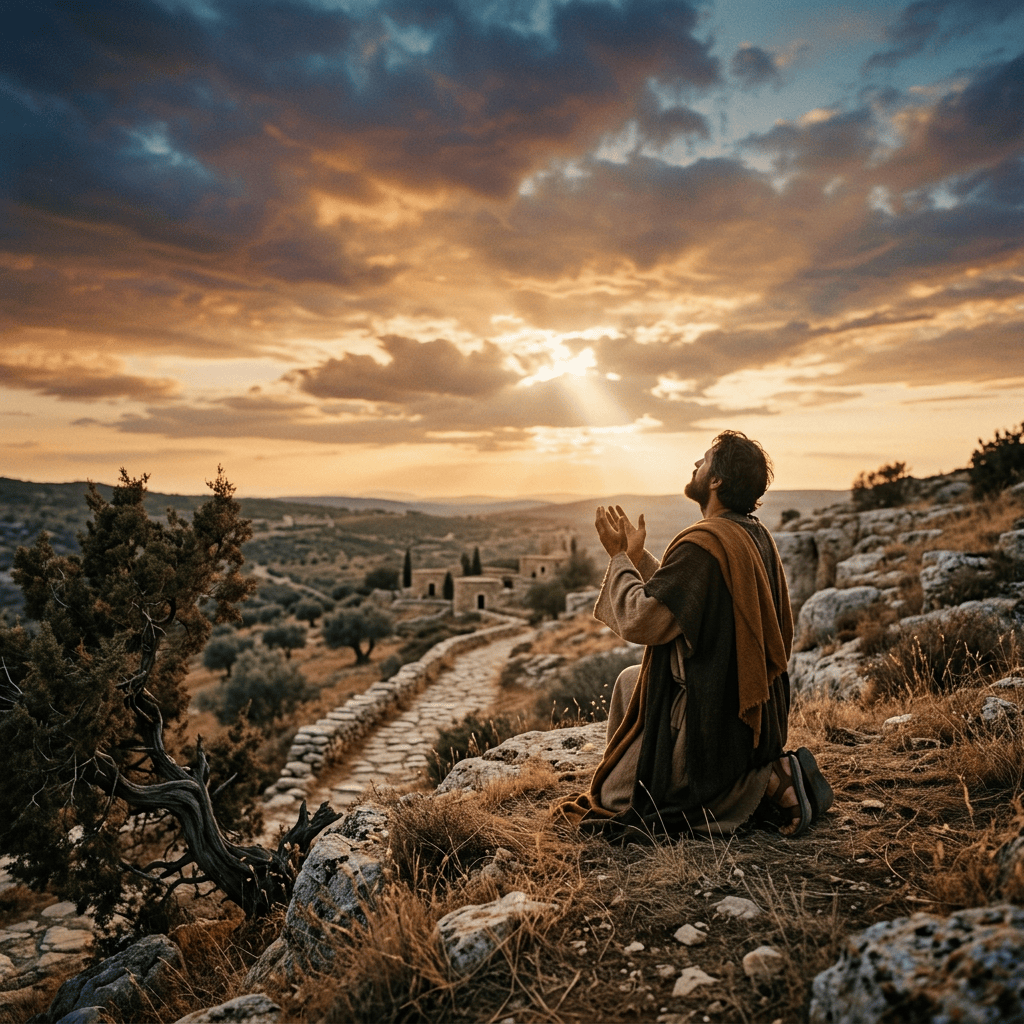
A robed traveler kneels in prayer as golden sunlight breaks through dramatic clouds over the valley.
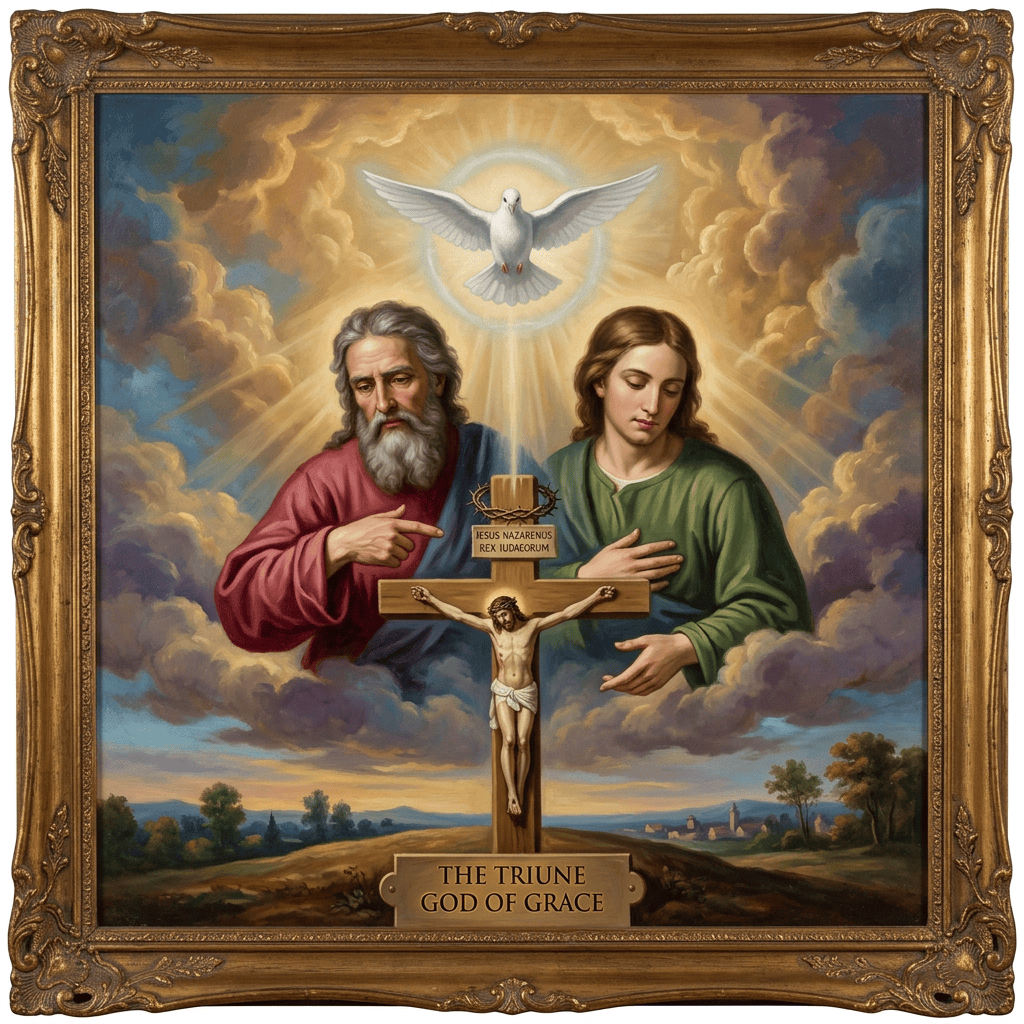
A study on the eternal, loving Triune God — Father, Son, and Holy Spirit — and the grace, goodness, and unconditional love at the heart of His nature.
Opening Reflection
This week’s lesson begins where our faith begins: with who God is. We believe in the eternal, loving Triune God—Father, Son, and Holy Spirit—who exists in perfect unity, delight, and purpose. God’s nature is pure grace, goodness, and unconditional love. Before we study what God does in Scripture, we anchor ourselves in who God has always been: three Persons, one God, bound together in love from before the world began, and overflowing that love toward us.
Scripture Focus
Genesis 1:26; Matthew 3:16-17; Matthew 28:19; John 1:1-3; John 17:20-24; Romans 5:8; 2 Corinthians 13:14; Ephesians 2:8-9; Colossians 2:9; 1 John 4:8-10
One God in Three Persons: Perfect Unity
Scripture reveals one God who exists eternally as three Persons—Father, Son, and Holy Spirit—perfectly united in essence and will. When Jesus commissioned His disciples, He instructed them to baptize “in the name of the Father, and of the Son, and of the Holy Ghost” (Matthew 28:19), a single name shared by three Persons. In His high priestly prayer, Jesus asked that His followers would be one “as thou, Father, art in me, and I in thee” (John 17:21), pointing to the Trinity itself as the model of perfect unity. Paul closes his second letter to the Corinthians with a blessing that names all three Persons together: “The grace of the Lord Jesus Christ, and the love of God, and the communion of the Holy Ghost, be with you all” (2 Corinthians 13:14). The Trinity is not three gods cooperating, nor one God wearing three masks, but one God in three Persons, undivided in nature and purpose.
Delight and Purpose Within the Godhead
Long before creation existed, the Father, Son, and Spirit delighted in one another. Jesus prayed, “for thou lovedst me before the foundation of the world” (John 17:24), revealing a love between Father and Son that has no beginning. John opens his Gospel by placing the Son—the Word—eternally “with God” and active in creation itself: “All things were made by him; and without him was not any thing made that was made” (John 1:1-3). Creation, then, was not God filling a lack, but the overflow of a joy and purpose already complete within the Godhead. The wonder of the gospel is that this same delight is extended outward, inviting us into the fellowship the Father, Son, and Spirit have always shared.
Grace, Goodness, and Unconditional Love
God’s nature is not divided between justice and love, or holiness and grace—His goodness is the ground of everything else true about Him. Paul writes plainly that our salvation is “by grace…through faith; and that not of yourselves: it is the gift of God: not of works, lest any man should boast” (Ephesians 2:8-9). This grace was not earned or triggered by our worthiness; Paul insists that “God commendeth his love toward us, in that, while we were yet sinners, Christ died for us” (Romans 5:8). John goes further still, describing love not merely as something God does but as who God is: “God is love” (1 John 4:8), a love made visible when “God sent his only begotten Son into the world, that we might live through him” (1 John 4:9). Because God’s love does not depend on our performance, it cannot be earned, and it cannot be lost by those who are His—it is unconditional because it flows from His unchanging nature.
Discussion Questions
How does knowing God exists eternally in loving relationship—Father, Son, and Spirit—change the way you understand your own need for relationship and community?
Where in your life have you struggled to believe God’s love is truly unconditional? What would change if you fully believed Ephesians 2:8-9?
The Trinity’s unity is described as a model for believers (John 17:21). What practical step could your family, small group, or church take this week to reflect that unity?
Romans 5:8 says Christ died for us “while we were yet sinners.” How does this truth reshape how you extend grace to others who haven’tearned it?
Spend a moment simply delighting in who God is, apart from anything He has done for you. What comes to mind?
Closing Prayer
Eternal Father, Son, and Holy Spirit, thank You for being complete in perfect love before we ever existed, and for inviting us into that love freely, by grace alone. Teach us this week to rest in Your unconditional love, to reflect Your unity with one another, and to delight in who You are. In Jesus’ name, Amen 💕✌️🙏
A richly colored religious painting presents the Trinity, crucifixion, and heavenly dove beneath the inscription “The Triune God of Grace.”