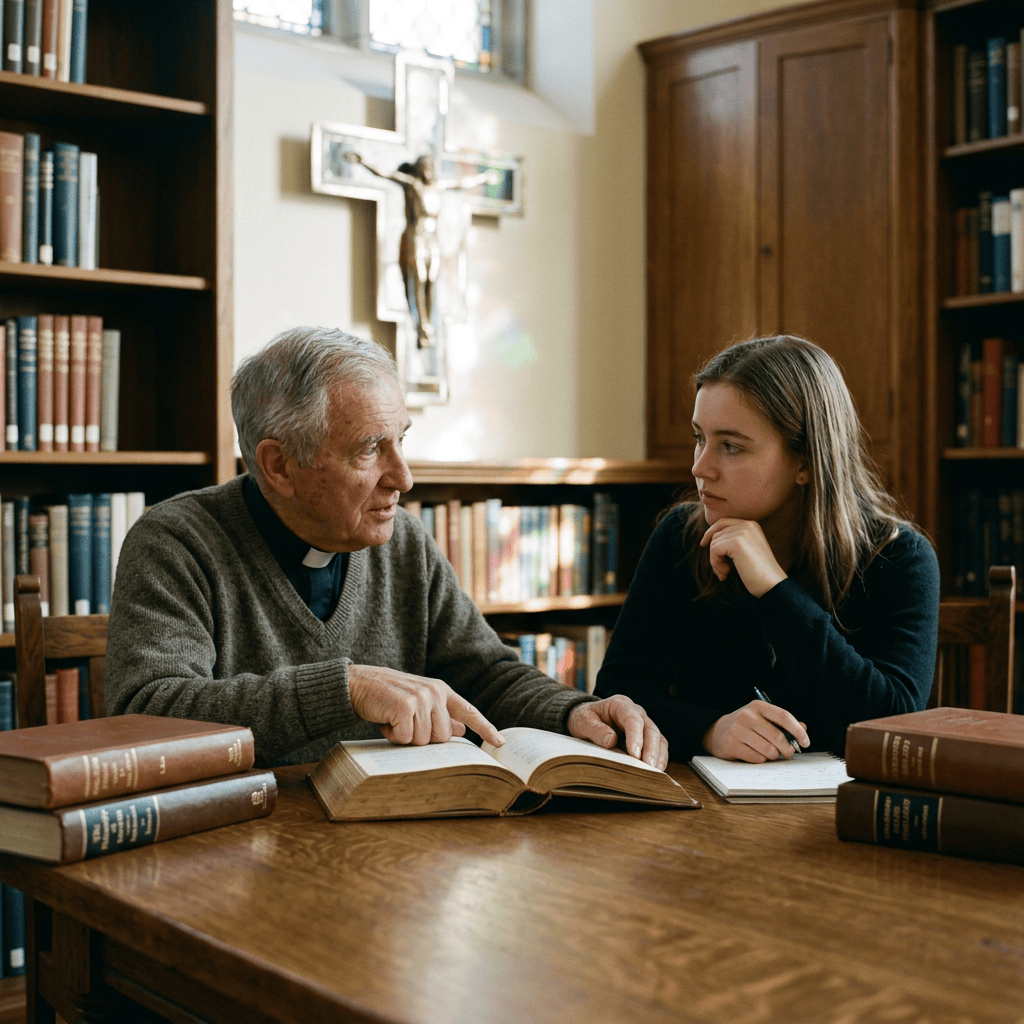
My current study, if you care to have a peek.
Chapter 5 explores sacramental thinking, especially the difference between modern Western ways of understanding reality and the more integrated worldview found in ancient cultures and sacramental Christianity.
Modern thinking often separates reality into two categories, the natural or physical world and the supernatural or spiritual world. The chapter challenges this separation. Sacramental thinking understands physical and spiritual reality as deeply interconnected. Physical things, actions, relationships, and experiences can therefore possess deeper spiritual meaning.
The chapter also introduces participatory knowledge. Some truths cannot be fully understood simply by observing or intellectually analyzing them. They must be known through participation and relationship. Christian truth, therefore, is not merely something we think about. It is something we enter into, experience, and ultimately live.
What Are the 3–5 Most Important Ideas?
1. The Physical and Spiritual Are Not Completely Separate
Modern Western culture tends to distinguish the natural world from the supernatural world. The chapter explains that ancient people generally did not think this way.
Sacramental thinking sees physical and spiritual realities as interconnected. A visible action or physical object can participate in and communicate a deeper spiritual reality.
This helps explain why physical things and actions are so important within sacramental Christianity.
2. Creation Possesses Meaning Beyond Its Physical Properties
A sacramental worldview sees the universe as filled with meaning. The physical world is not simply a collection of objects and processes without significance.
Nature, human relationships, history, beauty, worship, and our individual lives participate in a much larger reality. We are therefore part of a greater story rather than isolated individuals creating meaning entirely for ourselves.
This gives ordinary life a sense of cosmic and spiritual significance.
3. Not All Truth Is Known Objectively or Subjectively
The chapter challenges the common distinction between objective knowledge, which deals with measurable facts, and subjective knowledge, which deals with personal feelings or experiences.
It offers a third category: participatory knowledge.
For example, I may study everything available about another person, but I do not truly know that individual in the fullest sense until I enter into a relationship with that person. Participation gives us knowledge that observation alone cannot provide.
4. Knowing God Requires Participation and Relationship
This concept becomes especially important for Christianity. If truth is ultimately personal and revealed in God, knowing truth involves more than studying theological ideas.
Christian faith becomes a relationship with Christ.
Because God became human in Christ, humanity can encounter divine truth personally. Christianity is therefore not simply accepting certain propositions about God. It involves participating in God’s life and developing communion with Him.
5. Moral and Spiritual Growth Affect Our Ability to Recognize Truth
One of the most challenging ideas in the chapter is that our character can influence our ability to perceive reality.
Pride, selfishness, resentment, and other vices may prevent us from seeing situations and people clearly. By contrast, virtues such as humility and compassion can help us recognize truths that we might otherwise overlook.
Therefore, spiritual understanding requires more than increased intellectual knowledge. It also requires personal and moral transformation.
What Question Do I Still Have?
If knowing God requires participation rather than intellectual understanding alone, what practices within sacramental Christianity help us participate more deeply in Christ and recognize spiritual reality within everyday life?
This question seems especially important because the chapter explains the theory of sacramental thinking while pointing toward the practical Christian life that will be discussed next.
Personal Reflection
I found this chapter particularly thought-provoking because it challenges me to reconsider the tendency to separate my “spiritual life” from ordinary life.
If sacramental thinking is correct, then God is not relevant only during prayer, worship, or theological study. Creation, relationships, beauty, suffering, service, and even ordinary experiences can become places where deeper spiritual realities are encountered.
The discussion of participatory knowledge was especially meaningful to me. There is a significant difference between knowing aboutsomeone and actually knowing that person. The same can be true of faith. I can study Scripture, theology, doctrine, and the history of Christianity, yet Christianity ultimately calls me beyond knowing information about Christ toward knowing Christ Himself.
The chapter also challenges me personally because it suggests that spiritual growth and moral growth cannot be separated. Humility, compassion, love, and other virtues may actually help us see reality more clearly.
For me, the central lesson is this: Christian faith is not merely something to understand intellectually; it is a reality to enter, participate in, and live. Sacramental thinking invites us to see the entire world differently, recognizing that the visible and invisible, physical and spiritual, ordinary and sacred may be more deeply connected than we normally realize. 💕✌️🙏


Leave a Reply